

Uzbekistan is a land of handicrafts, and the Fergana Valley is the heartland for so much of this rich artistic and cultural heritage, including ikat fabrics, silk production and weaving, the renowned ceramics of Rishtan and Gurumsaroy, suzani (embroidery), knifemaking, dollmaking, and more. The history of these handicrafts and many of the traditional techniques can trace their roots back to the Silk Road, including that the Fergana Valley and many of its ancient cities like Margilan, Chust, Andijan and others were already famous then for their handicrafts and the high craftsmanship.
Today, the Fergana Valley is still renowned for creators who blend ancient skills with their unique vision, giving each item a distinct character and life. A strong community of local artisans and handicraft masters are preserving these handicrafts and traditional techniques, passing this cultural heritage on to future generations. Each artisan brings a unique story, weaving together a larger narrative that reflects the rich and evolving legacy of Central Asia and their enduring commitment to keep their crafts flourishing.
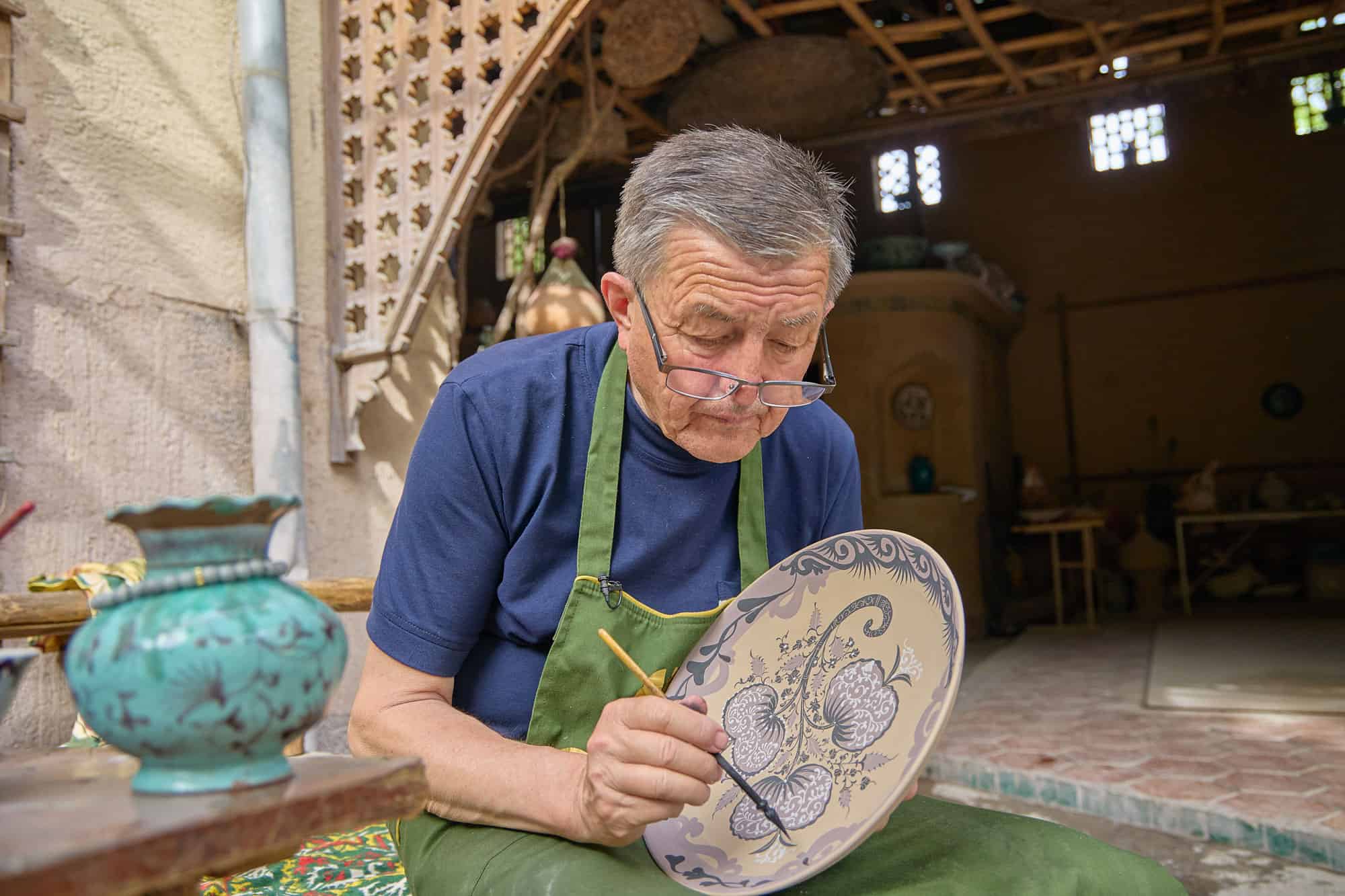
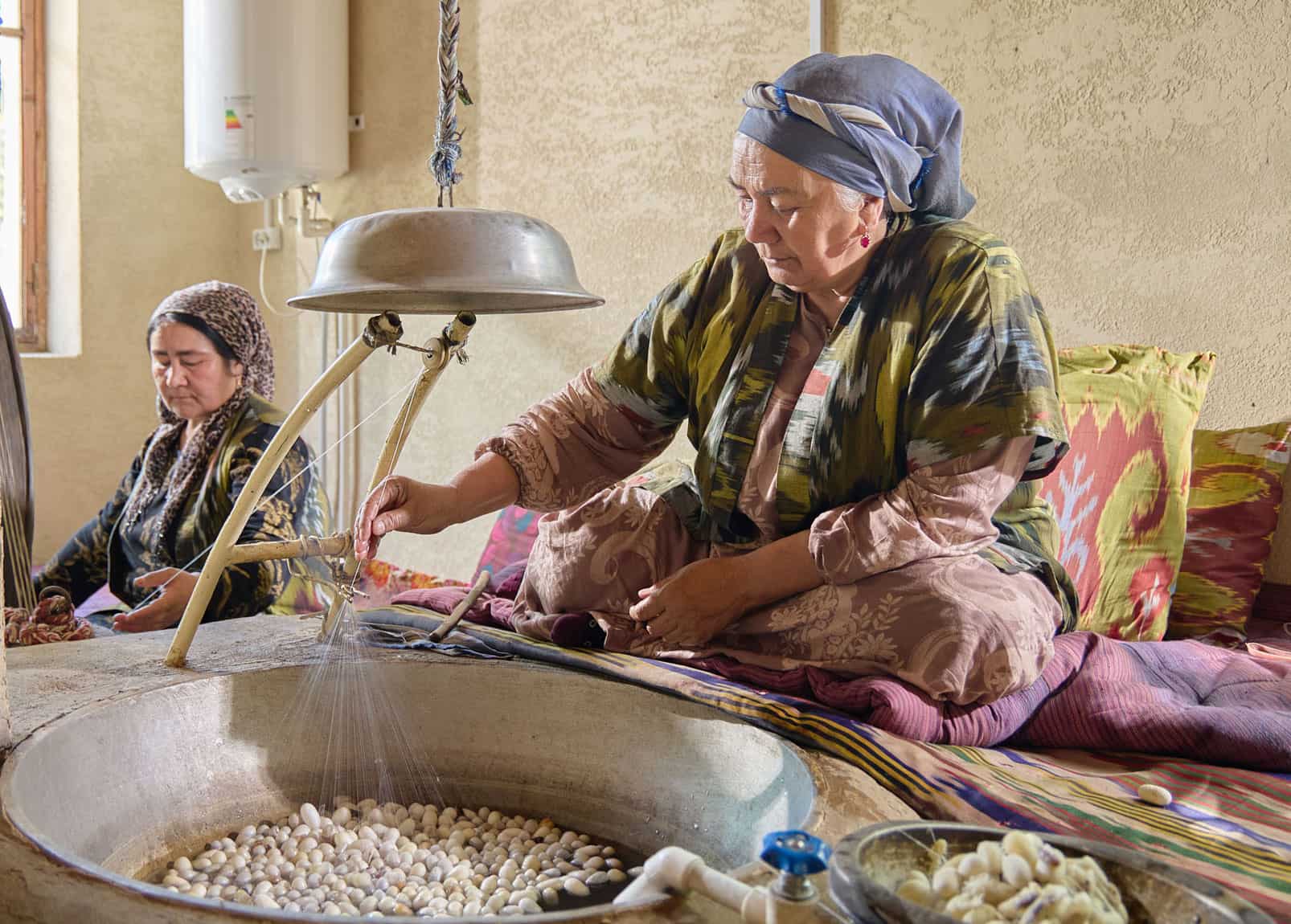

Many artisans have their own studios and enjoy opening them up to travellers through tours, master classes or through their showroom. Visitors have the chance not only to see these exceptional crafts up close but to hear the artisans’ stories and experience the warmth of Uzbek hospitality directly from those who dedicate their lives to preserving these traditional arts. Each piece is an authentic invitation to experience Uzbekistan’s storied history, artistry, and vivid culture.
This personal touch and being able to meet artisans directly are what make the handicrafts experience in Fergana Valley so unique. Be sure to check out our CTN artisan members and our CTN Recommended Route: Explore Fergana Valleys Art and Fashion Scene for even more ideas on artisans to visit, handicrafts to learn about, and shops to visit. It is important to book your visit to or master class with an artisan in advance to be sure they are prepared for your visit. We suggest getting in touch with one of our CTN member tour operators or tour guides to help you plan your trip and organize visits to artisans and handicraft studios.
Several CTN artisan members have recently opened up handicraft studios, galleries and shops that support and feature local Fergana Valley artisans: Craft House in Fergana City, Kokand Craft House, Silk Granat in Namangan City, and the Handicrafts Center in Margilan. These are great places to visit to get an overview of the Fergana Valley handicrafts highlighted below, meet artisans at work and be sure that the beautiful handmade gifts and souvenirs that you purchase support local artisans.
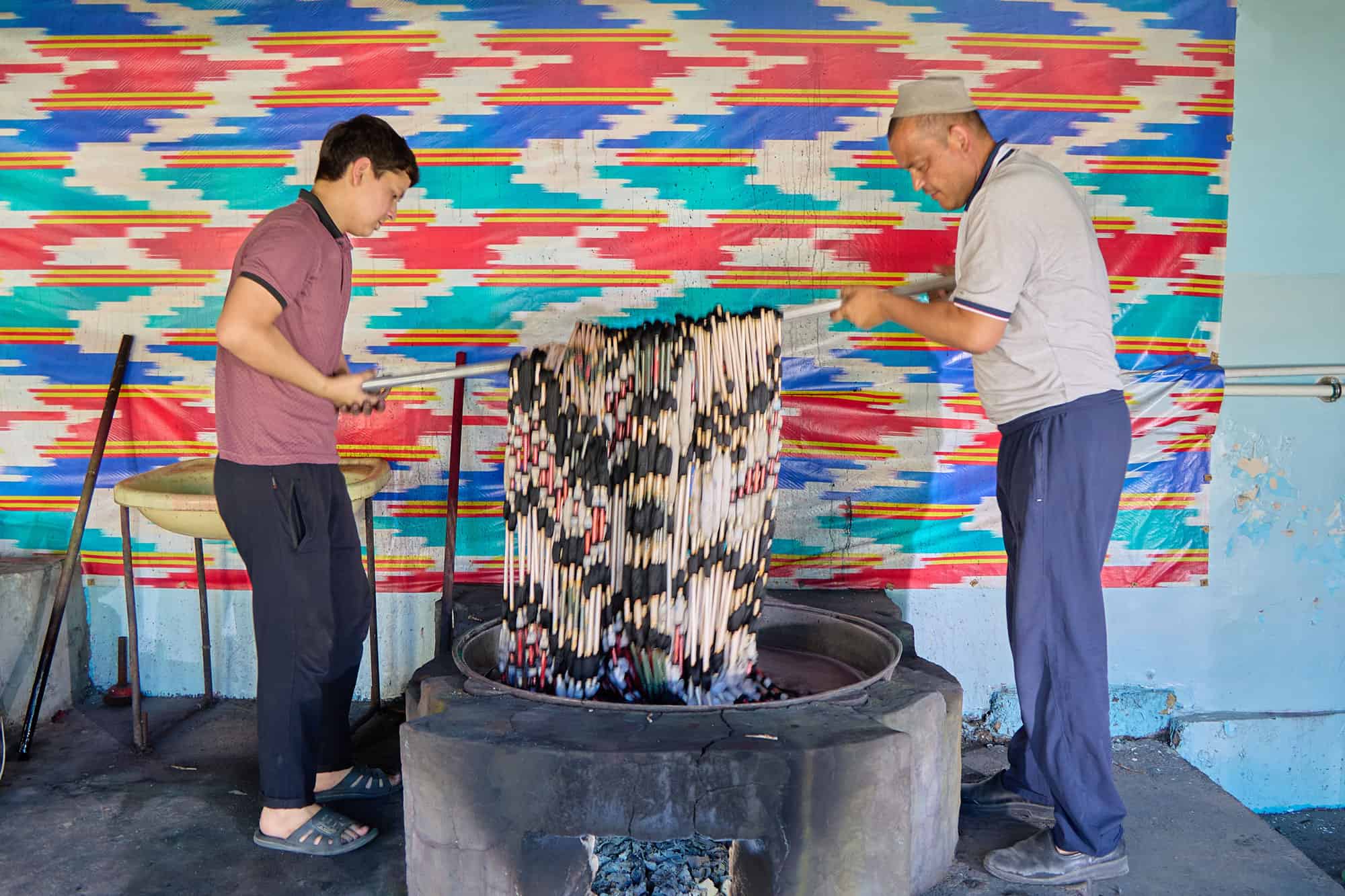

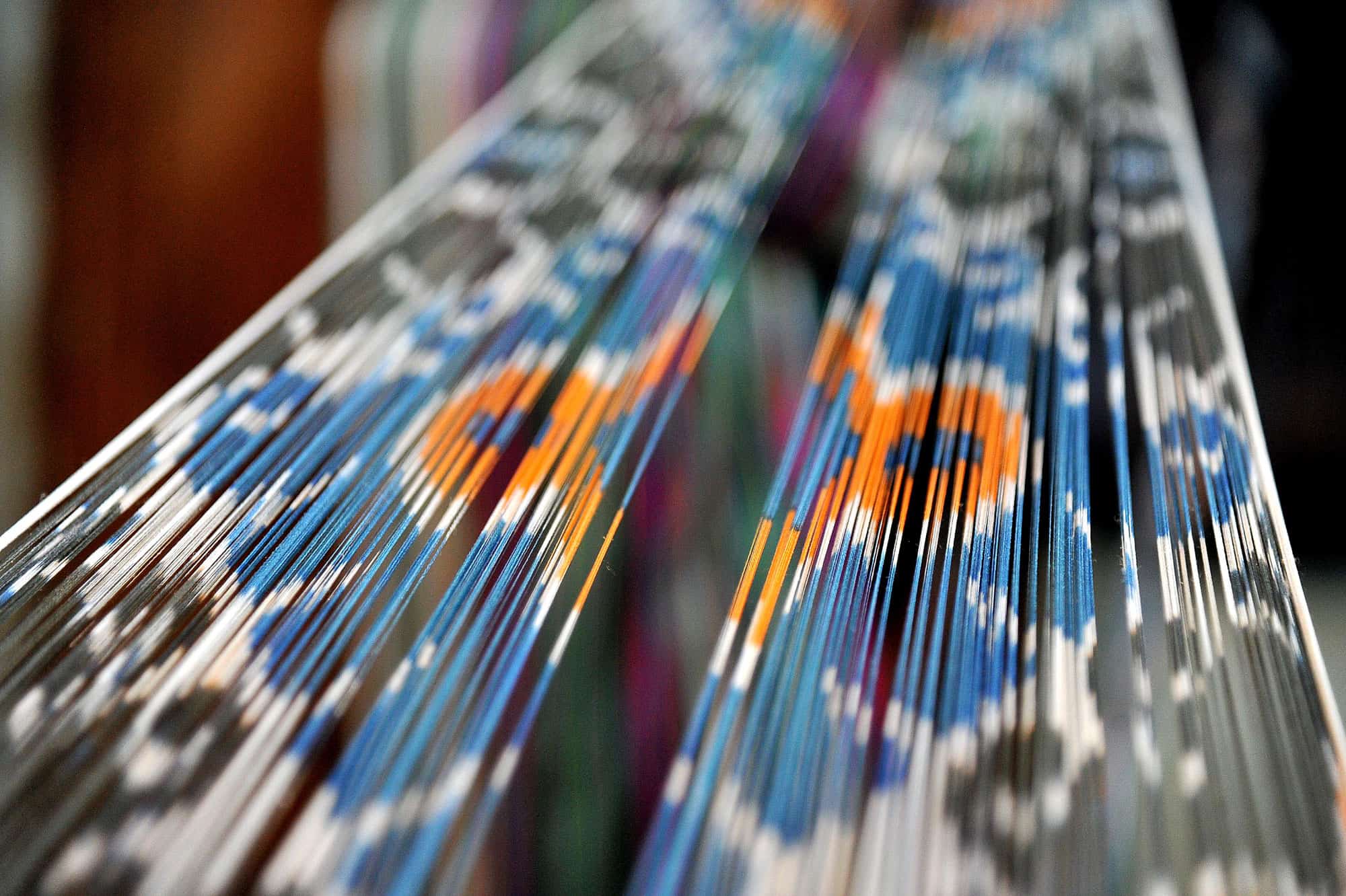
Margilan, one of Fergana Valley’s ancient cities, has been known for its silk production and silk goods since the 10th century when it was a prominent stop along the Silk Road. Local craftsmen learned the techniques of silk making from the Chinese and elevated their skills so that Margilan silk fabrics became a prized items traded along the Silk Road. Many of these handmade silk-making and weaving techniques are still being used today, including the use of natural dyes made from plants and flowers.
Margilan’s silk is most famous today for its vibrant ikat patterns that are now popular in other parts of Uzbekistan. Ikat is a method that originated in Indonesia for coloring fabric in patterns by resist dyeing, but this technique has been adapted and used Uzbekistan for centuries. Several of the ikat masters in Margilan are 9th to 10th generation, learning the intricate skill of tying and dying the fabrics from their elders.
There are several types of ikat fabrics that you can find that are of different styles and qualities. Atlas is pure silk with a glossy finish and adras is a silk-cotton blend. The most prized ikat fabrics are hand-woven on traditional looms.
Margilan’s silk-making heritage offers a fascinating glimpse into an ancient art that continues to thrive and be developed today. Here are a few places to visit in Margilan to learn more about Fergana Valley’s silk-making, ikat and weaving, as well as buy your own piece of silk art to take home.
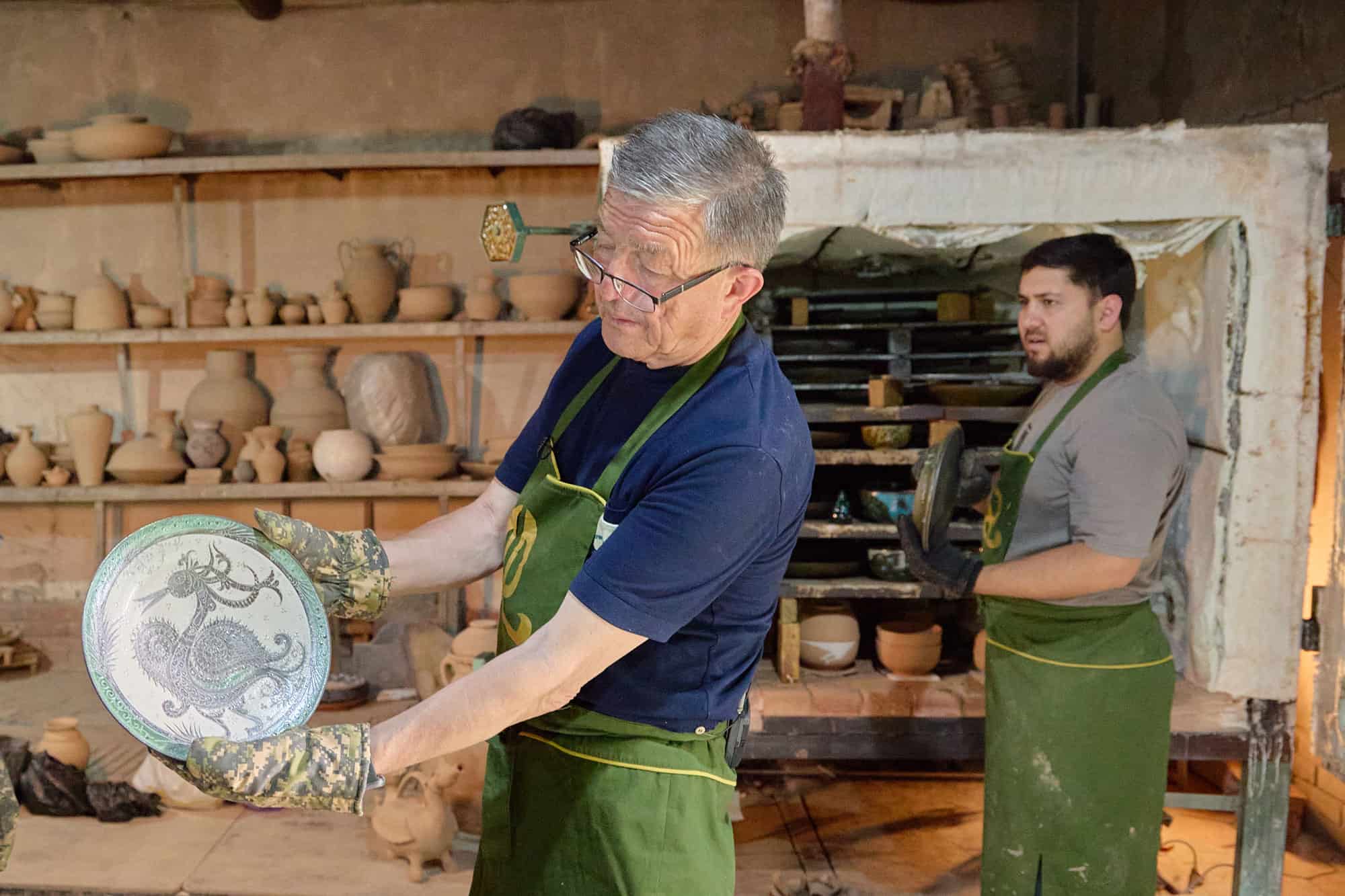

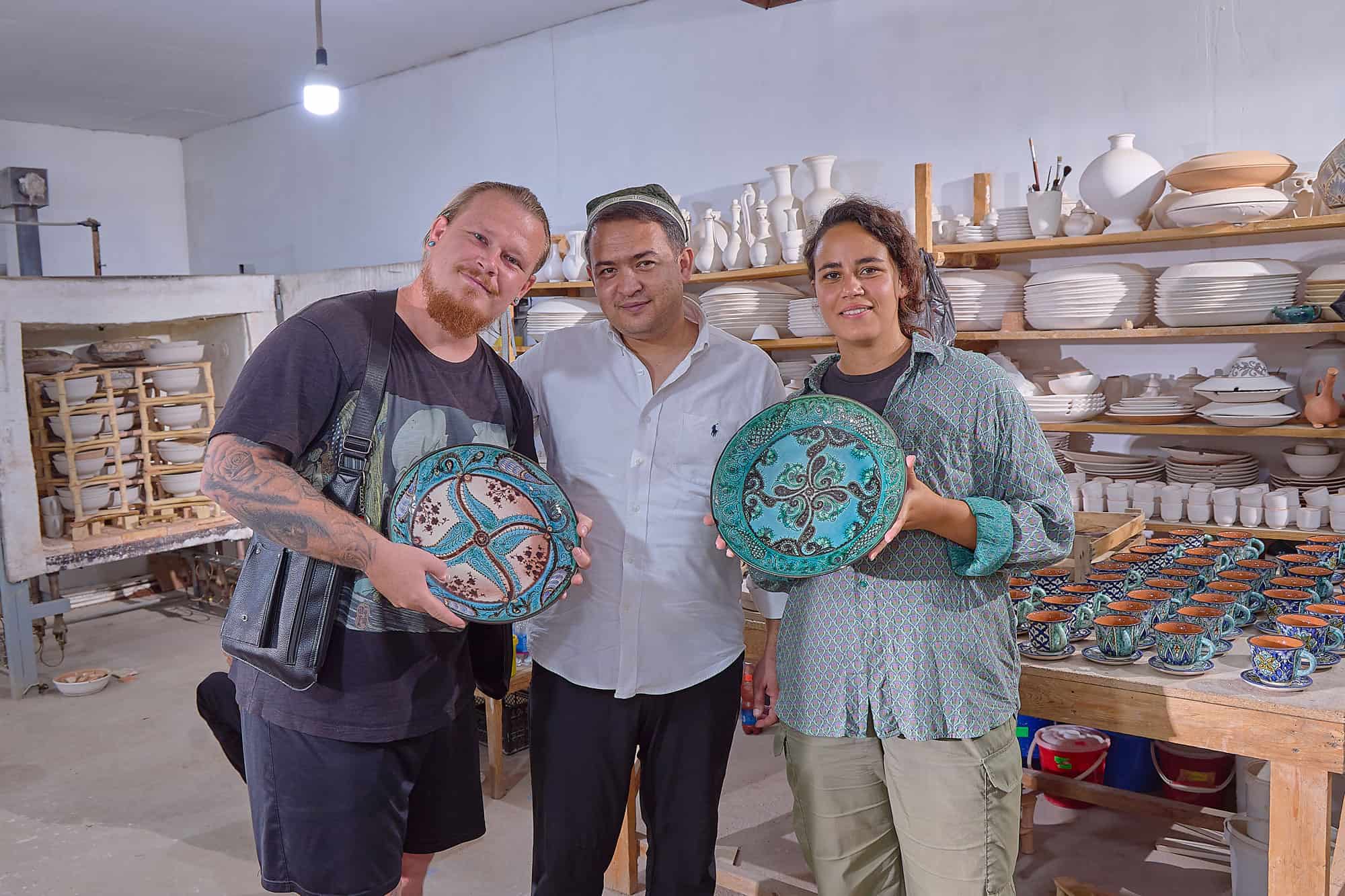
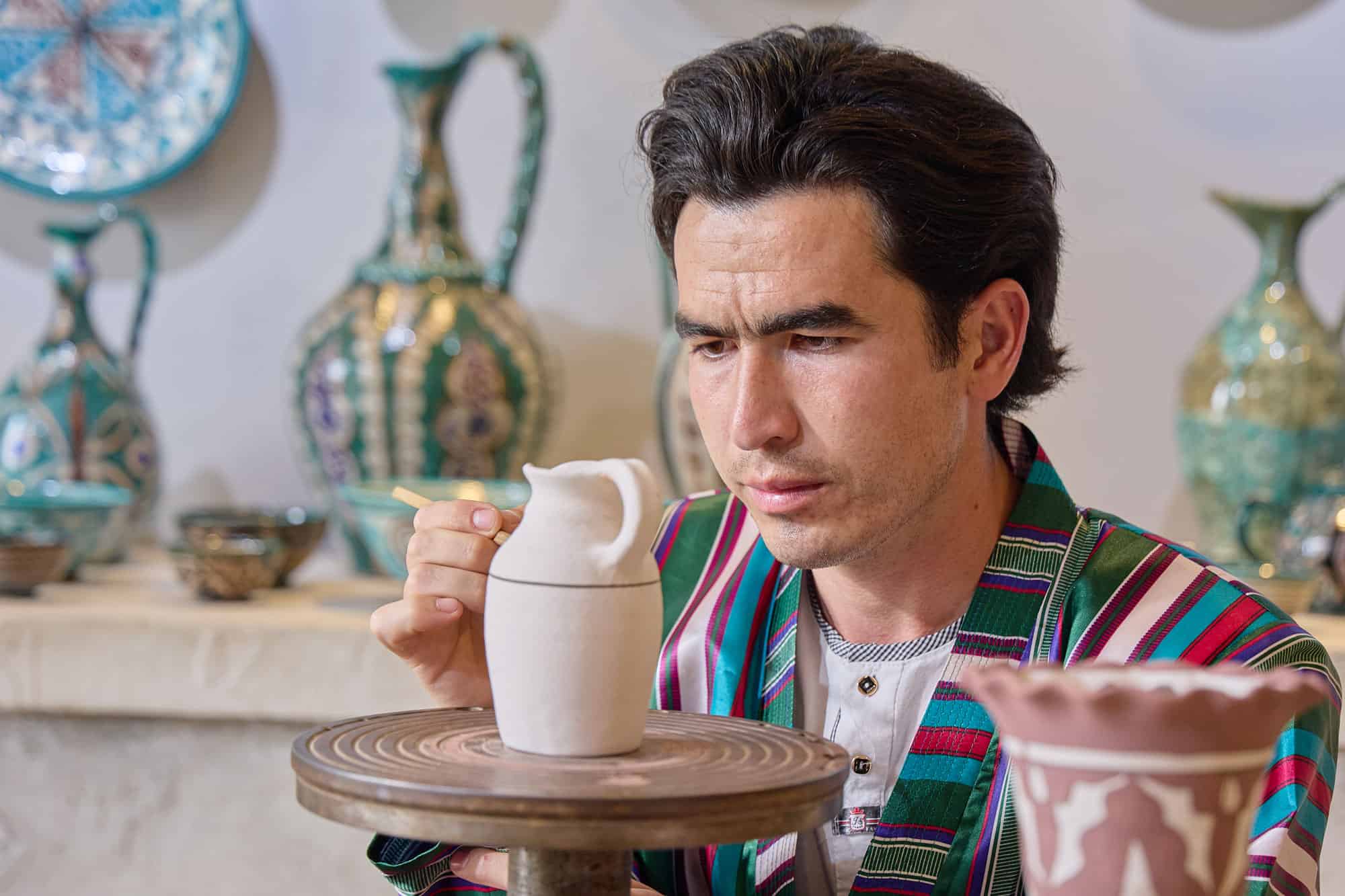
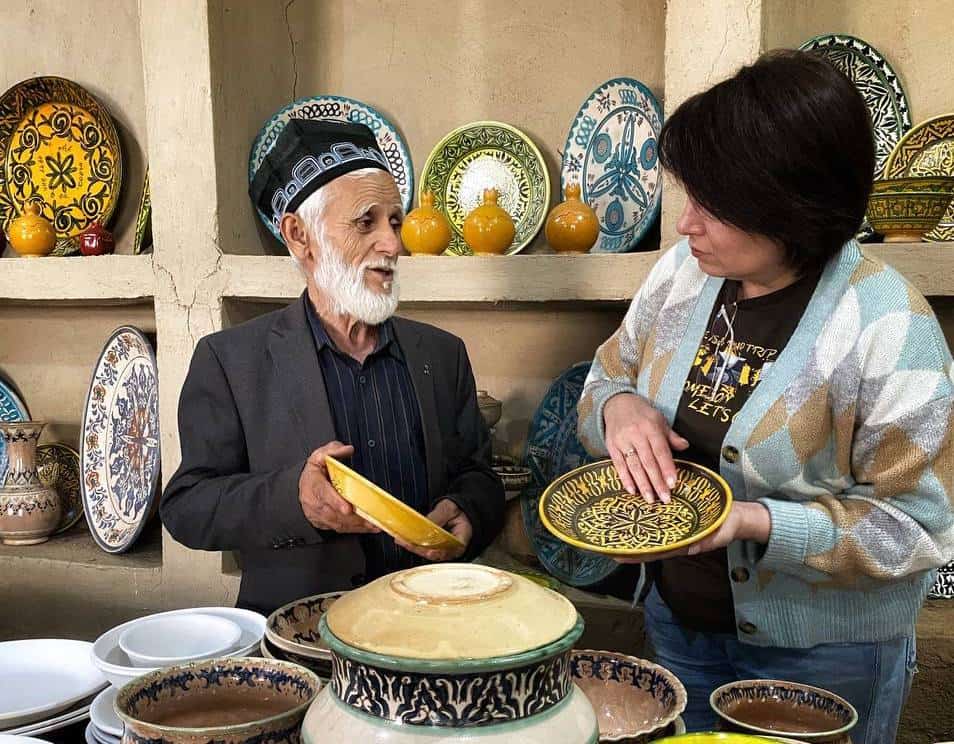
The Fergana Valley has a long tradition of ceramics that goes back thousands of years as can be seen in the pottery artifacts found at the archeological sites of ancient cities. There are three main schools of ceramics in Fergana Valley that you can find today: Rishtan (Rishton), Gurumsaroy (Namangan), and Andijan.
Each school of ceramics has their own specific technique, colors, design and style, and they are all being continued today through dedicated masters who are passing their knowledge to the next generation.
Rishtan ceramics are the most famous not only in Fergana Valley, but in all of Uzbekistan. It is the Rishtan potters who made the dazzling tiles for Khudoyar Khan’s palace in Kokand.
What makes Rishtan ceramics unique is the use of locally sourced red clay and the signature ishkor glaze, which is derived from natural plant ash. Traditionally, only three colors were used for painting: cobalt for a rich blue color, copper oxide for a bluish-green color, and iron which turns a brown color on the clay. This creates a distinctive turquoise and blue finish, often adorned with traditional floral and geometric patterns. Be sure to ask about the symbolism behind the colors and designs as they all have a story or meaning.
You can find ceramics and master potters everywhere you go in Rishtan, so this list below provides just some recommendations to get you started in your exploration.
Gurumsaroy is a village in Namangan Region that has been celebrated for its distinctive ceramics rooted in centuries of craftsmanship and tradition. Known for their bold colors and vibrant designs, Gurumsaroy ceramics often feature bright torquoise, dark blue and dark brown colors against a white background.
Artisans still use locally sourced red clay and gather “gulyak” herbs to create the signature “ishkor” glaze, just like their ancestors did. The designs often include floral and plant motifs, geometric symbols, and other elements inspired by nature. Together with the colors they symbolize prosperity and harmony.
The best place to learn about Gurumsaroy ceramics is at the studio of our CTN artisan member, Vakhobjon Buvayev, in Gurumsaray village where you can see the process and how he passes this knowledge onto the next generation of potters. In Namangan City, Silk Granat also features a lot of Gurumsaroy ceramics from local potters.
Andijan ceramics have a distinctive look and can be easily recognized by the combination of yellow and green color colors with an ishkor glaze. The ceramics are decorated with different symbolic designs, each with a special meaning. A lattice pattern symbolizes protection from the evil eye while “ram horns “ represents wealth, arched patterns show adherence to Islamic traditions, and petals in the center are a symbol of agriculture.
An ideal place to learn about Andijan ceramics is in the studio of Mirzabakhrom Abduvahabov, a 15th generation master potter who is continuing the traditions of Andijan-style handmade ceramics. You can also see different examples of and shop for Andijan ceramics in the handicrafts stores at the Registan.
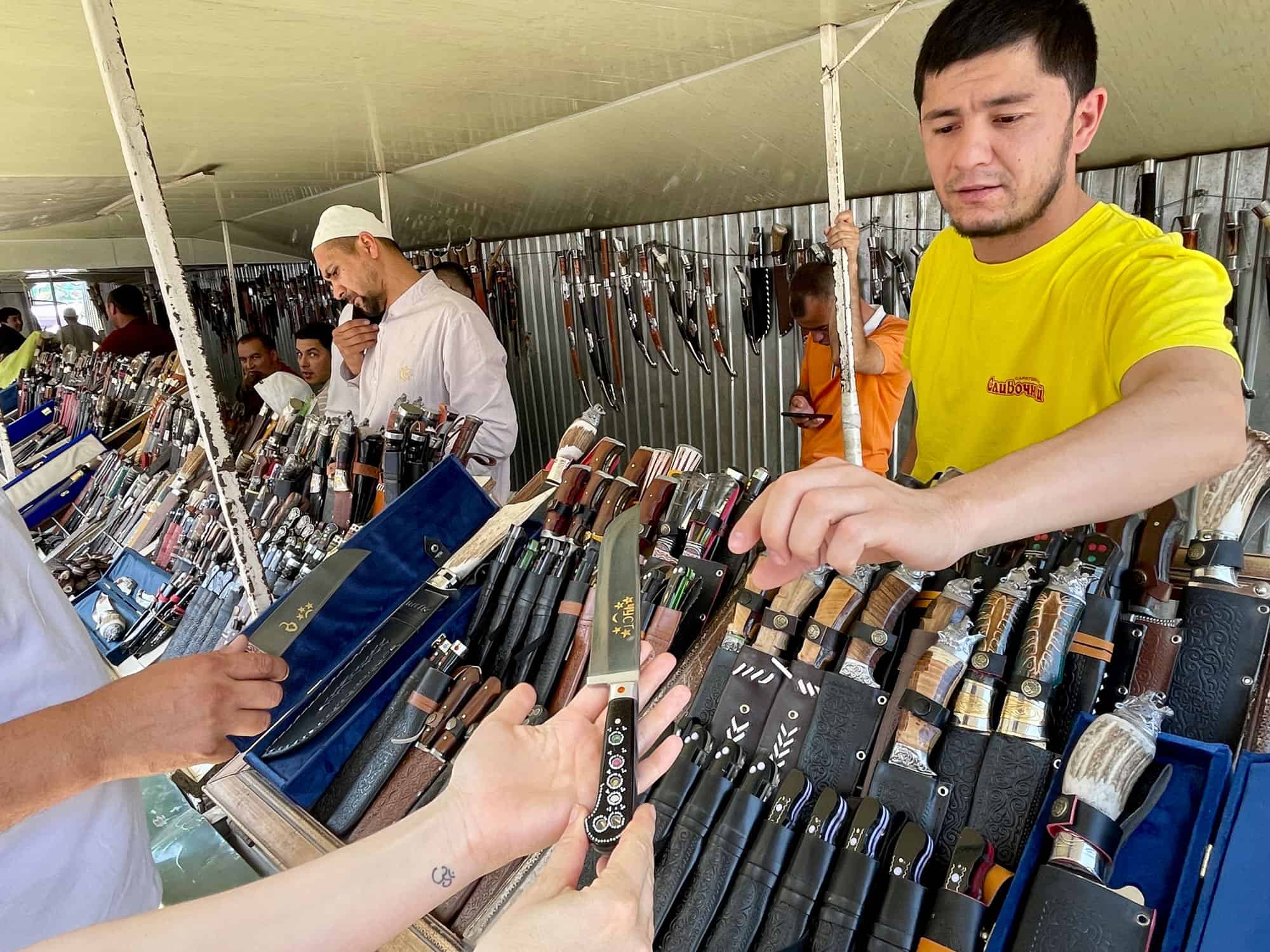
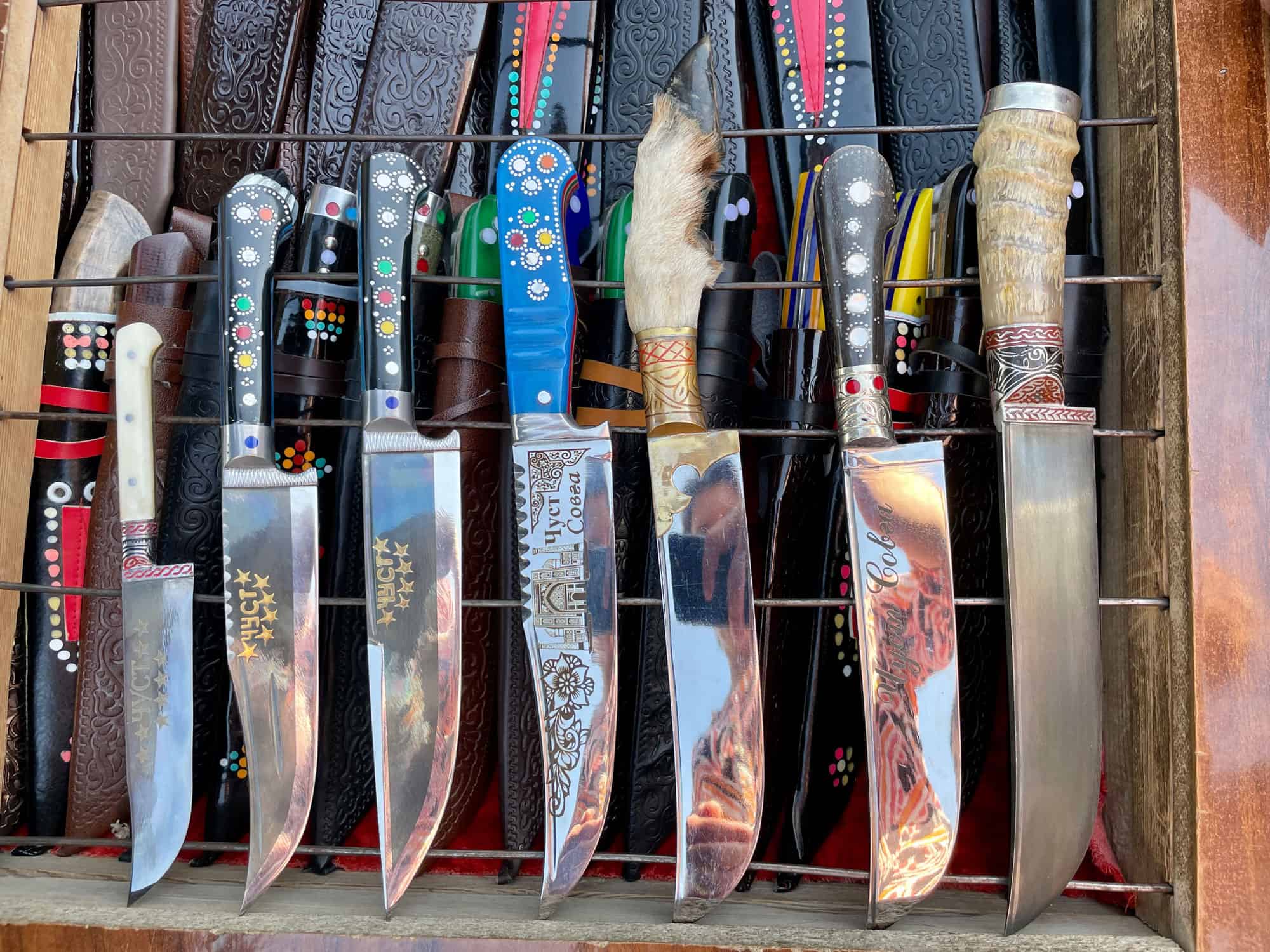


Knife-making in Fergana Valley is an ancient tradition that goes back to the Silk Road and even beforehand. It is believed by some historians that the famous Damascus steel, a technique that blends multiple types of metal together to make an incredibly strong blade, has its origins in Fergana Valley and were then traded in Damascus, Syria along the Silk Road. Damascus or Damasc steel is still used for knives today.
Pichak or pichhoq is the name for a traditional knife in Uzbekistan with a wide blade, excellent blade quality and a special hand-made handle that usually includes some special designs that indicate the master. These knives are pieces of art in addition to having a practical purpose. Note: If you do purchase a traditional knife, be sure to get a certificate from the artisan or shop showing that it is not an antique and you are allowed to carry it from Uzbekistan.
The two most famous places in Uzbekistan for these handmade knives are located in Fergana Valley: Chust in Namangan Region and Shakhrikhan in Andijan Region.
Located around 45 minutes from Namangan City, Chust has a tradition of knife-making that goes back several thousand years. Chust knives are the most famous knives in Uzbekistan with several masters who are 7th – 10th generation of knife makers and are passing this craft to the next generation. Every knife or pichak is carefully designed and made by hand so each one is unique and a collector’s item.
A good place to see different types of Chust knives is at the Dehqon Bazaar in the center of town where there is a special area dedicated to knife stands. There is also a large Knife Center on the main road leading into town with a large selection of pichoqq. Some knife masters do open their studios for visitors, but you need to reserve this in advance so we suggest contacting our CTN member tour operators or tour guides to organize this.
Shakhrikhan knives are crafted in the town of the same name around 45 minutes from Andijan City in Andijan Region. With a history of knife-making and black smithing stretching back centuries, these knives were once prized along the Silk Road for their durability and craftsmanship. Many of those same techniques are used today by master knife-makers, some of whom are 10th generation and these family dynasties are called pichokchi.
Each knife is handcrafted using high-quality steel, often decorated with intricate patterns etched onto the blade. The handles are made from materials such as horn, bone, or wood, and adorned with unique ornamental designs.
In addition to finding a selection of Shakhrikhan knives at the local bazaar, there are also many open workshops where visitors can see the process of preparing a knife and choose one to take home. One recommended workshop that offers master classes and showroom is that of CTN artisan member Muzaffar Umarov, a 10th generation knife-maker. He brings this ancient art to life with his creativity, skill and passion.
Note: Chust and Shakhrikhan are also centers for making doppi, the traditional Uzbek skullcap, so be sure to ask about seeing this craft as well.
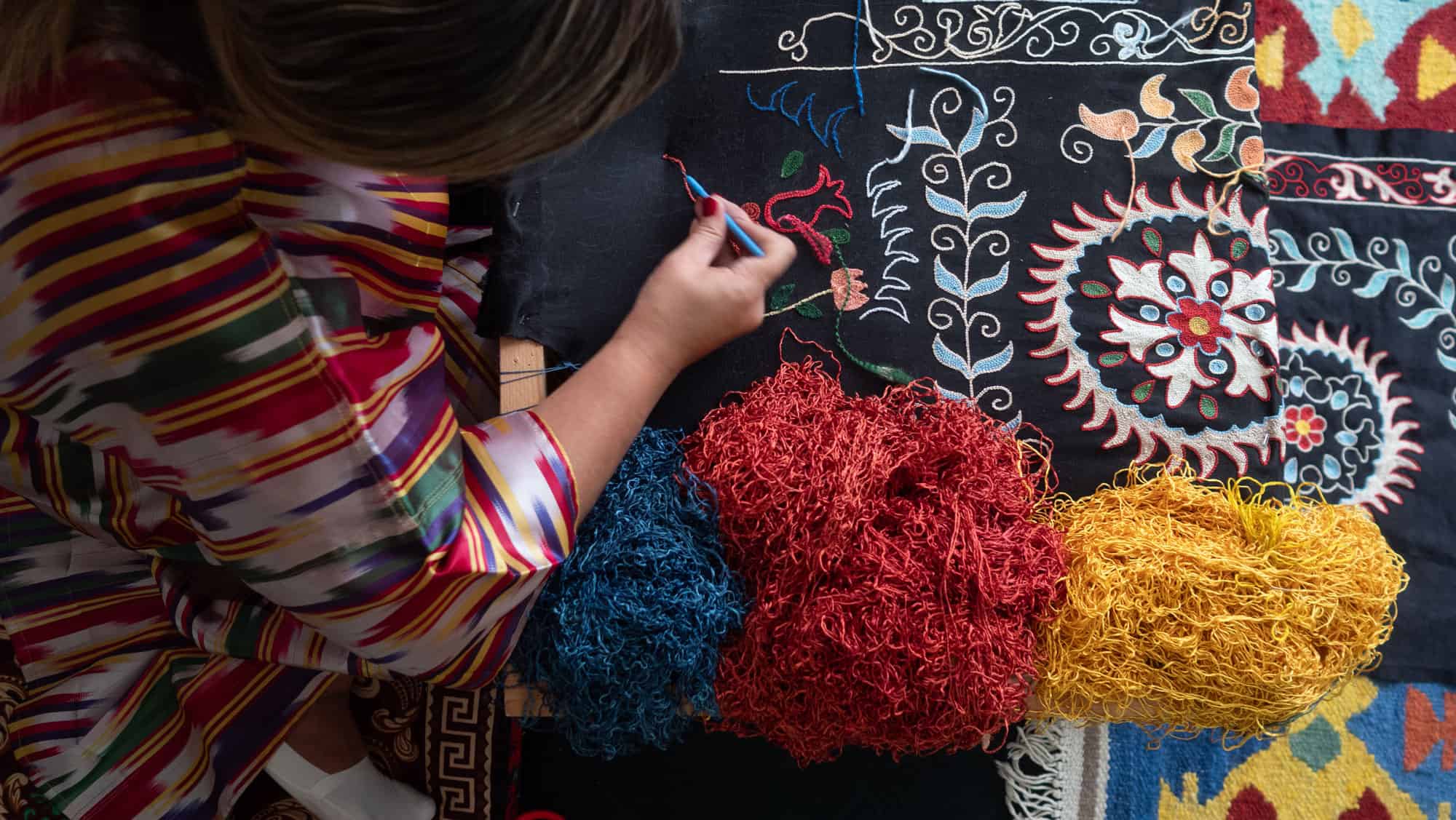
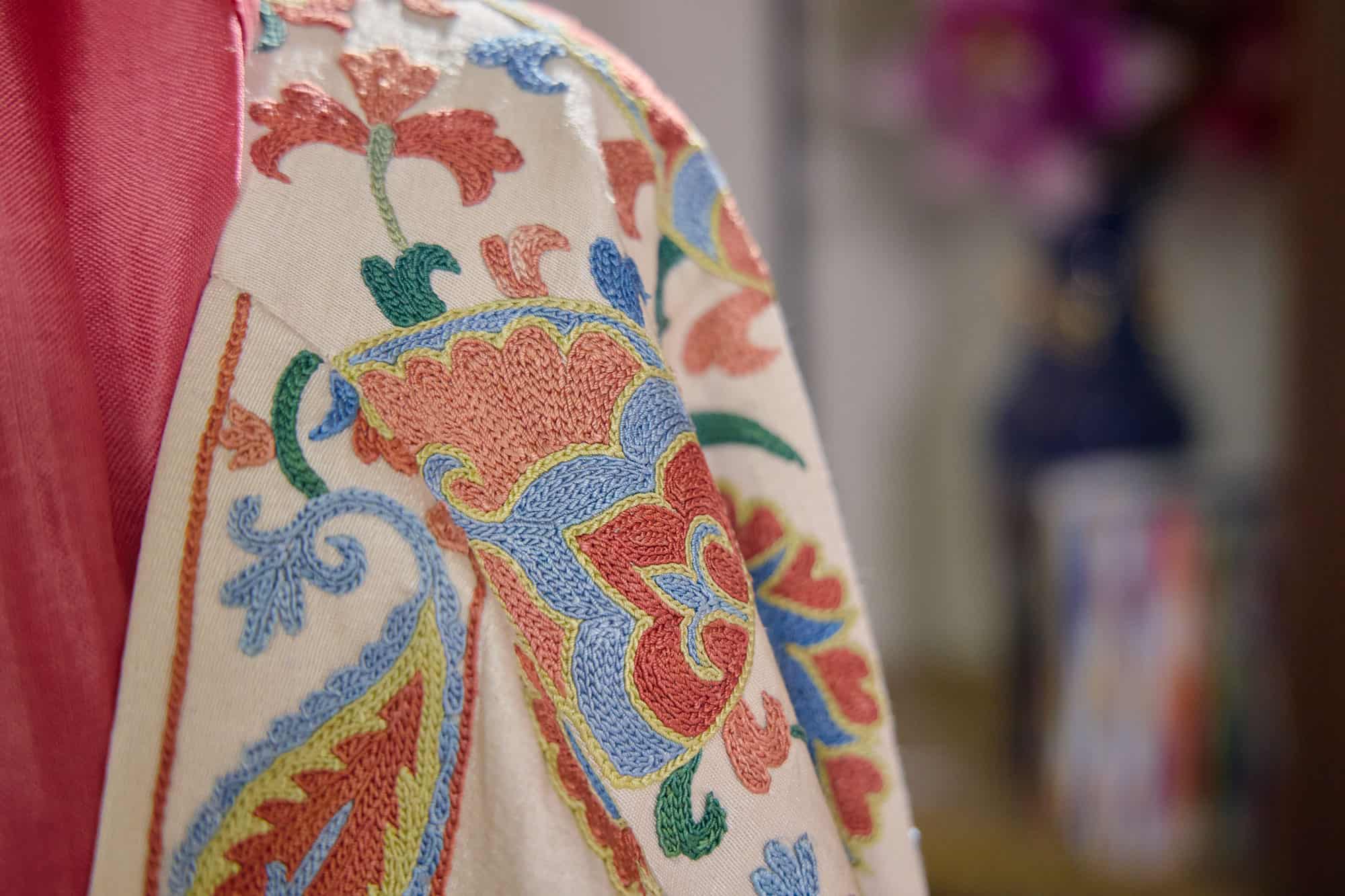
Suzani, the vibrant embroidered textile of Uzbekistan, comes from the Persian word for needle and has been a handicrafts tradition for several centuries in Fergana Valley. Each region of Uzbekistan has its own style of suzani with different motifs, patterns and colors.
Traditional Fergana Valley suzanis are often distinguished by their intricate floral, vine, and geometric motifs often embroidered on cotton or silk fabric using vivid threads in red, green, yellow, and blue. Each piece tells a unique story, blending artistry with symbolic designs and colors.
Suzani masters and workshops can be found in different places in Fergana Valley, and many handicraft shops — like Silk Granat in Namangan — have a selection of local pieces to buy. The suzani is sometimes incorporated into traditional clothing or other embroidered textiles. For a deeper understanding of suzani we recommend visiting our CTN artisan members Nargiza Sherkhodjayeva of Nora and Co in Margilan and Abdulhakim Suzani Embroidery in Namangan City.
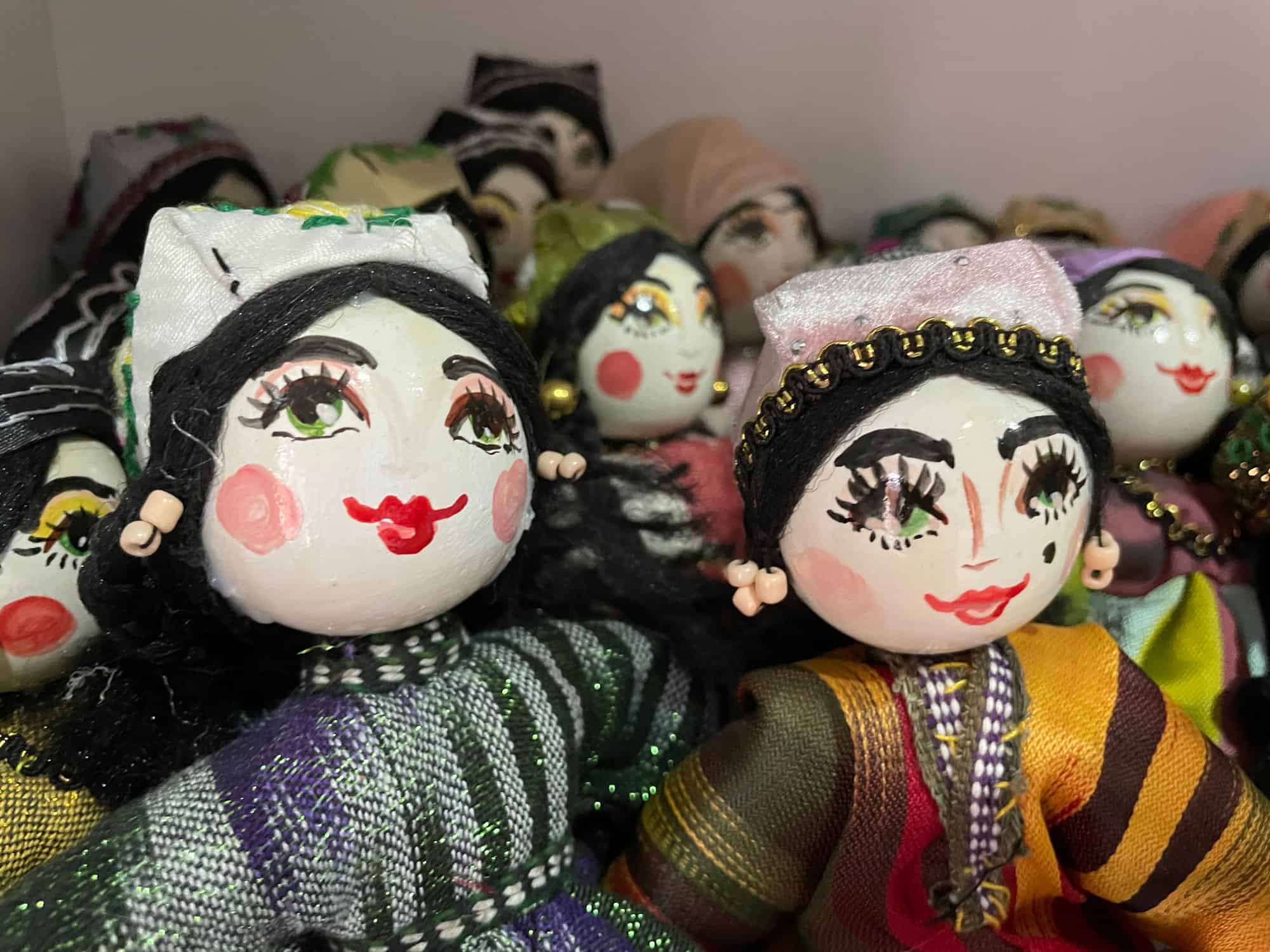
While the handicrafts mentioned above are most famous in Fergana Valley, the rich artisan heritage also extends into other types of crafts and craftsmenship. For example, Andijan is known for their traditional dolls while Kokand is famous for their wood-working. Each place you visit in Fergana Valley has a special type of handicrafts that it is known for and local artisans who are continuing these traditions.
In order to see a selection of different types of Fergana Valley handicrafts made locally, visit local handicrafts shops or bazaars. Be sure to ask about the traditions, techniques and stories behind the beautiful pieces. In Andijan City you can do this at the handicraft shops and art museum at the Registan while the Jami Mosque in Kokand hosts an applied arts museum and showroom and the newly opened Kokand Craft House features local artists and their work. In Namangan City, Silk Granat proudly showcases local artists and their work. And in Fergana City, the Craft House is a space for local artisans to work in studios and display their handicrafts.