Fergana Valley has a deep culinary heritage and its cuisine is famous throughout the region with a richness of flavour thanks to fresh ingredients from its fertile soils, climate and strong agricultural tradition. During the time of the Silk Road, traders would spend ample time in the Fergana Valley, partly due to its abundance of delicious fruits, vegetables and meats that would help them rejuvenate from a long journey. Visit any of Fergana Valley’s vibrant and bustling markets and you’ll see what we mean.
While many of the traditional dishes that you’ll find in the Fergana Valley look similar to traditional Uzbek foods like plov/pilaf (a rice dish with vegetables and meat), somsa (stuffed savory pastry), manti (stuffed dough) and non (bread), each area has its own local specialty and flavour. So these traditional dishes take on a special richness thanks to local recipes and the freshness of local ingredients. We challenge you to find sweeter melons, pomegranates, apples or grapes!
As Babur, the founder of the Moghul Empire in India and South Asia, came from Fergana Valley many believe that some of the popular dishes and cooking techniques in South Asia today have their roots in Uzbekistan. This includes South Indian dishes like pulao or biryani (a rice, vegetable and meat dish) that has similarities with plov or samosas (stuffed savory pastry) connected to somsa, as well as the beloved tandoor or tandyr clay oven used for cooking breads, somsa and grilled meats.
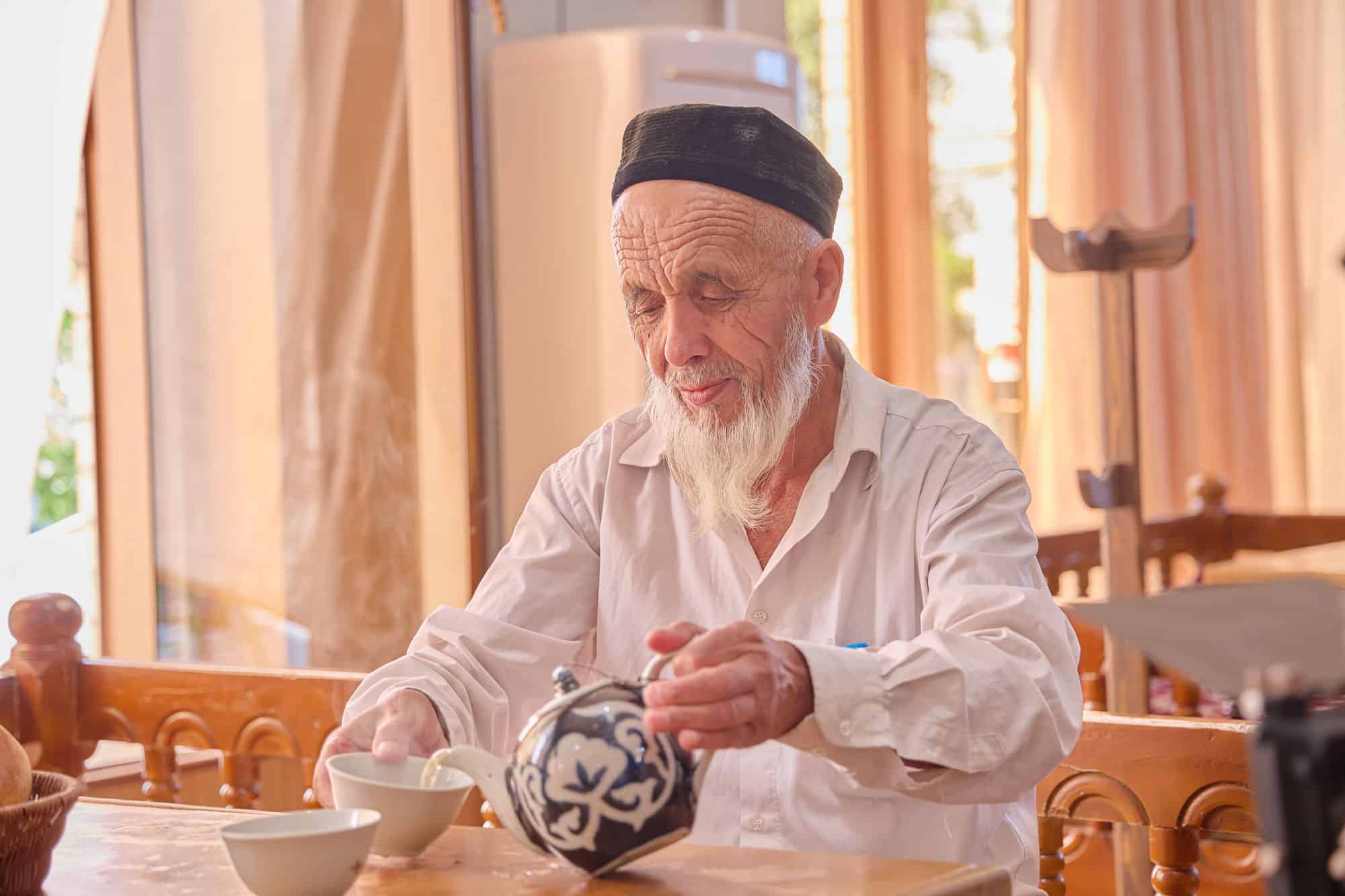
Do as the locals do and relax in a chaykhana (tea house) around the tapchan (traditional table) with some tea, plov, beautifully designed non and piles of local fruits as dessert. Given the hospitality of the Fergana Valley, we imagine you’ll make some new local friends along the way.
Note: A great way to discover Fergana Valley’s rich food and market scene is by following this Fergana Valley CTN Recommended Route: A Culinary Journey Through Fergana Valley. For a memorable and delicious culinary experience, our CTN Member Nargiza’s Traditional Guest House in Fergana City offers cooking classes to learn how to make many of the traditional dishes below like plov, samsa, nan (bread) and more in a traditional Uzbek home and courtyard.

Most Uzbek traditional dishes, as well as those in Fergana Valley, incoulde meat and this part of the local culinary heritage. Therefore, it can be challenging for vegetarian visitors to find vegetarian dishes beyond cold salads at local restaurants serving traditional Uzbek food. We have included recommendations below on eating options for vegetarians, but when possible please notify your local guide or tour operator if you require vegetarian food as your hosts or local restaurant may need advance notice to prepare it separately. Turkish restaurants in the main cities in Fergana Valley often offer a vegetarian selection.

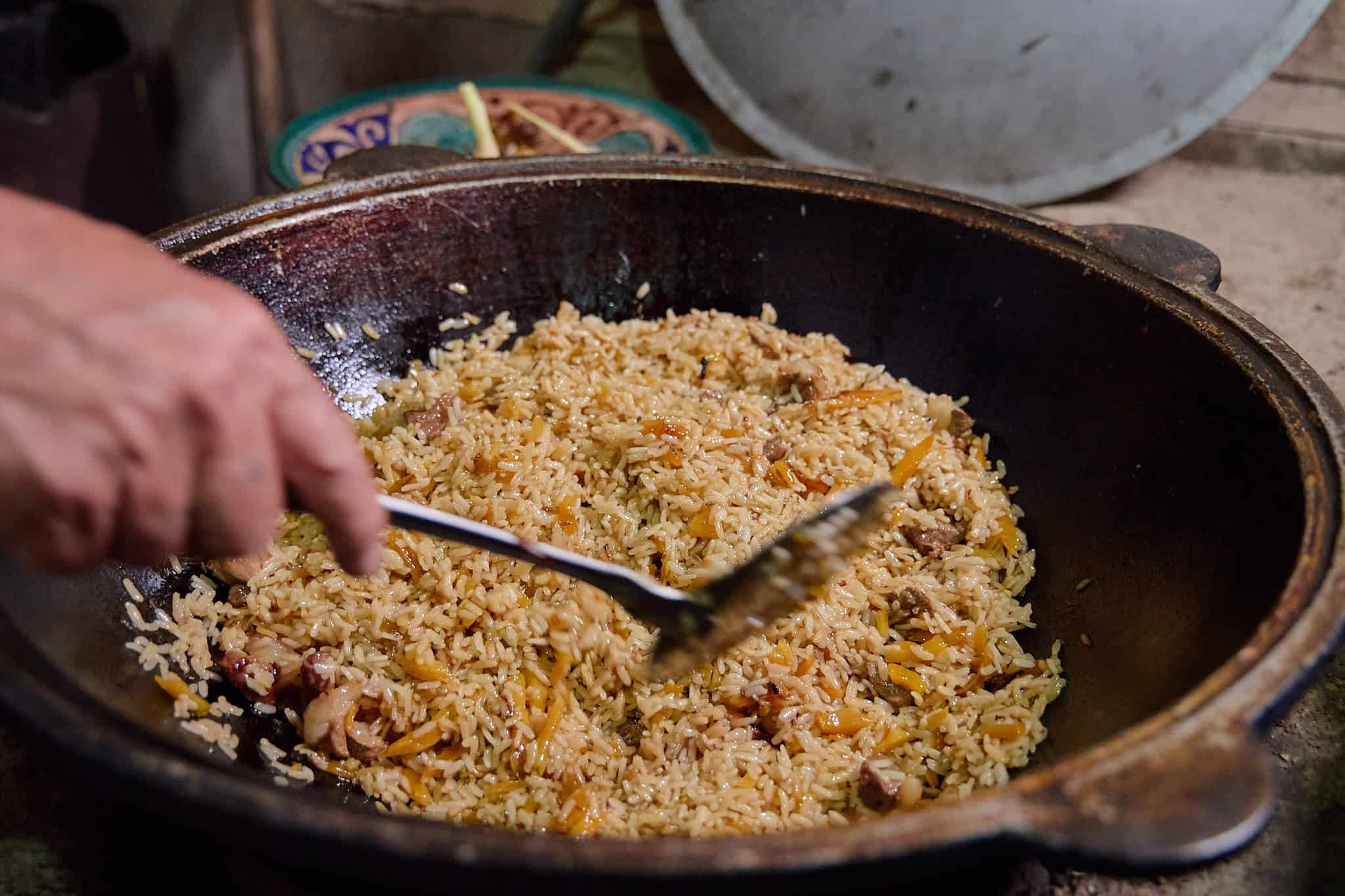


Plov (or pilaf or pilau) is Uzbekistan’s most beloved national dish that often marks special occasions like weddings, funerals or other major life events. Today it is often eaten for regular meals as well, but the traditional way of serving plov on a large platter for a group to share shows the dish’s rich cultural significance that represents local hospitality, community and identity. It is not uncommon to see groups of friends or families gathered together for hours sharing plov and chatting together. It is for all of these reasons that plov was recognized by UNESCO as important intangible cultural heritage.
Although there are many variations of plov, the basics include rice simmered in broth with chopped vegetables (usually onions and carrots), meat (beef or lamb) and spices in a kazan, a large round metal pan. The whole cooking process often takes 4-5 hours for all the the flavours to seep into the rice and dish.
Plov is often served in chaykhanas or restaurants with achichuk, a simple chopped tomato and onion salad, hot peppers, and sometimes a choice of other salads made up of pickled vegetables, garlicky tomatoes, creamy sauces and more. As plov can be quite rich and heavy, the salads are a light and tangy condiment that goes perfectly together. Green tea is usually is usually the drink of choice.
In the Fergana Valley each area has its own special way of preparing it based on the type of rice, vegetables, meats, and special toppings like roasted garlic, chickpeas, stuffed grape leaves, horse sausage or quail eggs. The presentation of a plate of plov is quite important.
ANDIJAN PLOV is made with devzira rice, a red-brown rice grown in the hills that is a specialty rice of Fergana Valley. It not only provides a different color, but also a distinctive taste that makes the plov’s flavours stand out. The plov is simmered hours with chopped onions, sweet yellow carrots, dried fruits (sometimes) and meat.
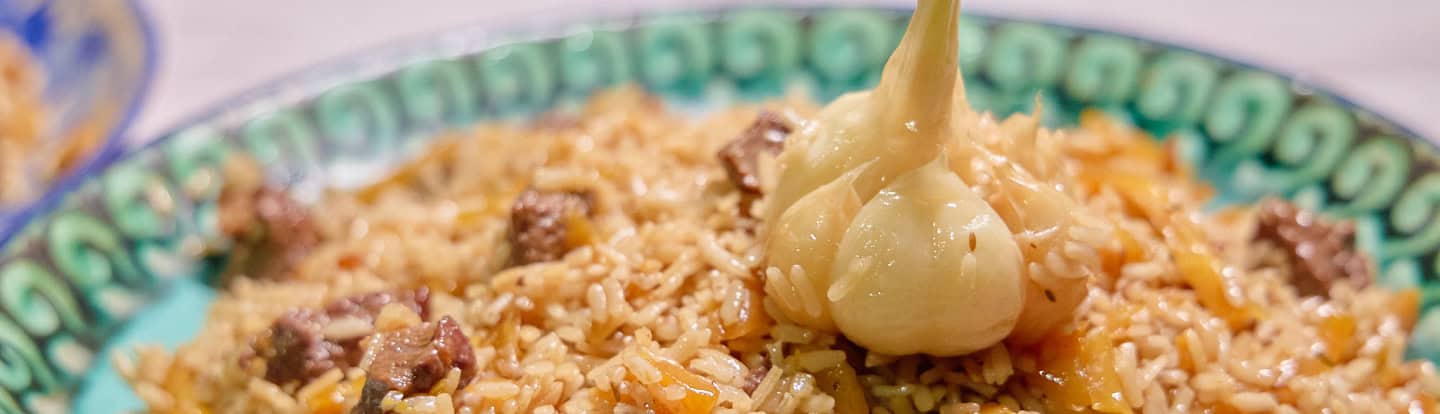
FERGANA REGION PLOV is also made from devzira rice and whole heads of garlic are often stewed with the rice, vegetables and meat to infuse its flavor. You’ll find small differences between Rishtan, Kokand and Fergana style plov so it’s worth trying all of them to select your favorite.
CHUST PLOV from Namangan Region is renowned for its richness of flavours thanks to its use of quail eggs, whole heads of garlic, and different types of meats and sausages. Other areas of Namangan Region also have their specific plov specialties depending upon their use of spices, cuts of meat and type of vegetables.
A note on plov for vegetarians: Plov is traditionally cooked in meat fat and broth so if you would like to try vegetarian plov you will need to request this in advance as it takes a different cooking process. Your local tour guide or travel agency can help with this request.

Samsa (or somsa) are stuffed pastries that are usually cooked on the side of a tandyr (tandoor) oven until they are slightly brown and crispy on the outside with juicy, tasty fillings on the inside. The most traditional samsa fillings include lamb or beef and onions, but at bigger places you can also find samsa filled with chicken, pumpkin, potato, cheese and other options.
Marhamat’s giant samsa in Andijan Region is worth seeking out as a local food specialty. Filled with either lamb or beef, these giant samsa are baked on the side of a tandyr oven for a long time so that all the juices from the meat, onions and spices combine together in a delicious, hearty soup or stew. This samsa is so large and rich it will fill you up for the whole day…and maybe the next!
Another place to try samsa is at Tandir Restoran Somsa Centre in Namangan with its massive tandyr oven that can make hundreds of samsa at one time.
Note for vegetarians: As it is not too difficult to find samsa filled with pumpkin, potatoes or other vegetables they can be a good eating option for vegetarians in Fergana Valley. Just be sure to ask if any meat is included in the filling as sometimes it is added for flavour.
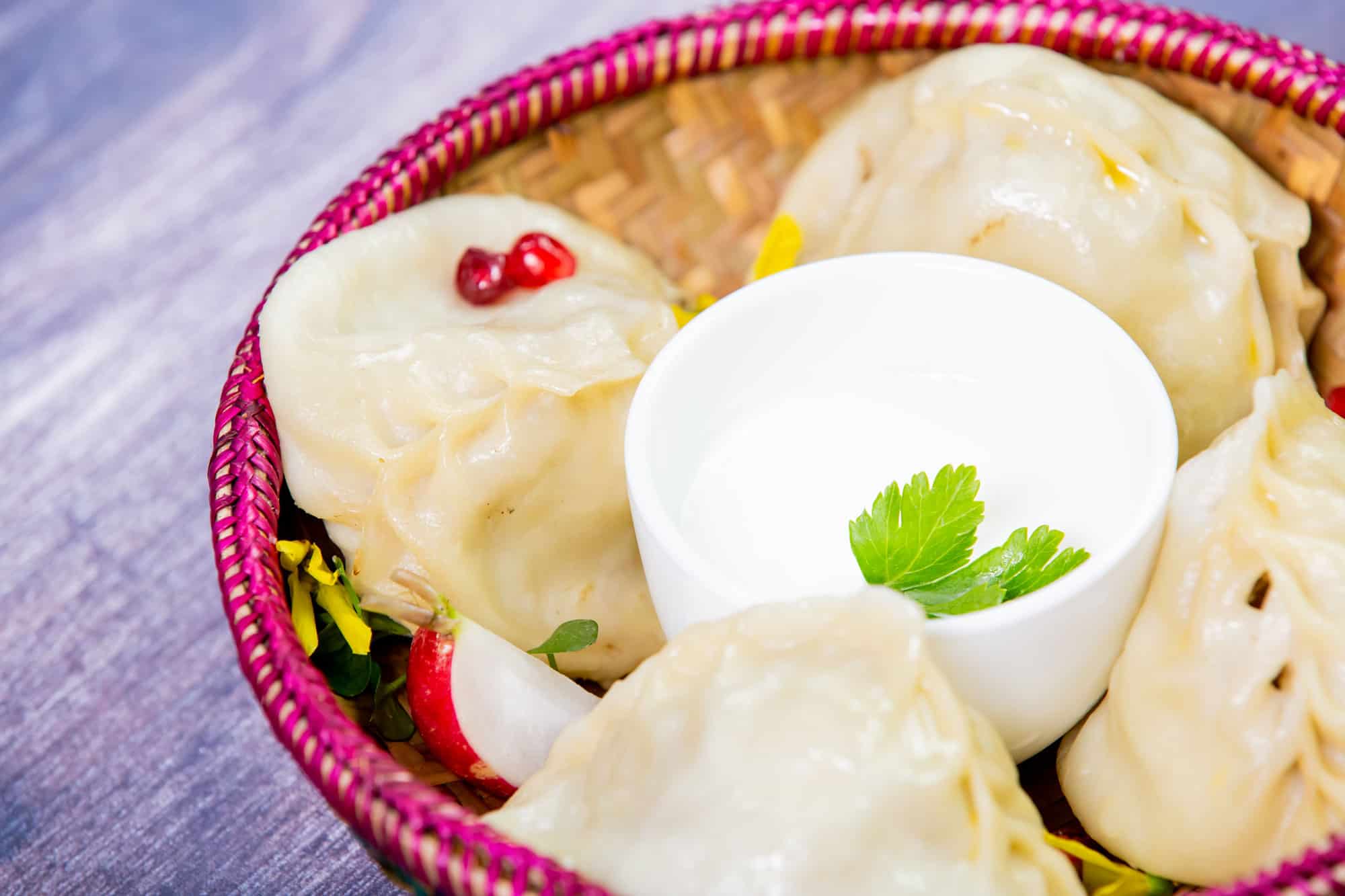
Manti are like dumplings, a dough filled usually with a meat and onion combination. It is usually served steamed with a creamy sauce. It can be either a first course or depending upon the size of the manti, a full meal.
Note for vegetarians: If you find pumpkin or potato manti on a menu, be sure to ask whether the filling also includes meat or meat fat as often this is added to make the dish more rich.

Lagman is a hearty noodle dish that has its origins in Uyghur cuisine. It is made from hand-pulled noodles that are served with chopped vegetables (usually different peppers and onion), meat and a savory sauce. You can often find it served in two varieties — as a soup with broth or fried as noodle dish (pictured here).
Note for vegetarians: You may be able to get vegetarian lagman if you ask in advance so they have time to prepare it separately.
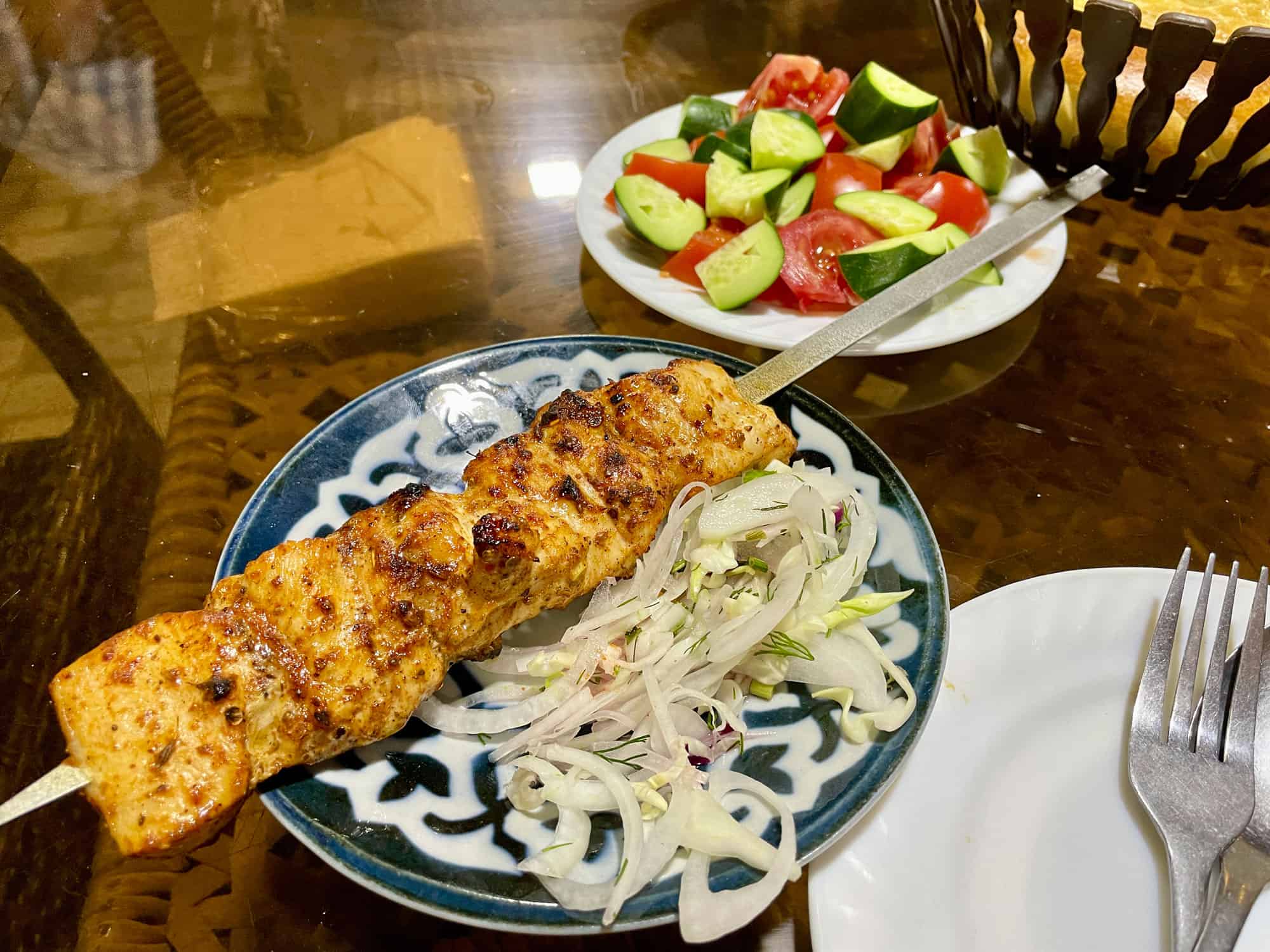
Shashlik (or kebab) is skewered grilled pieces of meat – usually lamb of beef, but sometimes chicken (as pictured here). Shashlik is cooked on a grill over coals or sometimes inside a tandyr oven. It is often served together with sliced onions, bread and a salad. A shashlik menu will usually include different types of meat, as well as different cuts, so you can select the one that best suits your taste.
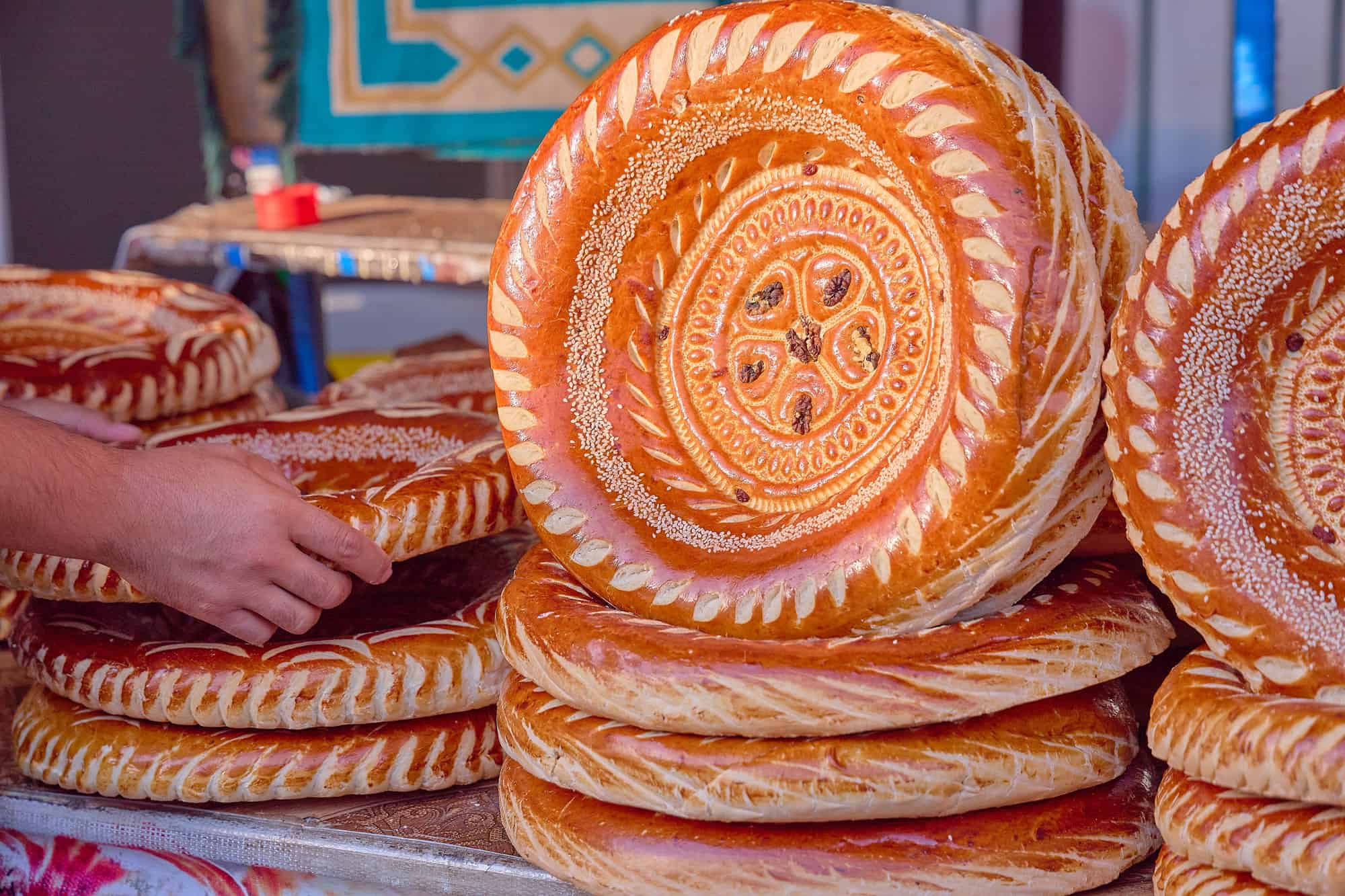
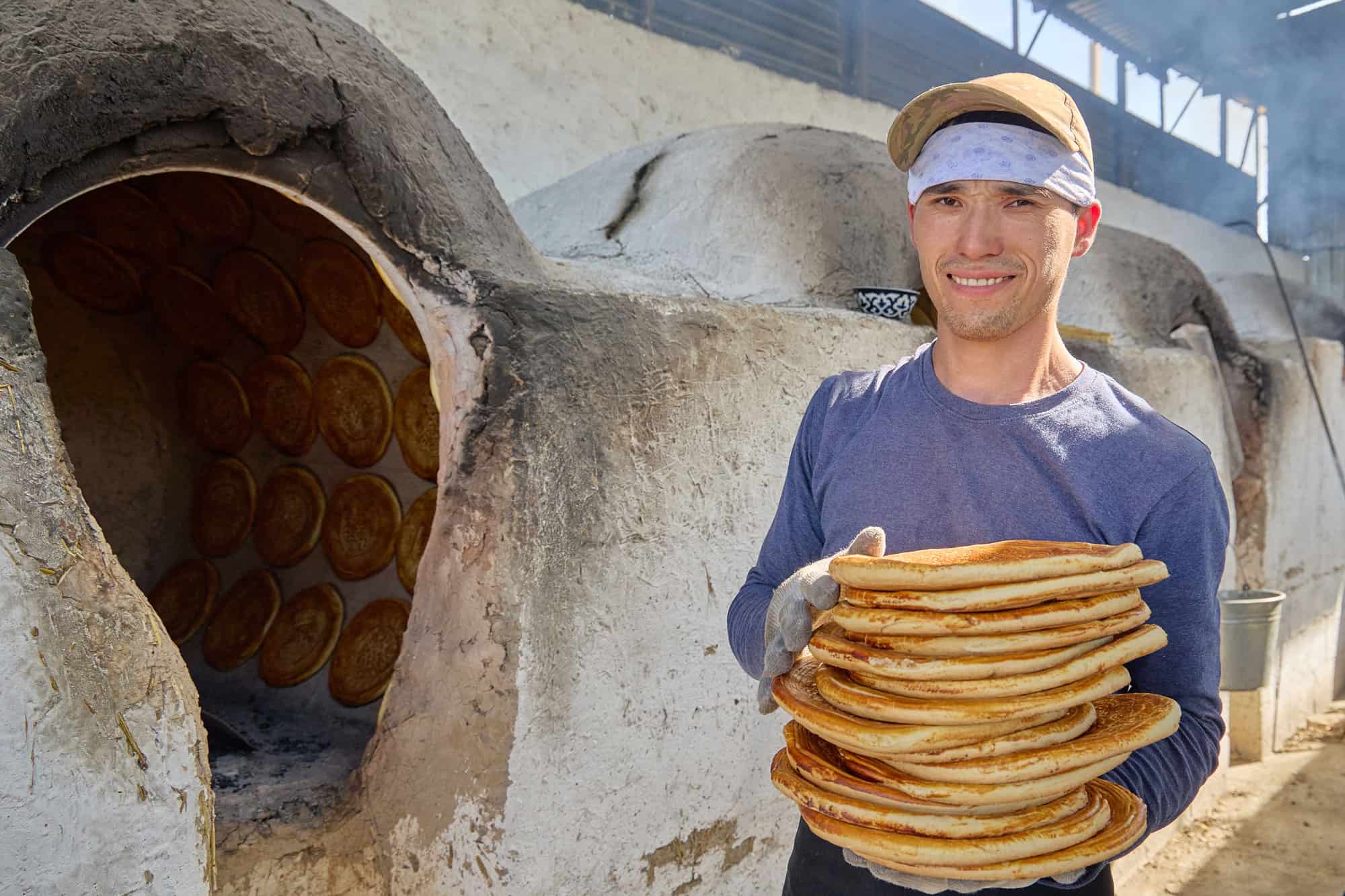
Non (bread)is not just an important part of Uzbek meals, but it also has important cultural significance as a symbol of hospitality and respect. There are many cultural traditions around breaking and offering bread to guests as it is believed this will strengthen relationships and foster goodwill.
Non is often cooked inside a clay tandyr (tandir) oven and is decorated on top through bread stamps or other designs. So it is not only delicious to eat, but also beautiful to look at. Each area has their own non or bread specialty so it is always a good idea to taste the local bread each place you visit. For example, patir non is a thin, flaky bread known for its buttery taste and slightly crisp exterior. Shirmov non from Namangan Region is made from cornmeal and is often served during festive events.
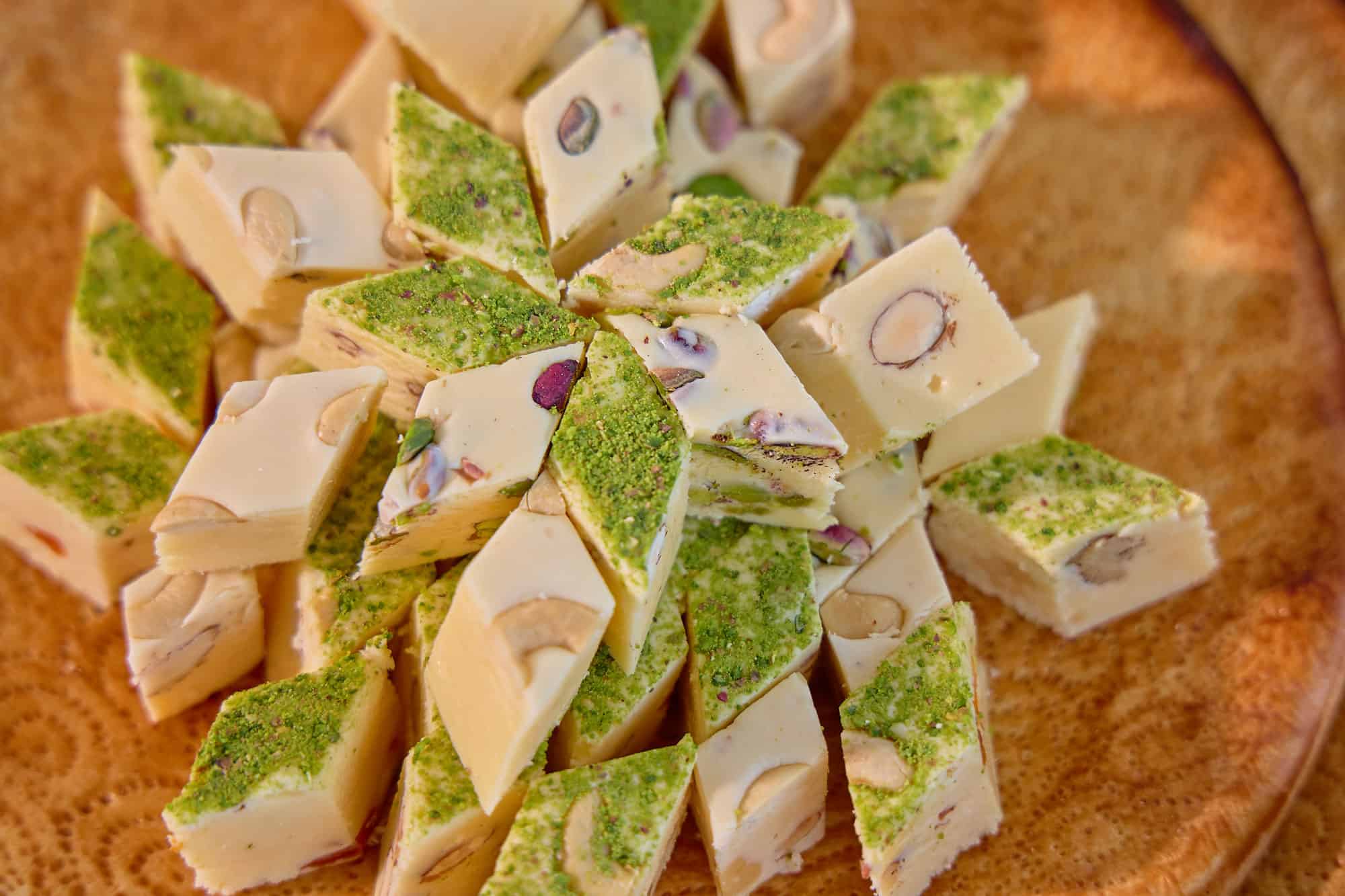
Havla means “sweetness” in Arabic and it is a beloved dessert throughout Uzbekistan and beyond. Kokand halva is famous in the region for its roasted flavor and crubly texture. It uses a an ancient recipe that has not been changed for centuries. The batter is made from roasted flour and butter combined with a sweet syrup and different nuts added to add to the flavour and richness. It is possible to go see the halva masters at work in Kokand.
Shahand halva in Namangan Region is also renowned for this dessert. It has a more chewy and elastic texture based on how the flour (and sometimes cornmeal) is roasted and its use of caramelized sugar. You can visit the shahand halva masters not far from Namangan city during the months of November to March.
Visiting the bustling markets and bazaars of the Fergana Valley in Uzbekistan is often one of the highlights of a trip. It offers a memorable glimpse into local culture and an opportunity to engage with local people. These vibrant hubs are not just places to shop — they are living museums of tradition, cuisine, and craftsmanship. Here, you’ll find colorful stalls brimming with fresh produce, piles of spices, stacks of bread, textiles and other handicrafts. All together this tells the story of the Fergana Valley’s rich cultural, artistic and culinary heritage.
Ask your host or guide for when the big market days are in the area you are visiting. Sometimes the markets run every day, but often Thursdays and Sundays have the most activity.
While most cities and towns will have their own markets and bazaars, the following is our list of recommended markets to visit in the Fergana Valley.

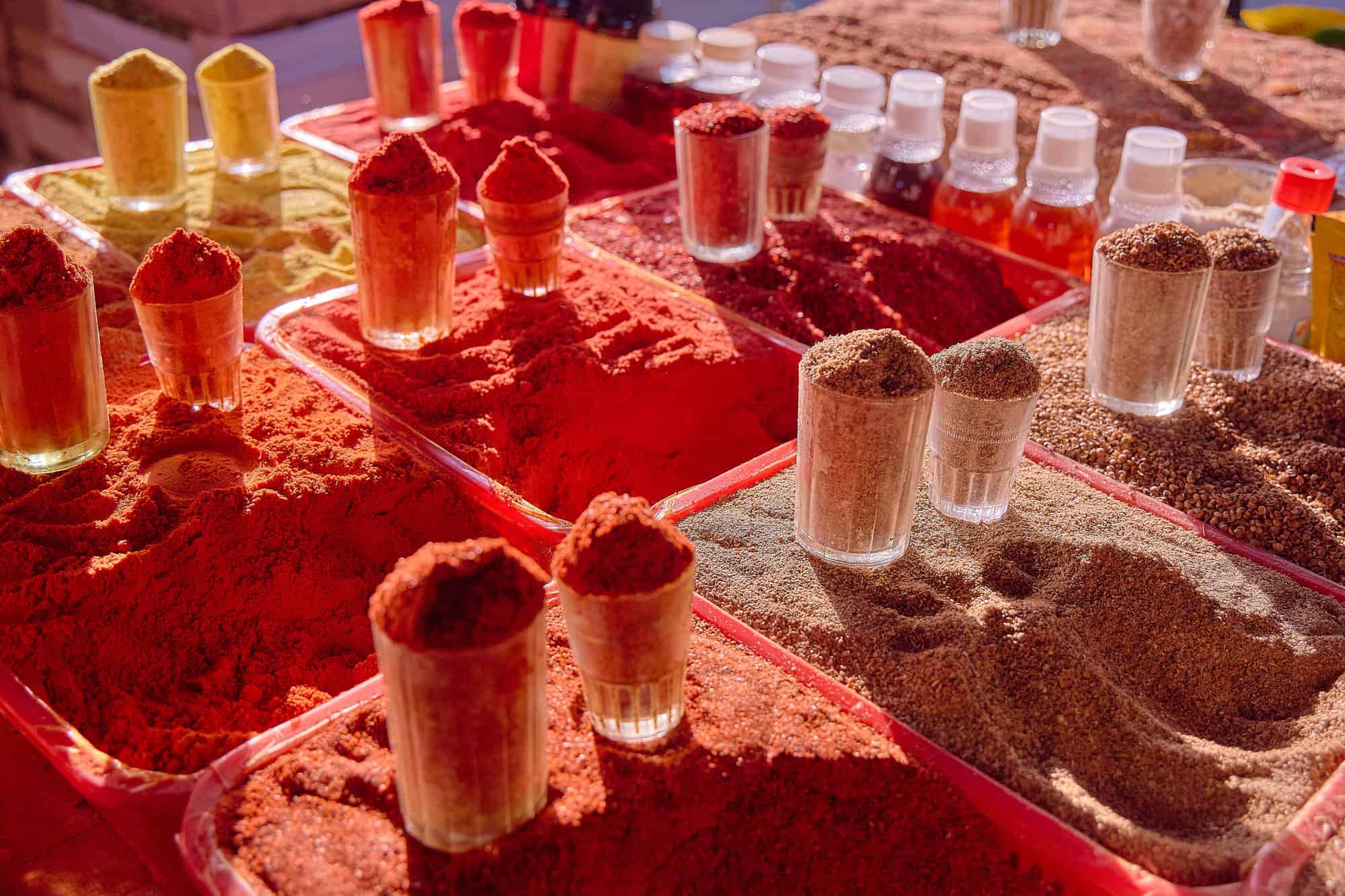
The Kumtepa Bazaar around 5km outside of Margilan in Fergana Region is one of the Fergana Valley’s oldest, most important and most vibrant markets. It is renowned for its deep connection to the ancient Silk Road when Margilan was — and still is today — a center for silk production.
This sprawling market only operates on Thursdays and Sundays, and is full of local people coming from neighborhing areas to buy and sell their goods. Many men and women are dressed in traditional clothing and use this time at the market to catch up with friends at the tea houses over pots of tea, baskets of bread and plates of plov.
Kumtepa is famous for its wide selection of ikat fabrics — adras and atlas styles — that are crafted using traditional silk-weaving techniques and designs that have flourished in Margilan for centuries. Beyond textiles, the bazaar is bustling with stands filled with fresh produce, spices, and breads, as well as offering local foods such as samsa and plov. This vibrant market scene with many opportunities to engage with local people and culture make Kumtepa Bazaar a highlight of a visit to Fergana Valley.
Note: Kumtepa Bazaar is quite large and can feel overwhelming at first to figure out where to go, especially if you want to see a specific section — e.g., ikat fabrics, fruits and vegetables, or handicrafts. We recommend that you visit with a local tour guide or as part of a trip with a local tour operator so that you have a local expert with you to help you enjoy the experience and engage with people without getting lost.
How to get to Kumtepa Bazaar: The easiest way to reach Kumtepa Bazaar is by taking a taxi there (e.g., with the Yandex app) from Margilan or Fergana City, which should cost only a couple of dollars each way

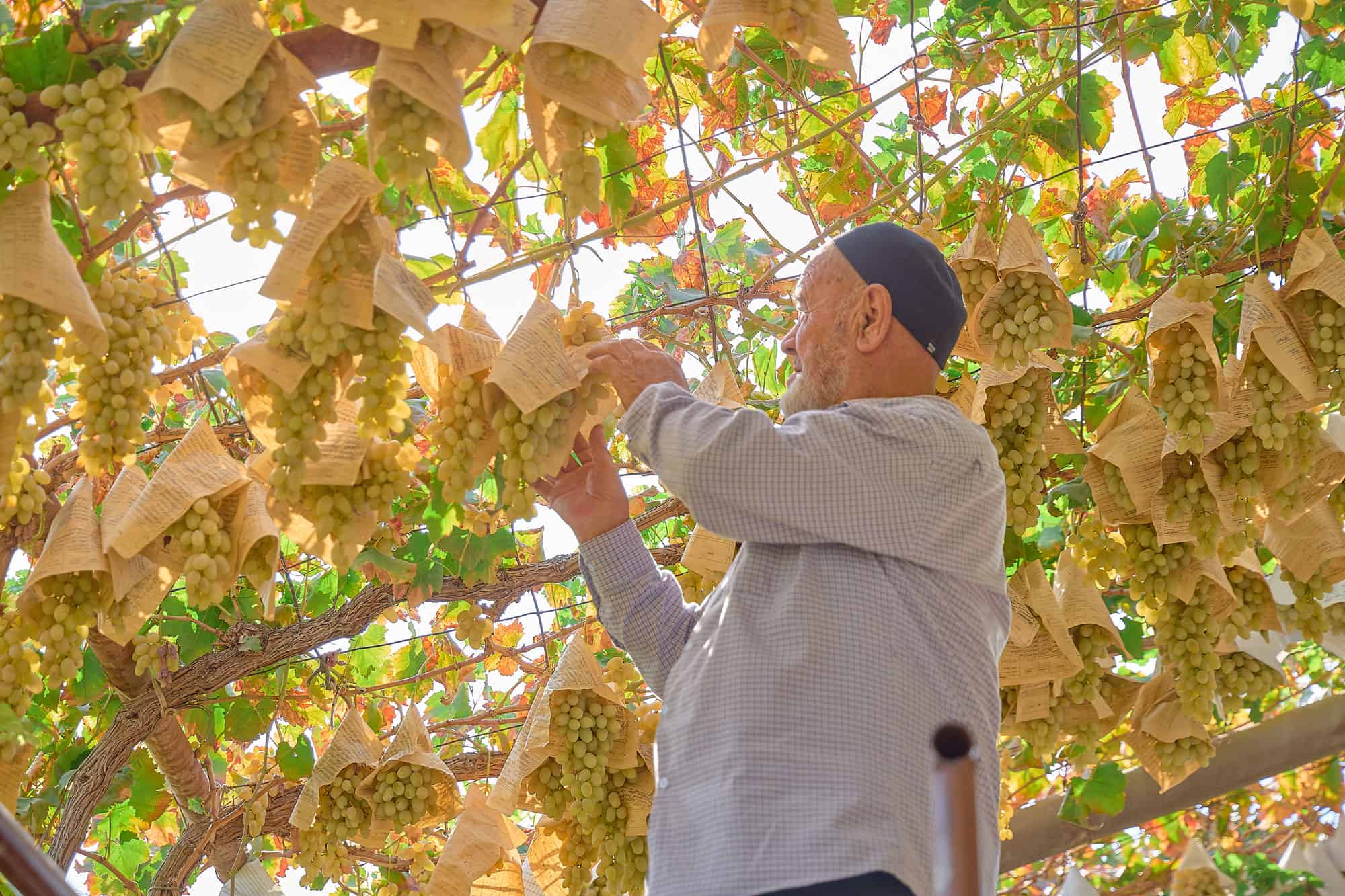
Located in Andijan’s old town area is a fresh market called Eski Bazaar that is filled with fruits, vegetables, breads, street food and much more. Depending upon the time of year of your visit you’ll see the different local produce freshly harvested, showing Andijan Region’s rich agricultural heritage.
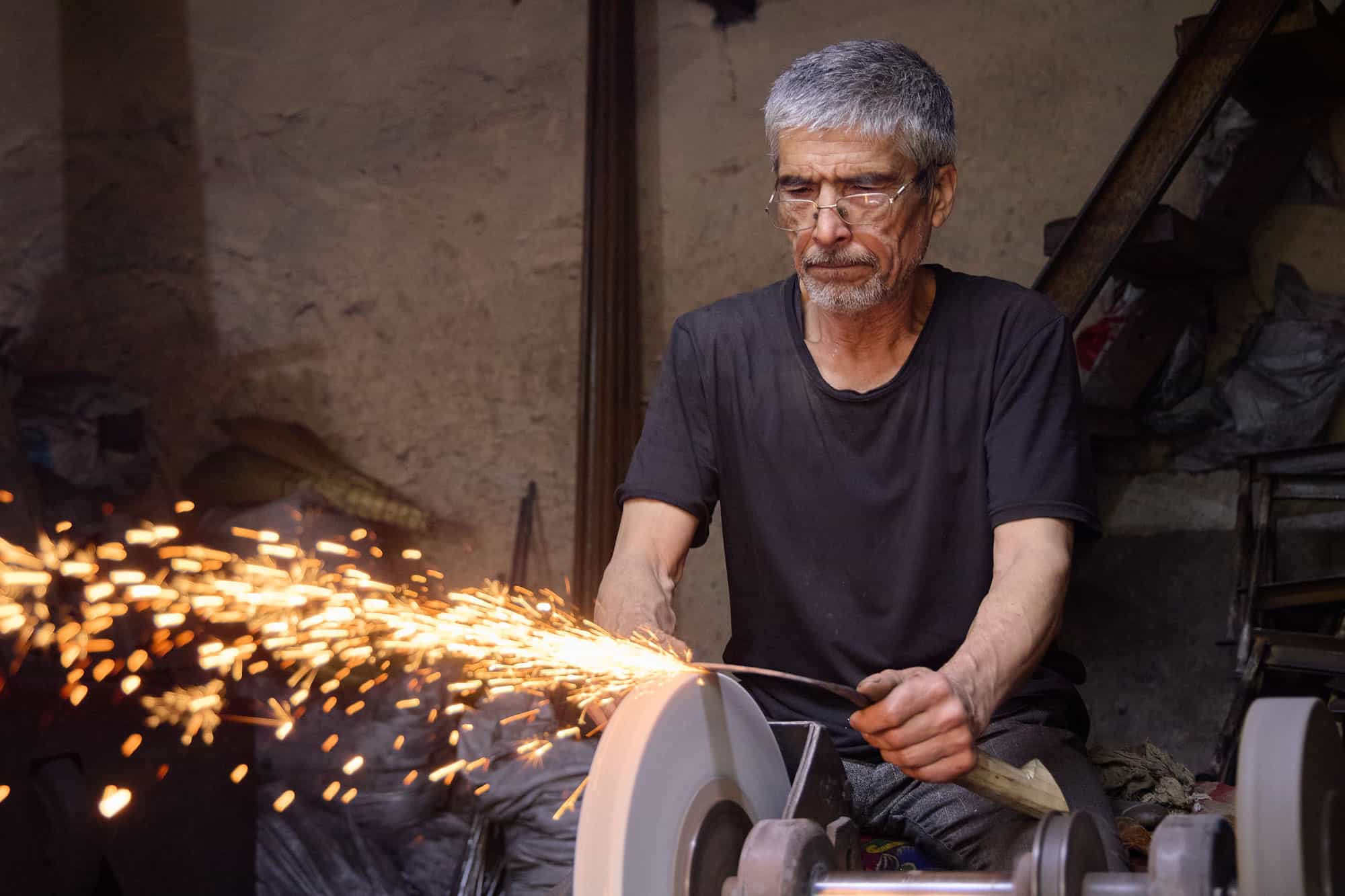
Located just outside is a street filled with local craftsmen selling handmade tools, household goods and a few handicrafts. Known as Craftsmen Alley, this is a great place to wander, engage with curious locals and learn about how the craftsmanship continues today in different types of handmade products.
As these are both relatively small in size they are easy to navigate and include in a walking tour of Andijan’s old town together with the Devonaboy Mosque, Jami Complex and Registan.
If you are interested in visiting another market in Andijan then check out Jahon Bazaar located around 4km north of the city. This huge, open-air market is the biggest on the Uzbek side of the Fergana Valley and is known as the place to get the best deals. Although it is open every day, Thursdays and Sundays are the most active days.

Chorsu Bazaar in the heart of Namangan is Uzbekistan’s largest inner-city market and is a bustle of activity that spills out onto the nearby streets. Filled with stands with piles of fresh produce, spices and breads, Chorsu Bazaar is a place to explore to not only enjoy the colorful market scene, but also to meet friendly vendors and local people. Enjoy sampling delicoiusly sweet fruits as you make your way through the market stalls.