

Connect with Fergana Valley’s rich artisan and handicraft culture by visiting artisan workshops and buying local handmade handicrafts through the Fergana Valley CTN network of artisan and handicraft members. In addition to being able to buy handicrafts and souvenirs directly from the artisan, some studios below offer tours or masterclasses so that you can learn firsthand about traditional techniques and crafts directly.
Below is the list and profiles of Fergana Valley CTN artisan members who are looking forward to welcoming you at their studios and shops. Many of these artisans are also included in our Fergana Valley CTN Recommended Routes. We highly recommend working with one of the CTN tour operators or tour guides to arrange visits with the artisans and book masterclasses in advance. Please get in touch if you need any more details about one of our CTN artisans.
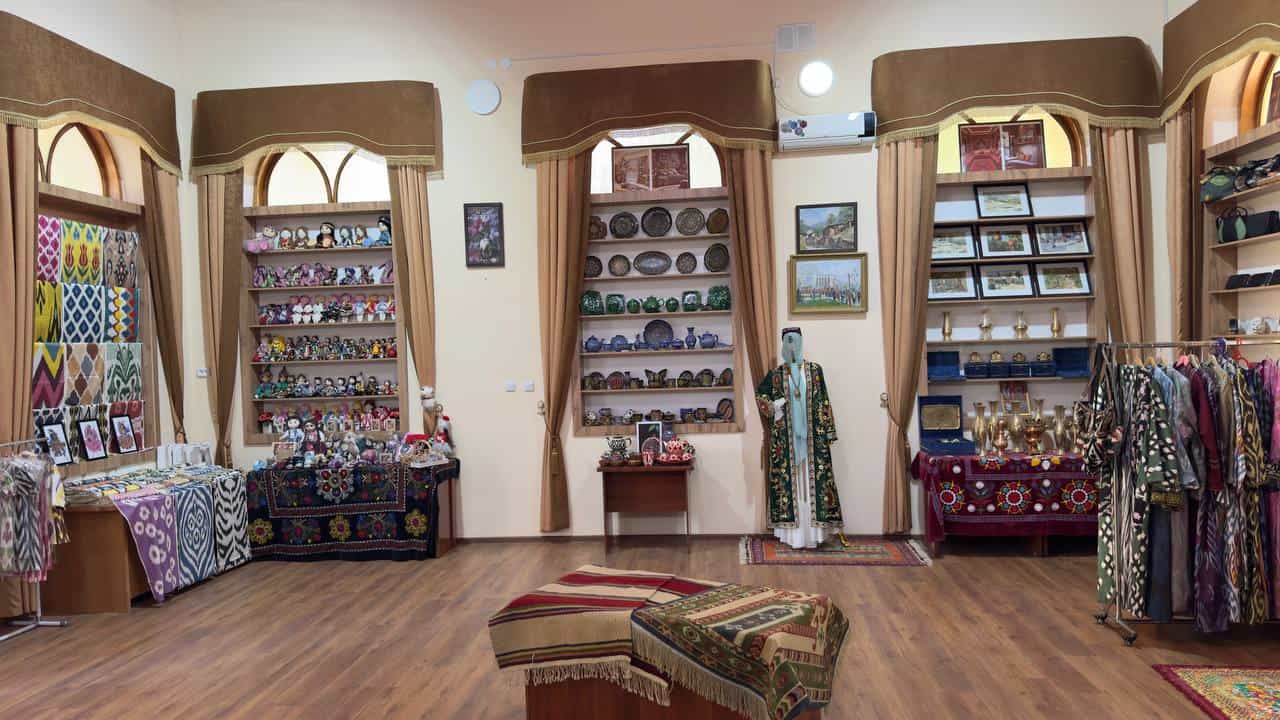
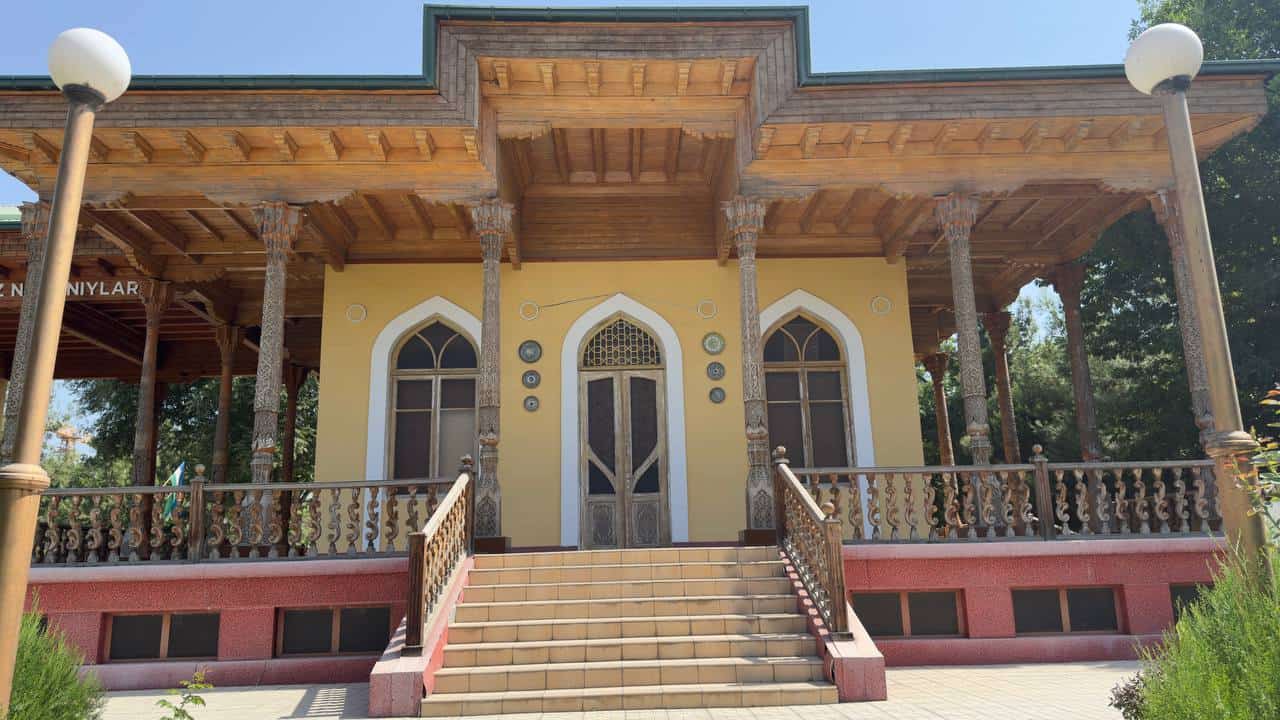


Craft House offers visitors an introduction to the world of traditional Uzbek craftsmanship! Featuring the handicrafts of many CTN artisans, Craft House is more than just a gallery. It is a place where tradition, culture, and handmade beauty come together. Every piece carries a story, a human touch, and the spirit of Fergana Valley’s rich cultural heritage. Guests will have the opportunity to meet local artisans and watch them carry on these handicraft traditions.
Crafts House offers a photo corner styled like a traditional Uzbek home. Open every day from 10:00 to 18:00.
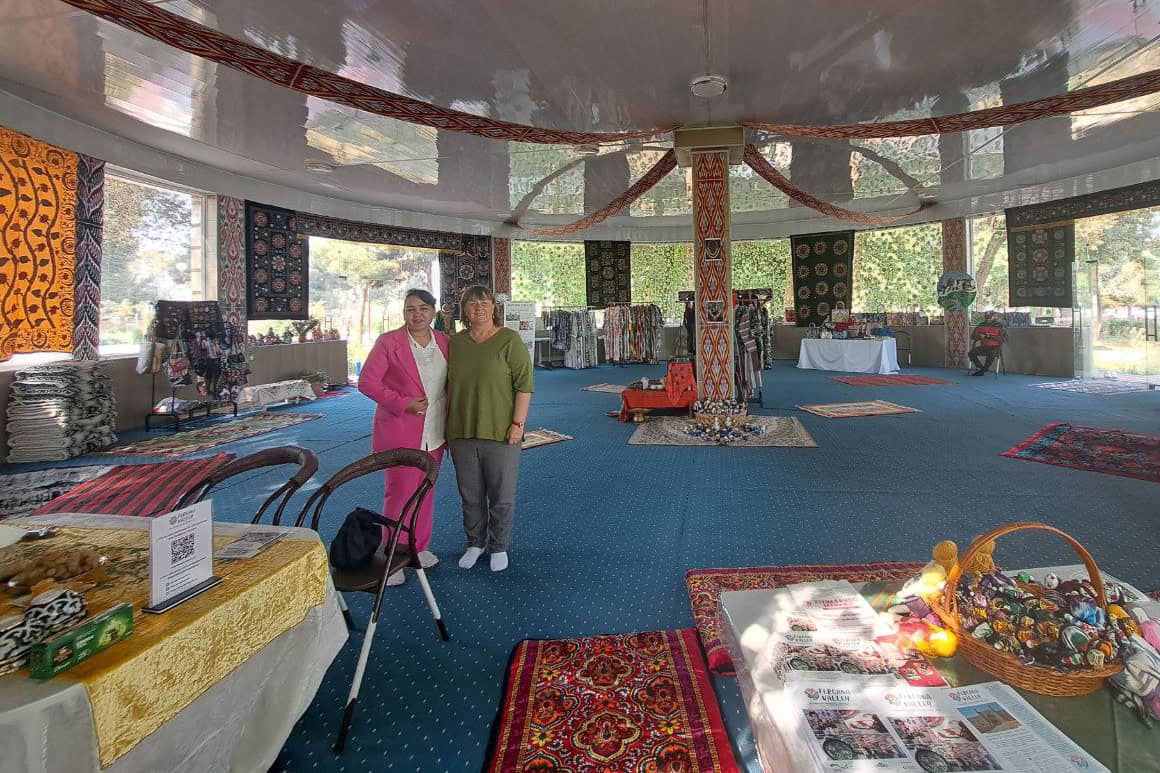
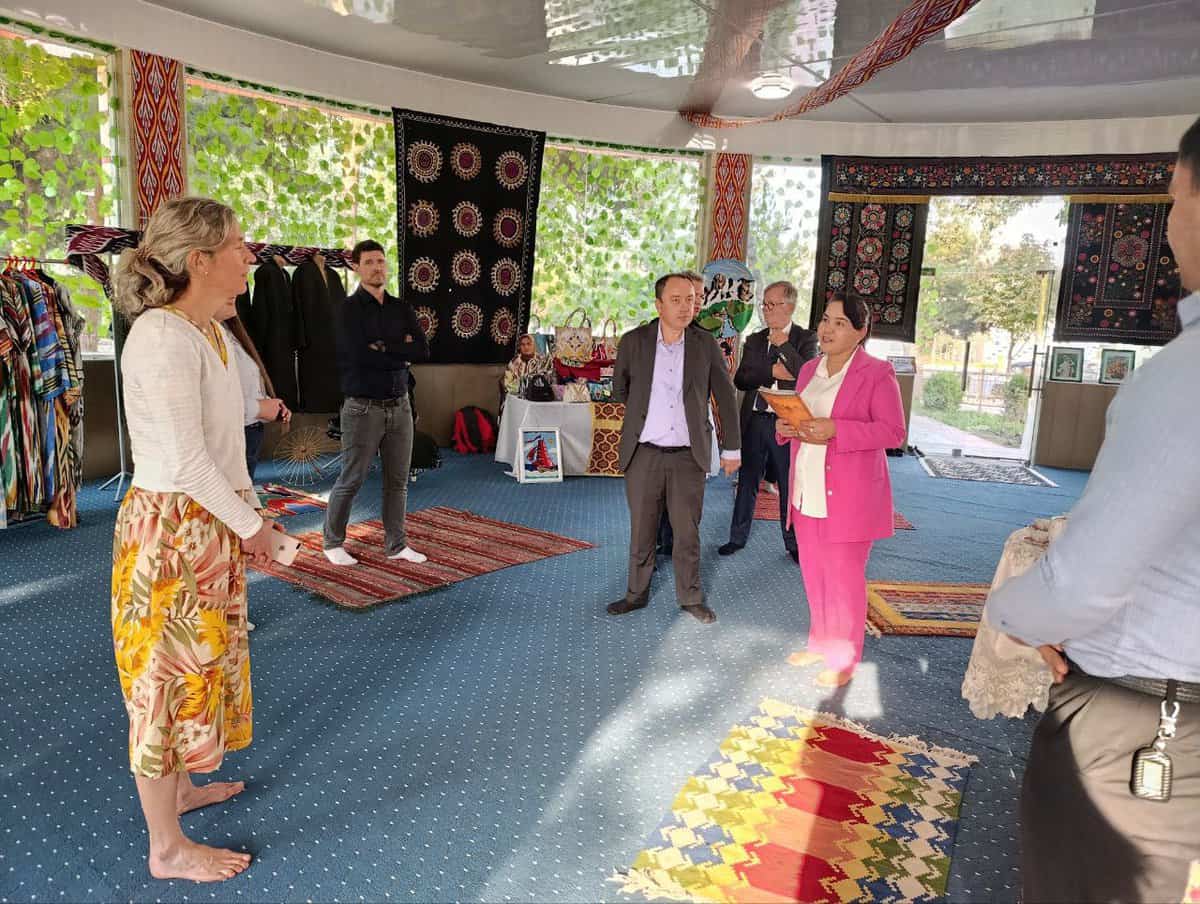
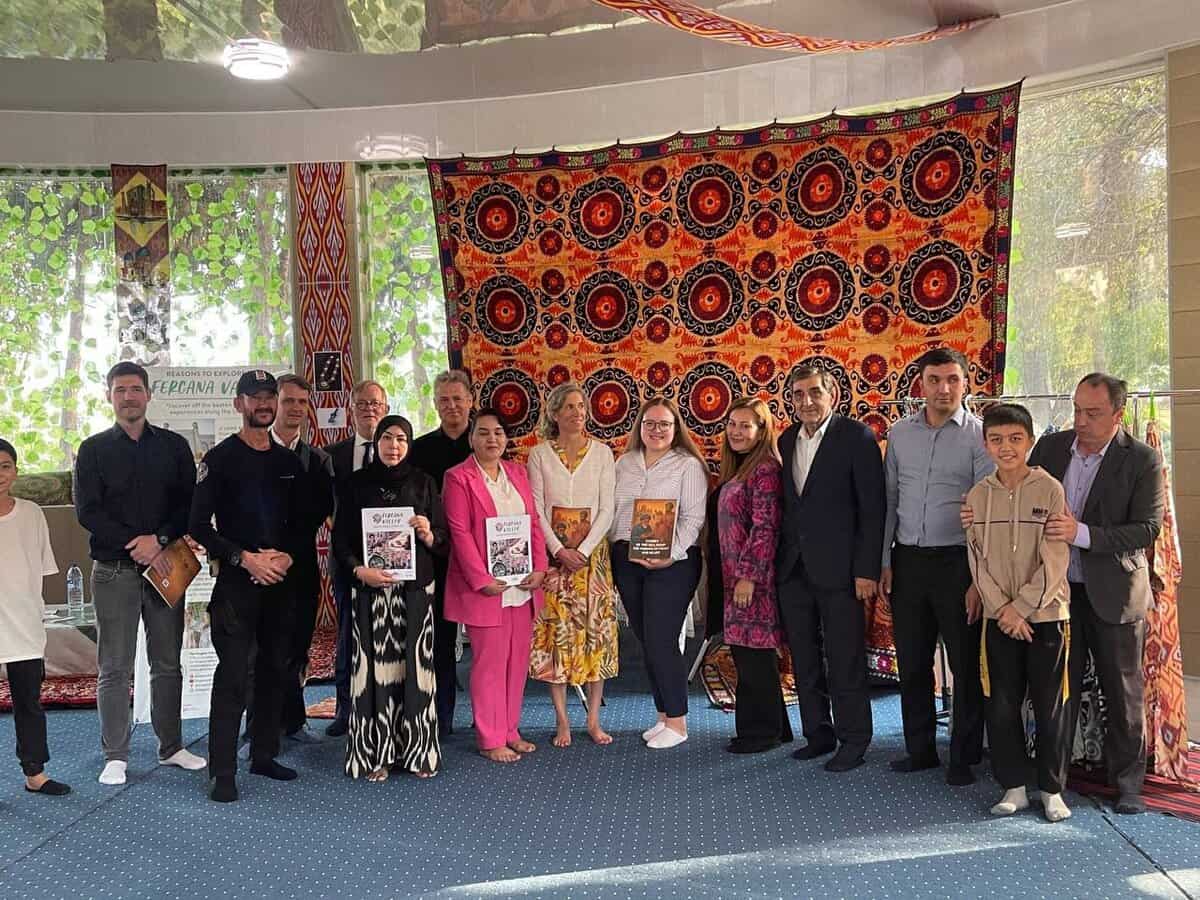
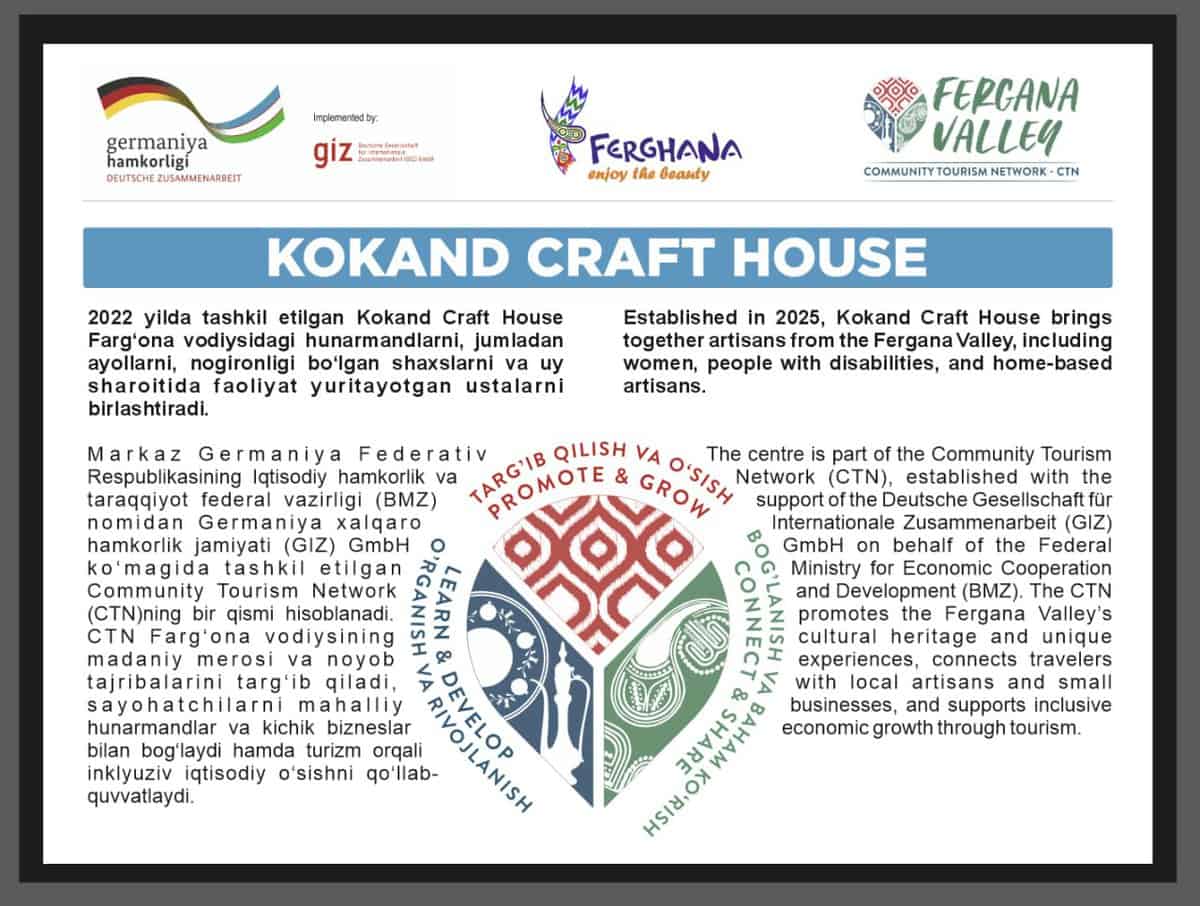
Established in 2025, Kokand Craft House brings together local artisans from the Fergana Valley, including women, people with disabilities, and home-based artisans. Located at one of the traditional Silk Road crossroads in Kokand, the Craft House is home to more than 10 artisans and displays their work. It provides a beautiful and warm space for local people, artisans and travelers to come together to learn about local handicrafts and culture. And to enjoy tea, coffee and snacks in a relaxing setting surrounded by traditional Uzbek handicrafts.
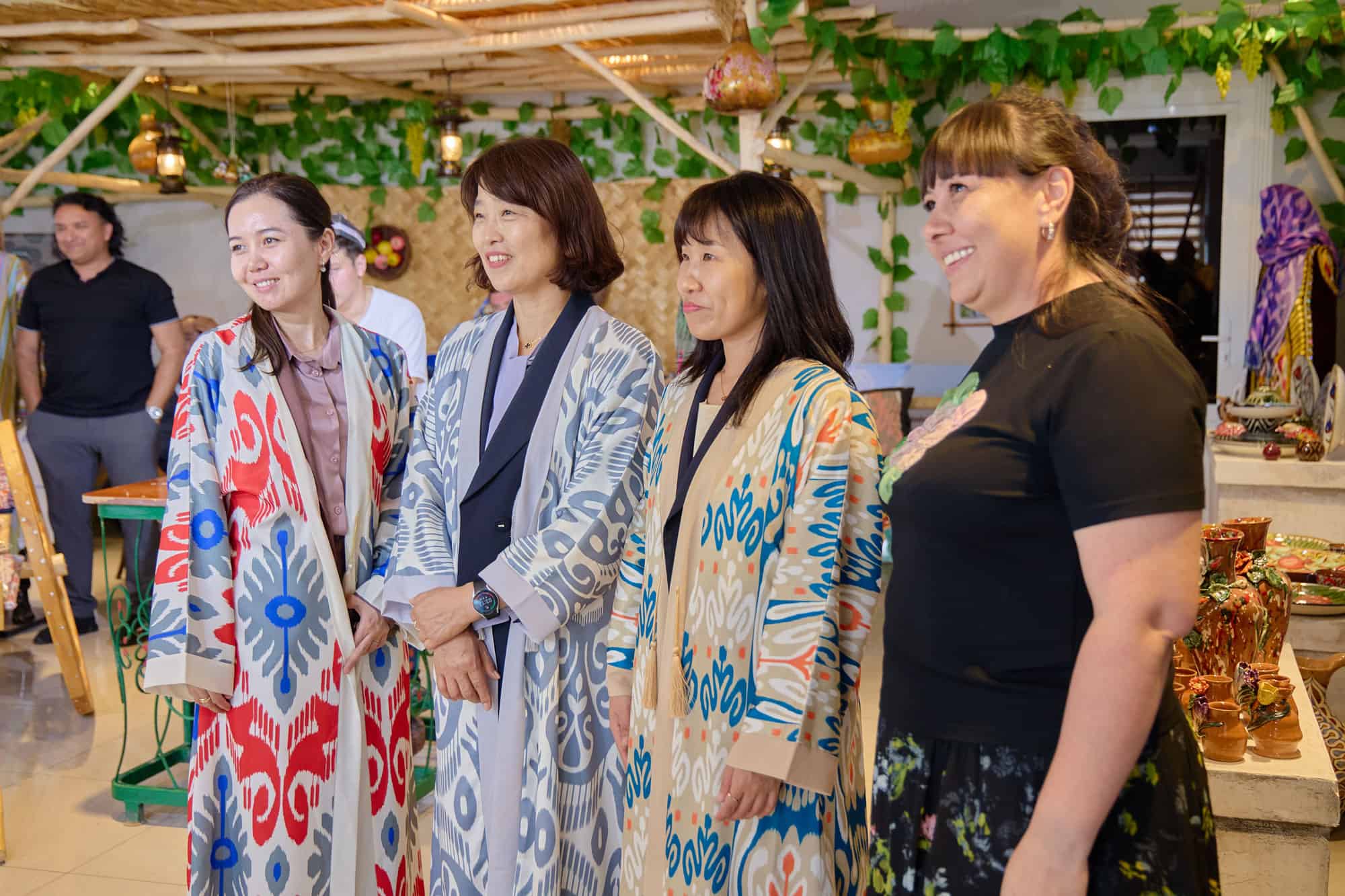
Visitors can enjoy dressing up in Uzbek National Costumes, shopping for local eco-friendly handmade handicrafts and souvenirs, and even take part in a jewelry or suzani (embroidery) master class. When you can meet the artisan behind the gift or handicraft, it makes it all the more special and unique.
Kokand Craft House is located close to Kokand’s Jome Mosque and Palace of Khudáyár Khán. Open every day from 09:00 to 18:00.
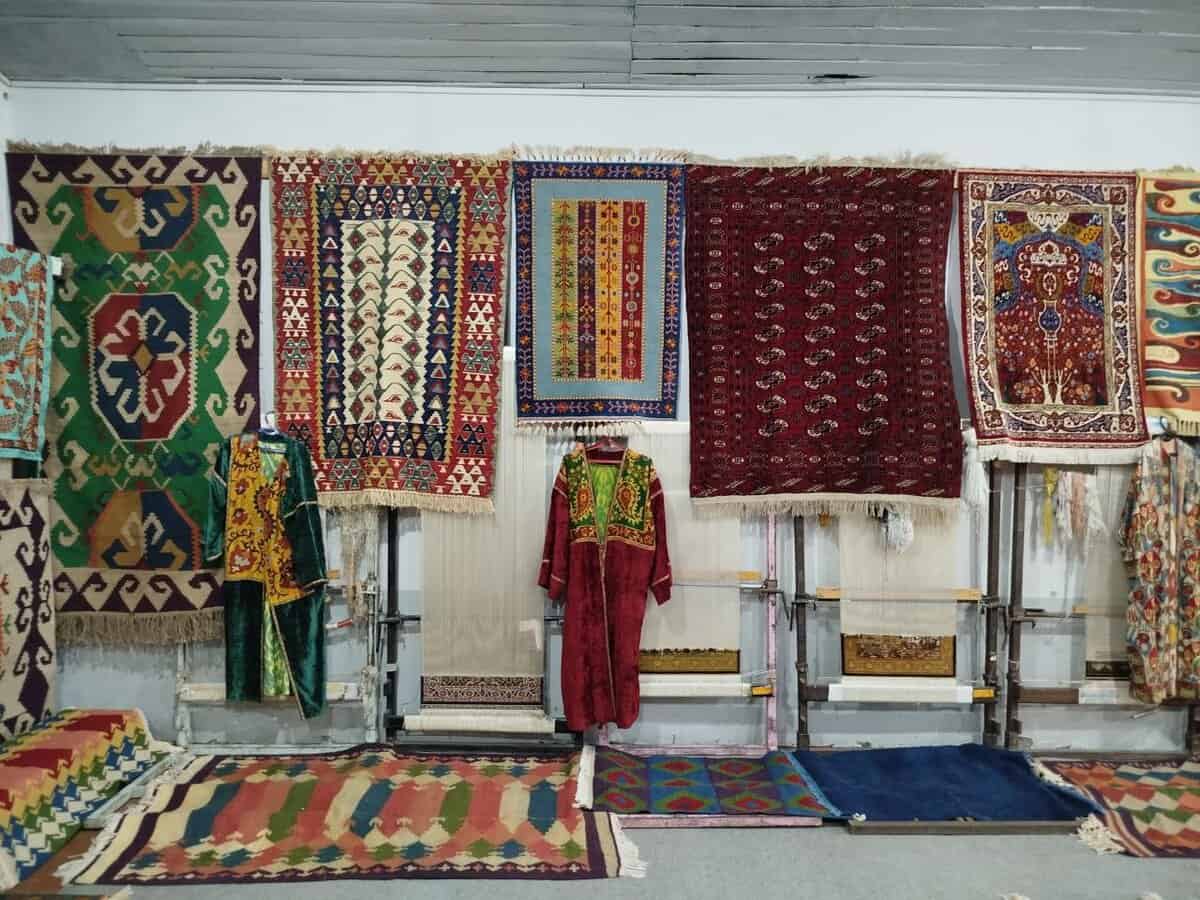


Located in the Carpet Room at Yodgolik Silk Factory in Margilan is the gallery of artisan Nargiza Sherhodjaeva (Ahralobna). This colorful and warm workshop showcases her own work, as well as carpets, suzani (embroidery), national clothes, purses, ikat and adras fabrics from other local artisans.
Nargiza was inspired by the training received during the GIZ-funded project to create immersive travel experiences and a place for travelers to engage deeply with local culture and artisans. Visitors can not only shop for handmade handicrafts and art from local artisans, but they can also take part in embroidery and carpet weaving classes. They can make their own souvenir to take home.
The Carpet Room at Yogdorlik Silk Factory is open Monday to Saturday from 09:00 to 17:00.
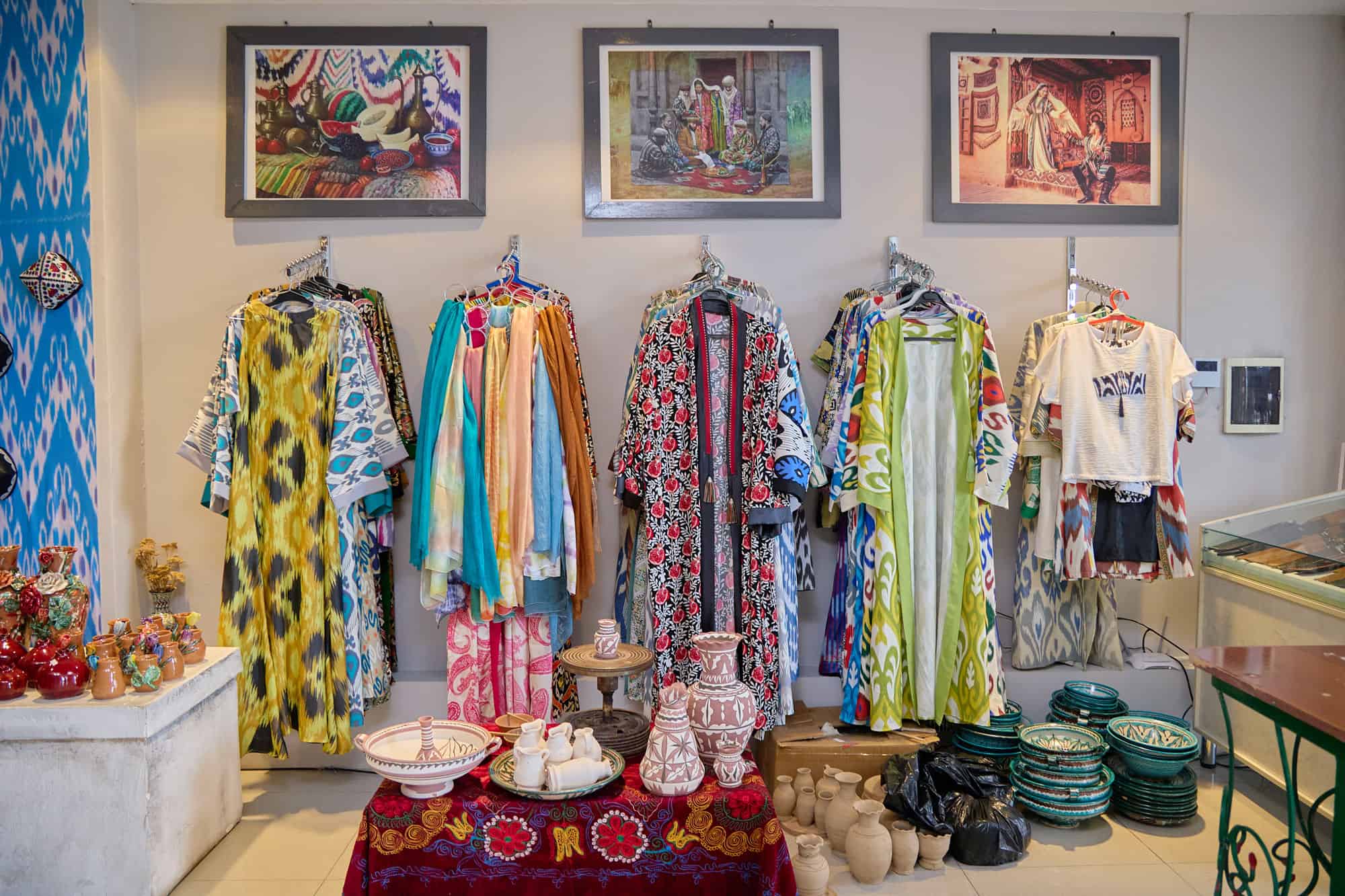
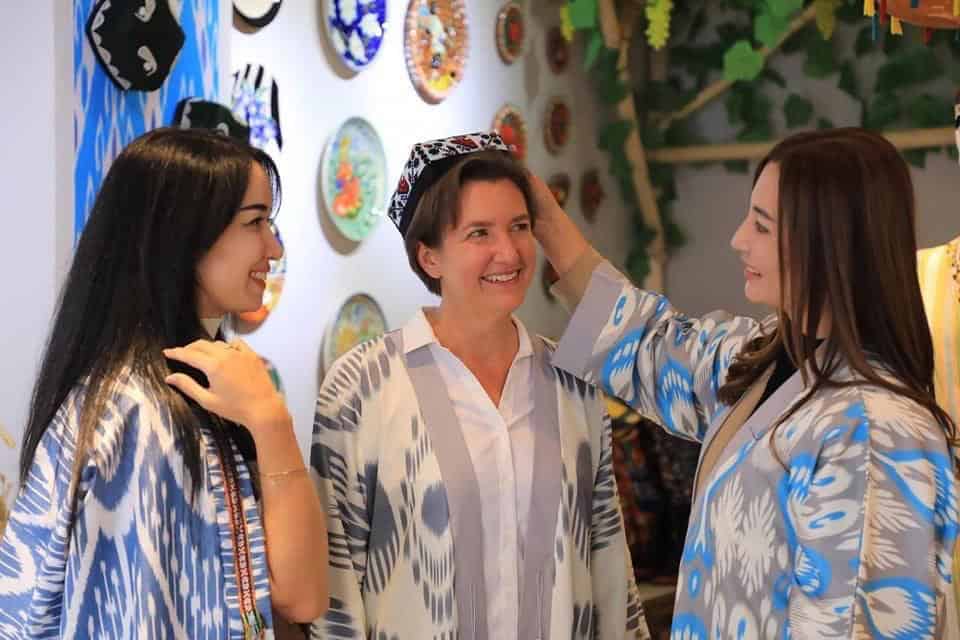

Marina Djabbarova is the visionary behind Silk Granat. Her passion for Namangan’s artisan heritage shines through every piece she brings from the Fergana Valley and her goal is to connect Namangan’s craftsmanship to the world. With deep-rooted relationships within the artisan community, Marina looks to promote local artisans more broadly to reach new markets.
At the heart of her endeavors is her retail handicraft shop in Namangan City that elevates local artisans by providing them with a space to display their unique creations. From intricate embroideries to finely crafted textiles, visitors can buy high quality locally sourced handicrafts that support local artisans.
Through Silk Granat, Marina is sharing not just products, but a rich cultural legacy.

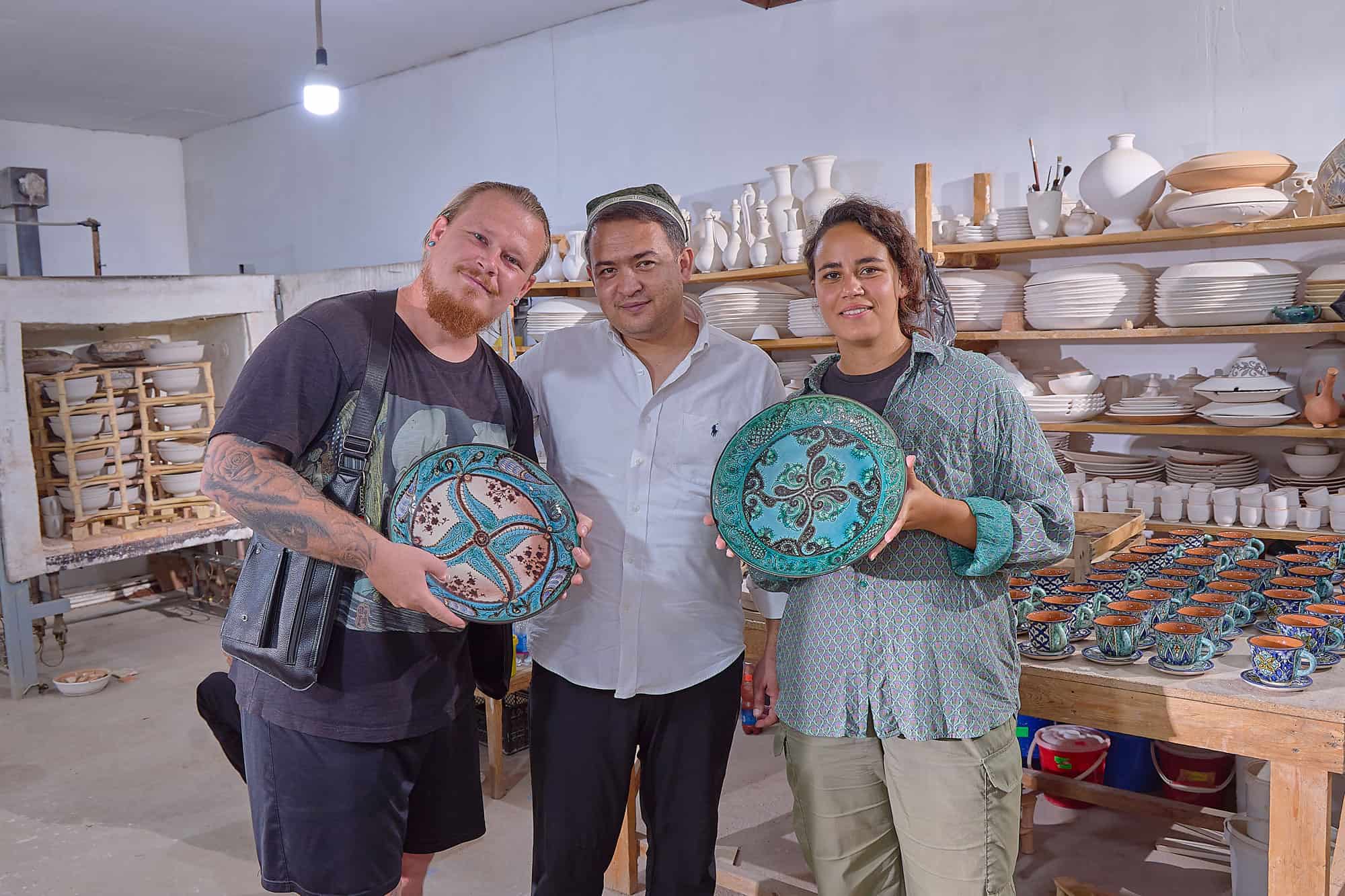

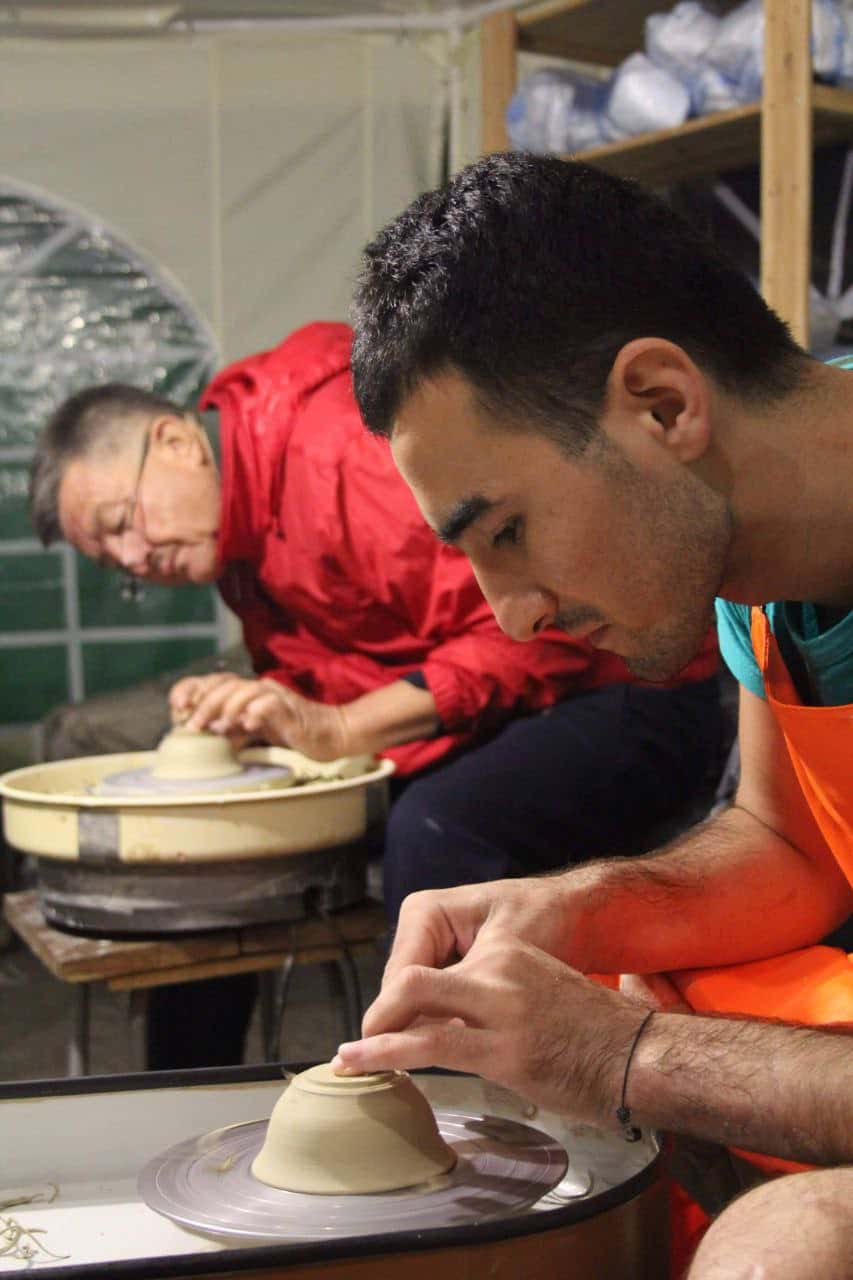
Diyorbek Nazirov’s pottery business is dedicated to creating unique ceramic pieces using only local resources sourced within 20km of Rishtan, the famous centre for pottery in Uzbekistan where much of the pottery is still made today using traditional methods. He comes from a family of artisans who crafted the famed tiles of Khudoyar Khan’s palace in Kokand, passing down a skill refined along the Silk Road.
Diyorbek is committed to preserving and advancing his family’s rich legacy and balances traditional production methods with innovative designs. He carries on the tradition alongside his family, infusing each piece with Rishton’s symbols of life, prosperity, and beauty. Birds, fish, pomegranates, and almond flowers interweave on each piece, alongside timeless geometric designs influenced by Islamic art. Each design reflects the patience and care instilled through years of training. Going back to his family’s roots, he has learned how to collect all ingredients from nature including the glazes as it was done centuries ago.
For Diyorbek, every piece of pottery is more than an art form; it’s a connection to Rishtan’s heritage, passed from artist to apprentice.

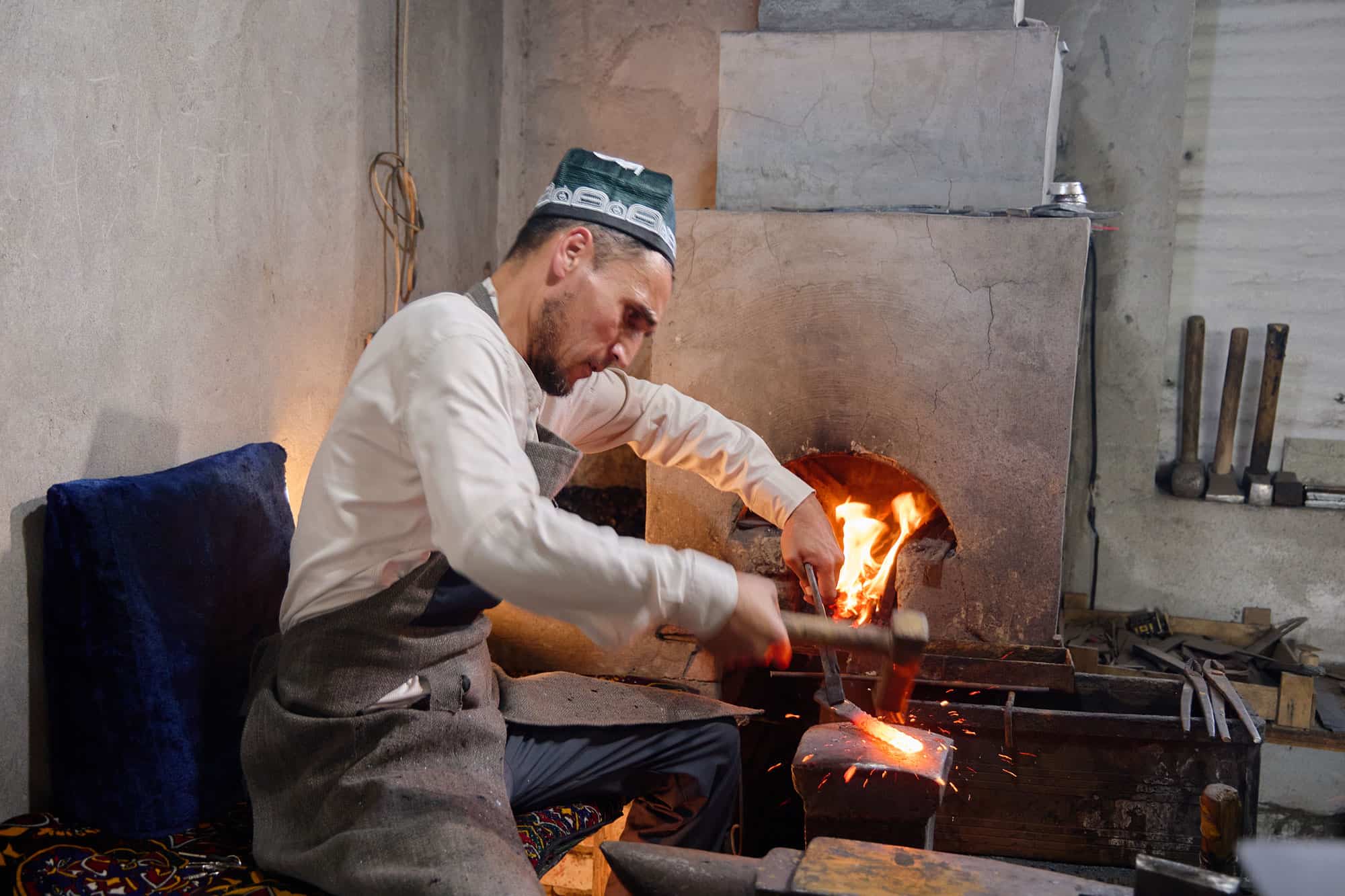

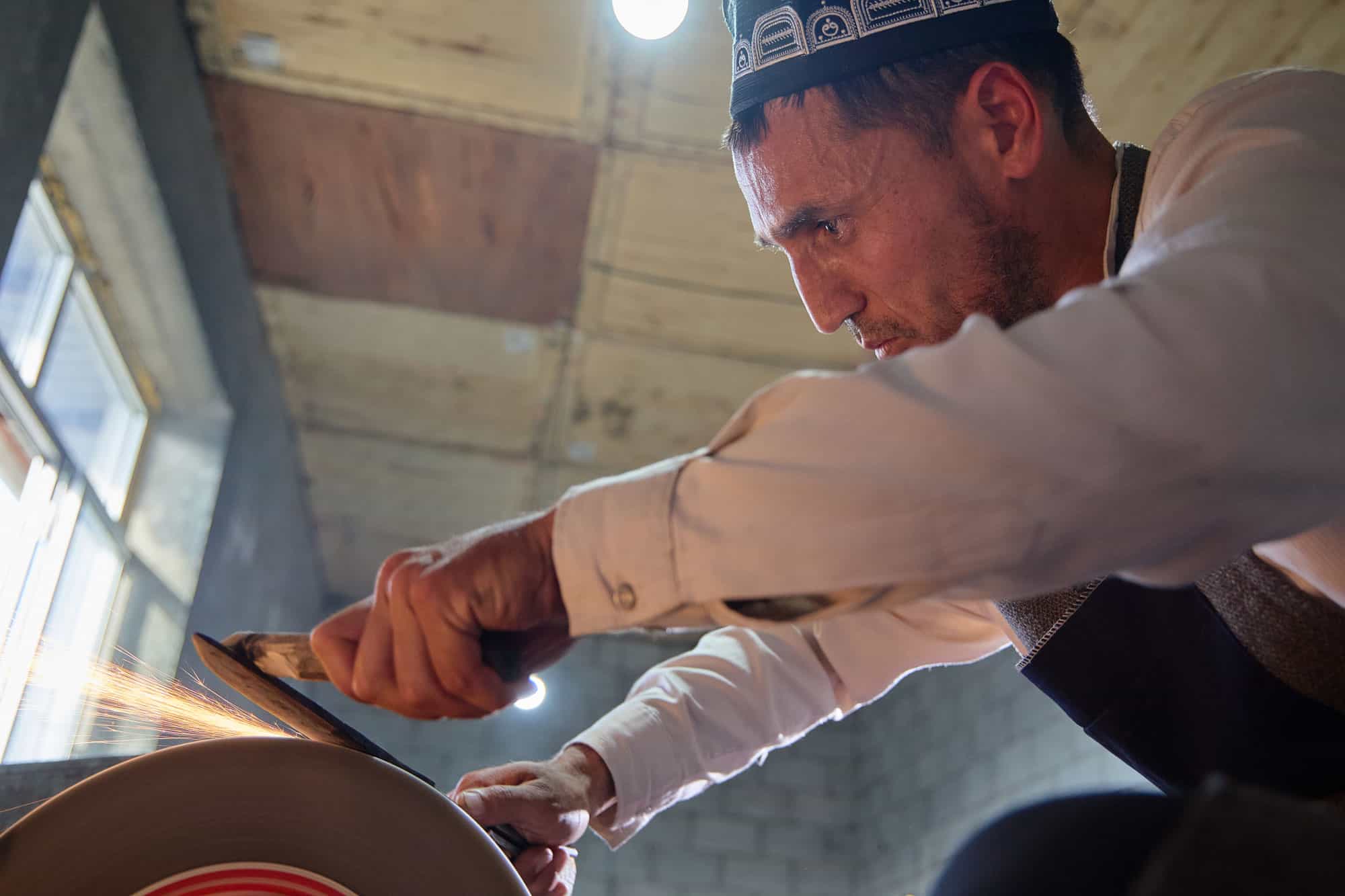
Muzaffar Umarov is a 10th generation knifemaker from the historic town of Shakhrikhan in Andijan Region where knife making has roots dating back to the Silk Road. He brings this ancient art to life with his creativity and skill. His knives aren’t just tools; they are works of art crafted with passion and skill passed down through centuries.
Muzaffar has endless creativity and makes limited ranges, meaning that each knife is unique and a collection worthy. Using Damascus steel and unmatched attention to detail, Muzafar’s knives are highly sought after. With his ever evolving custom ranges his creations reflect a deep pride in Shakhrikhan’s tradition and a commitment to innovation.
Each knife is made with love and when you use it, “you will feel something special.”
With his ever-evolving custom ranges his creations reflect a deep pride in Shakhrikhan’s tradition and a commitment to innovation. His vision is to elevate the profile of Shakhrikhan’s knife-making heritage and history. He has recently opened a shop in Shakhrikhan and loves sharing his craft with visitors.
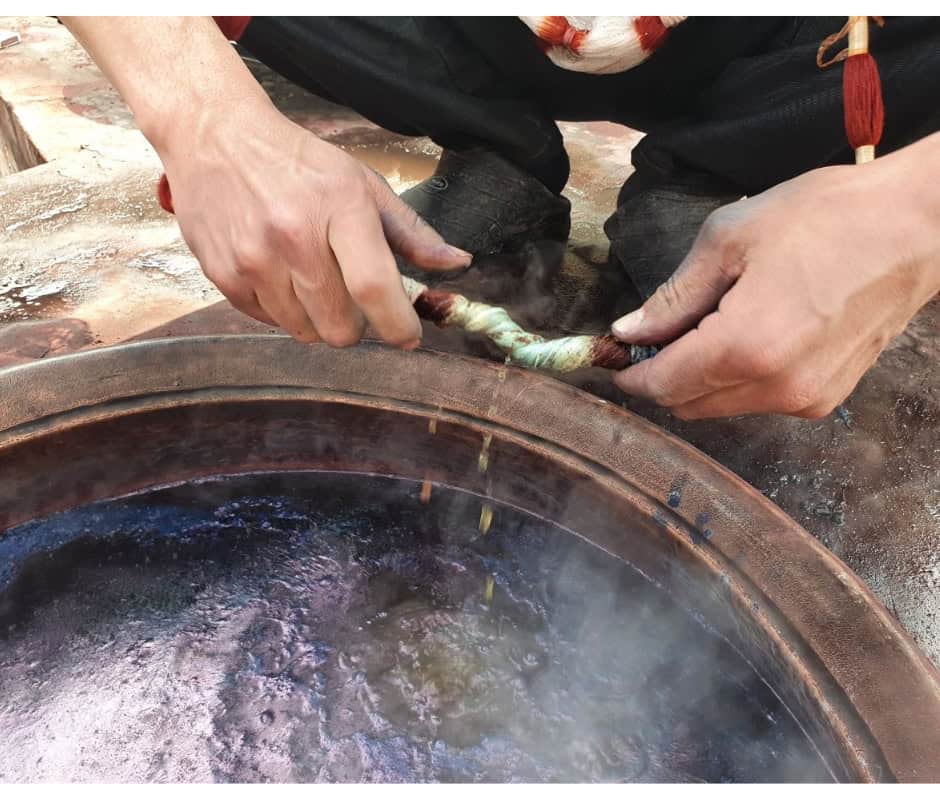

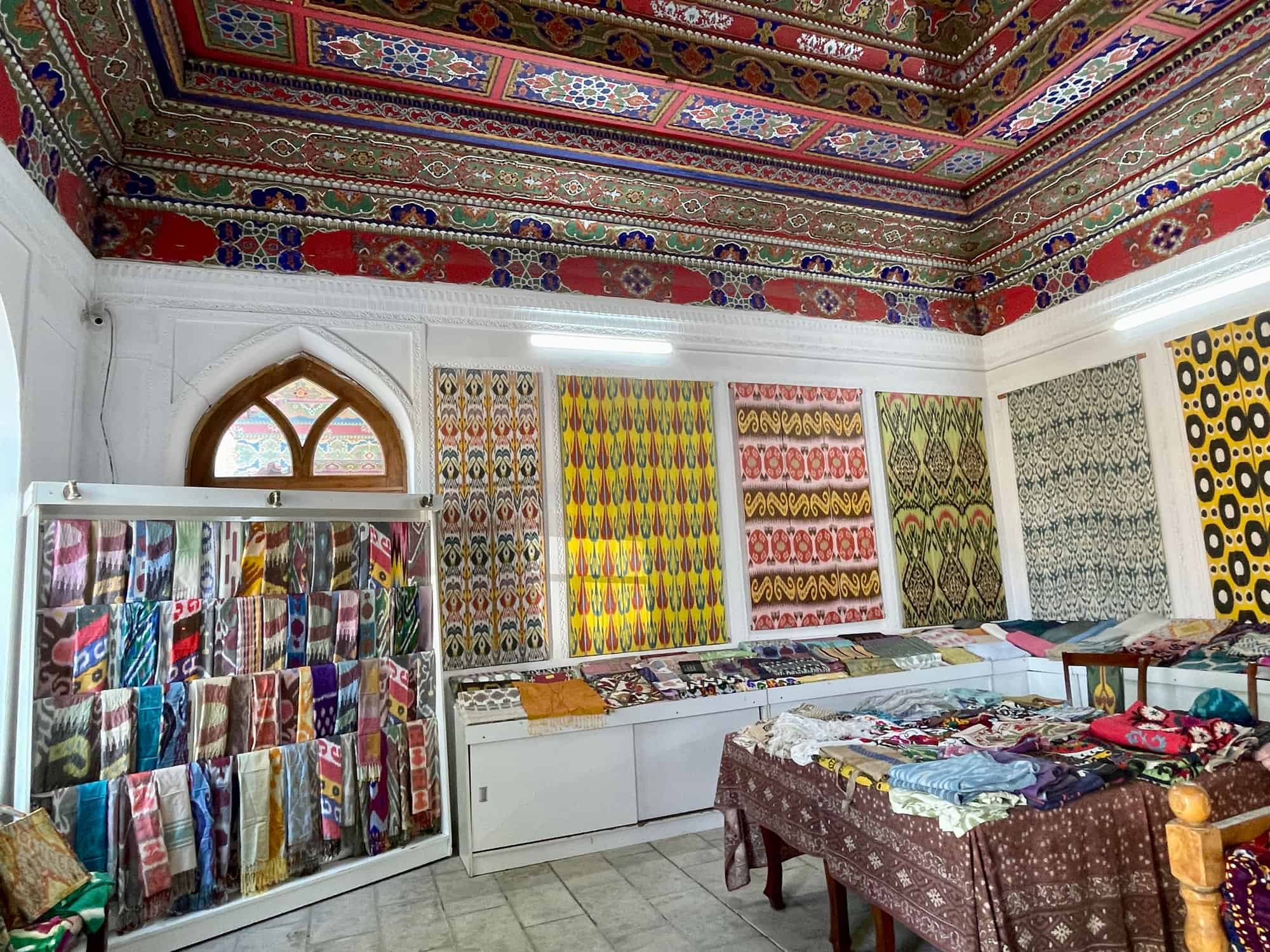
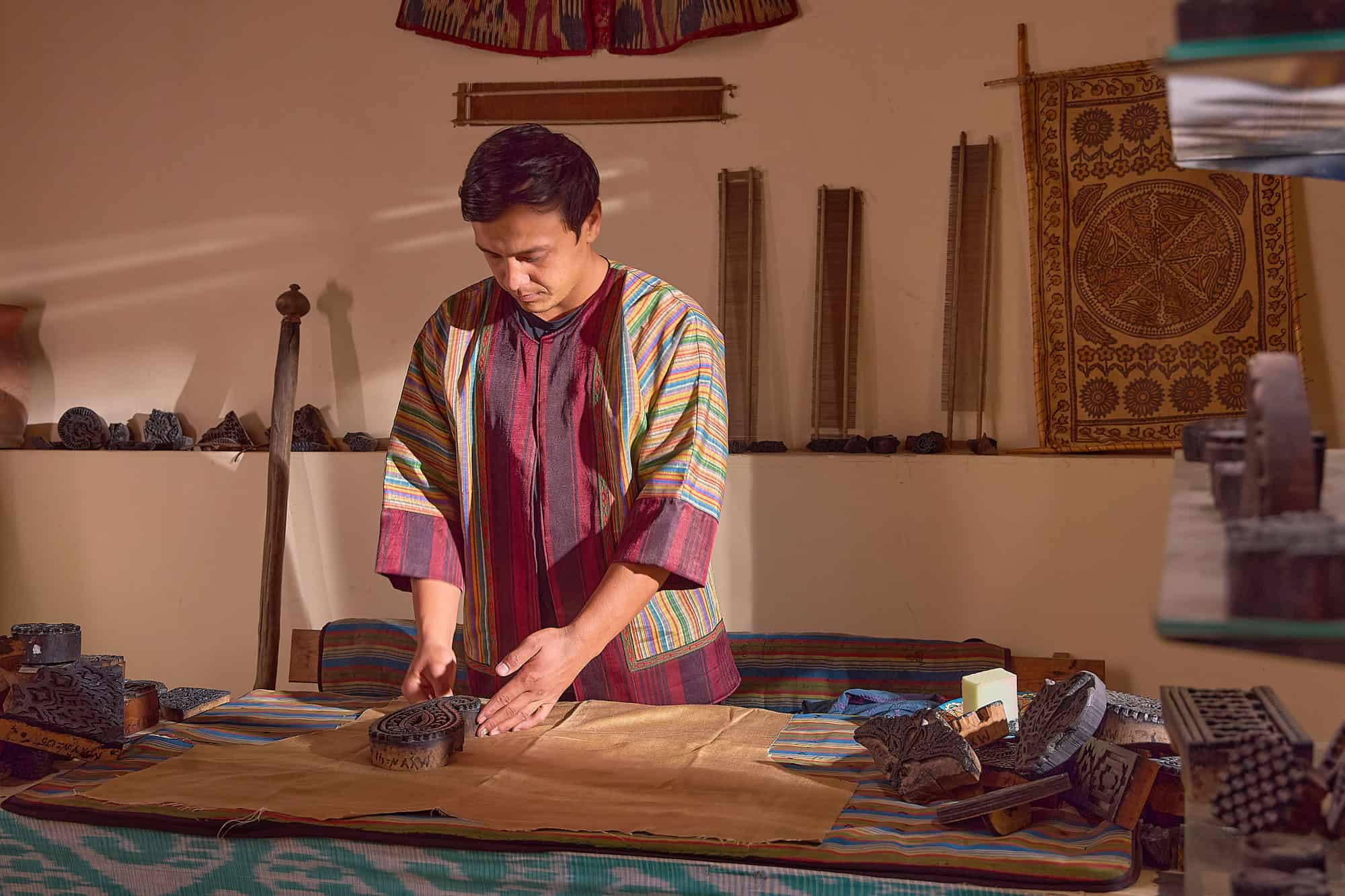
Discover the legacy of ikat weaving with Rasuljon Mirzaahmedov at his Margilan Crafts Development Centre located in the beautiful 19th century Said Akhmad-Khoja Madrassa in Margilan. Rasuljon carries on a family legacy that spans nine generations of master ikat weavers. Trained by his renowned father, Turghunbay Mirzaahmedov, Rasuljon has dedicated his life to preserving the art of ikat, a vibrant textile technique that transforms threads into breathtaking patterns through the ancient process of tying and resist dyeing.
His journey has led him to create the exquisite “a’lo bakhmal” velvet ikat – which even caught the eye of legendary designer Oscar de la Renta. This revival of historic textiles earned Rasuljon the prestigious UNESCO “Seal of Excellence” in 2005.
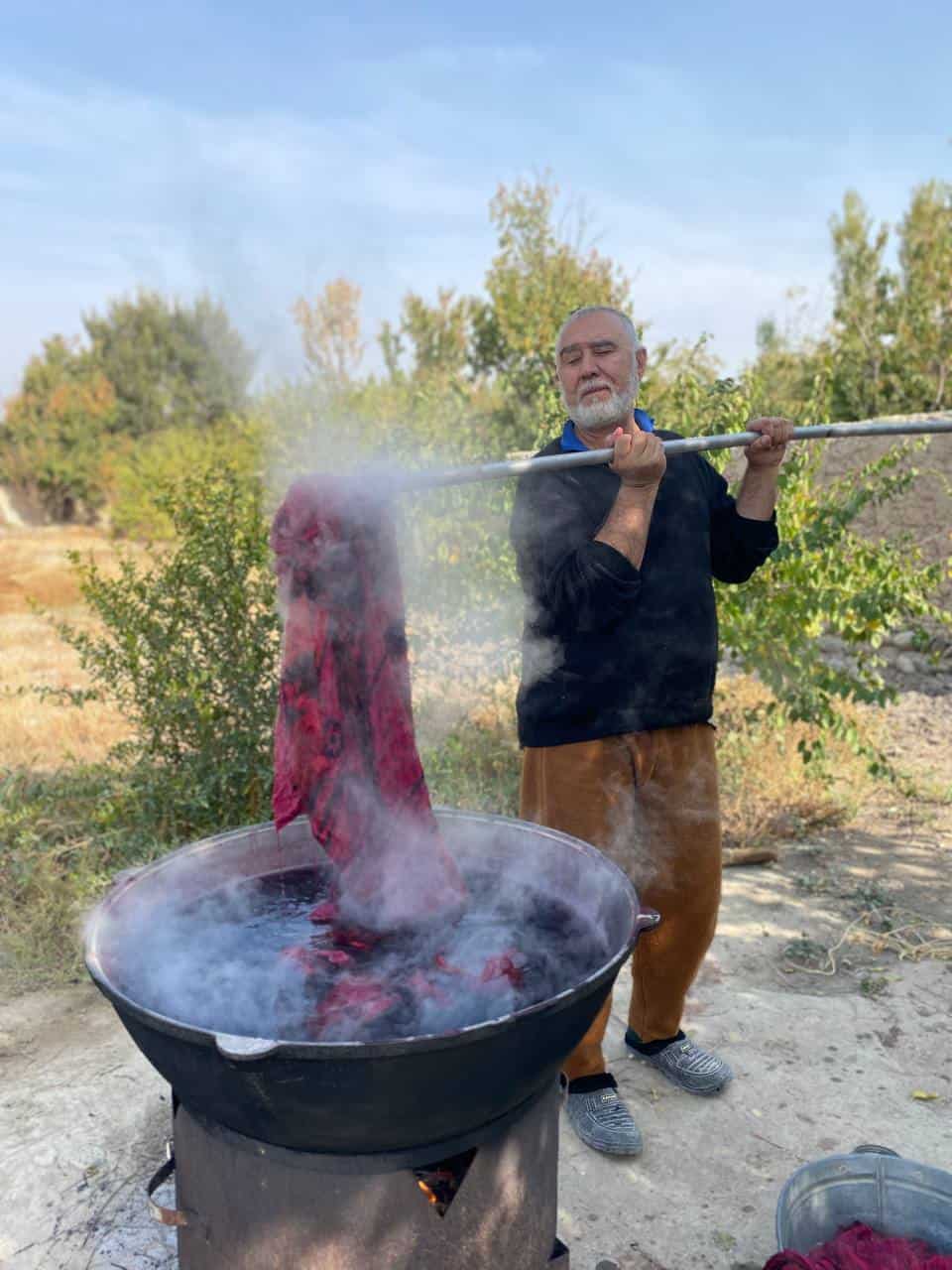
As a passionate advocate for natural dyeing, Rasuljon authored the book Secrets of Natural Dyeing and established the Margilan Crafts Development Centre, where traditional crafts like ikat weaving, carpet weaving, and embroidery thrive. Here, over 100 apprentices are trained through the master-apprentice school, ensuring the continuation of these ancient skills. Their range of products made from ikat and block printed fabrics includes bags, cushion covers, and bedding, attracting the attention of major fashion houses and discerning shoppers.
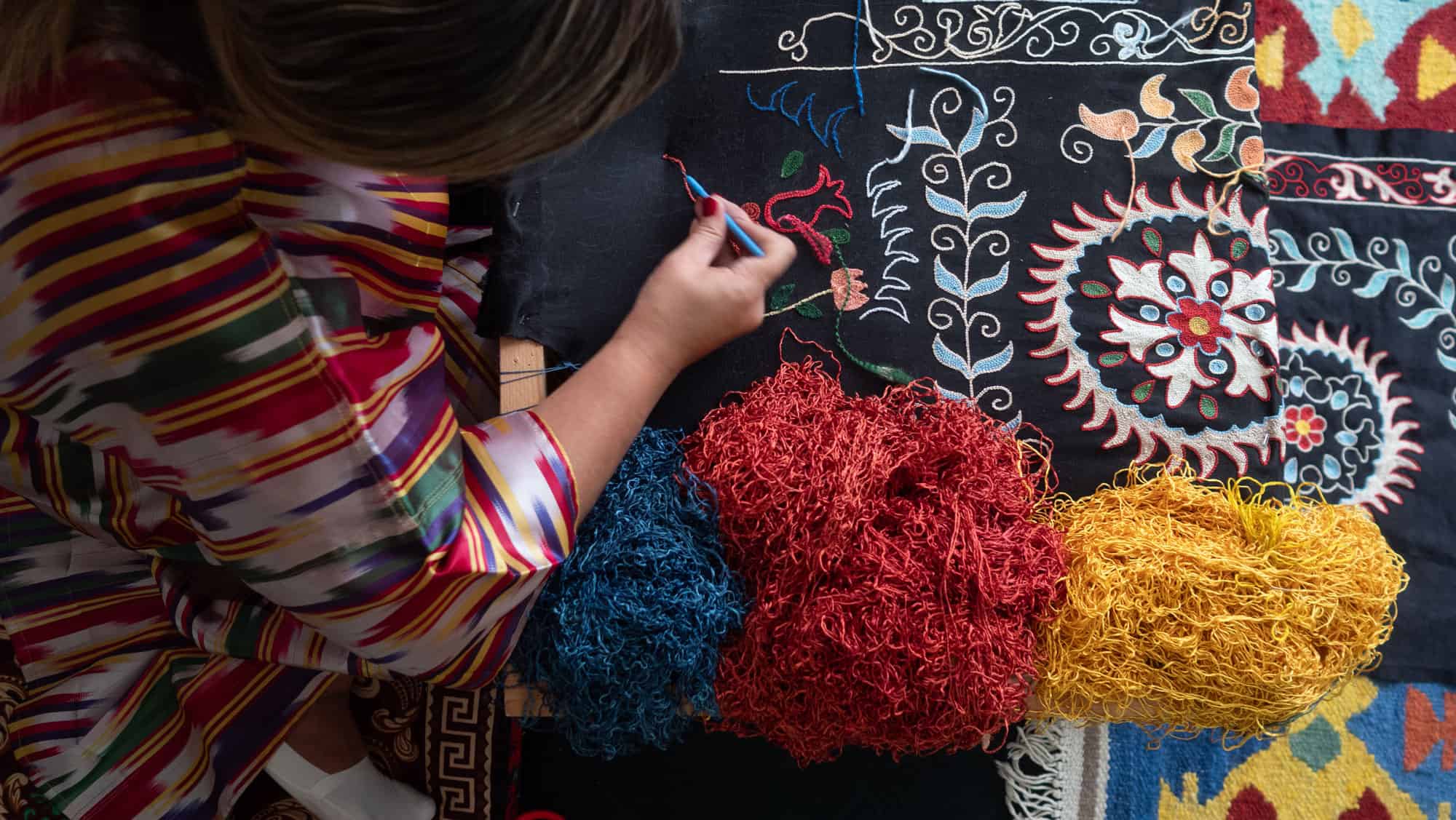
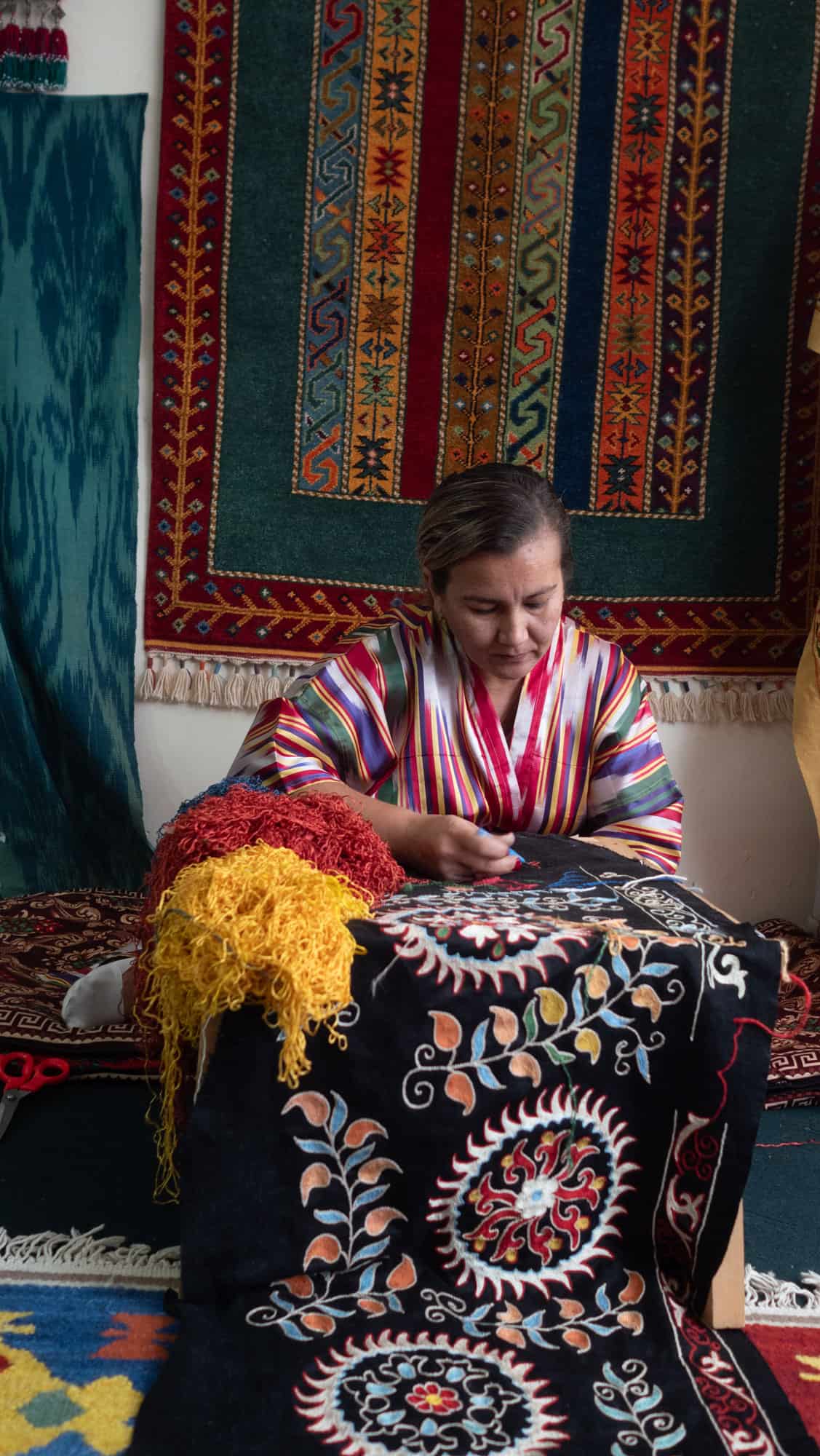
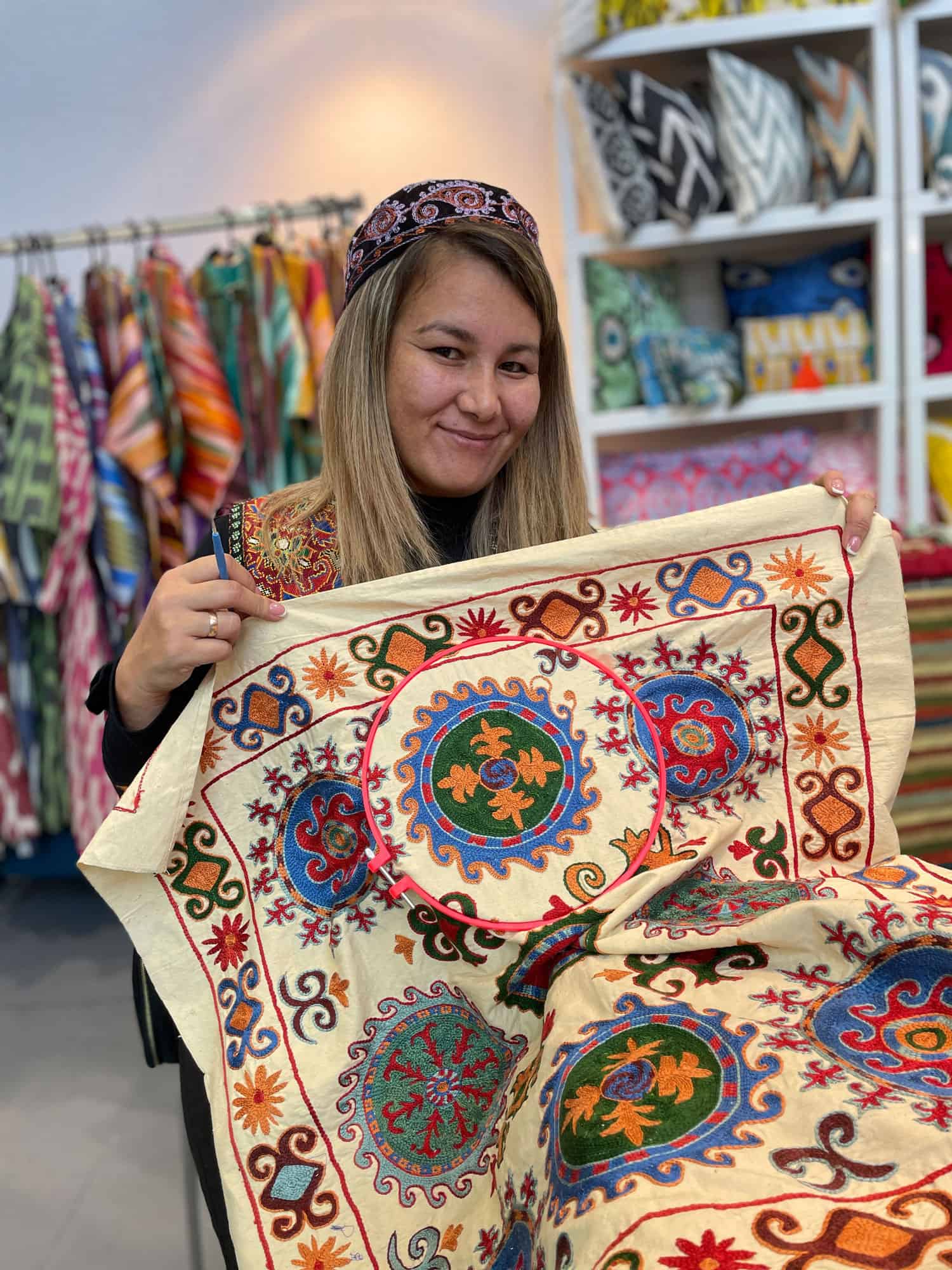
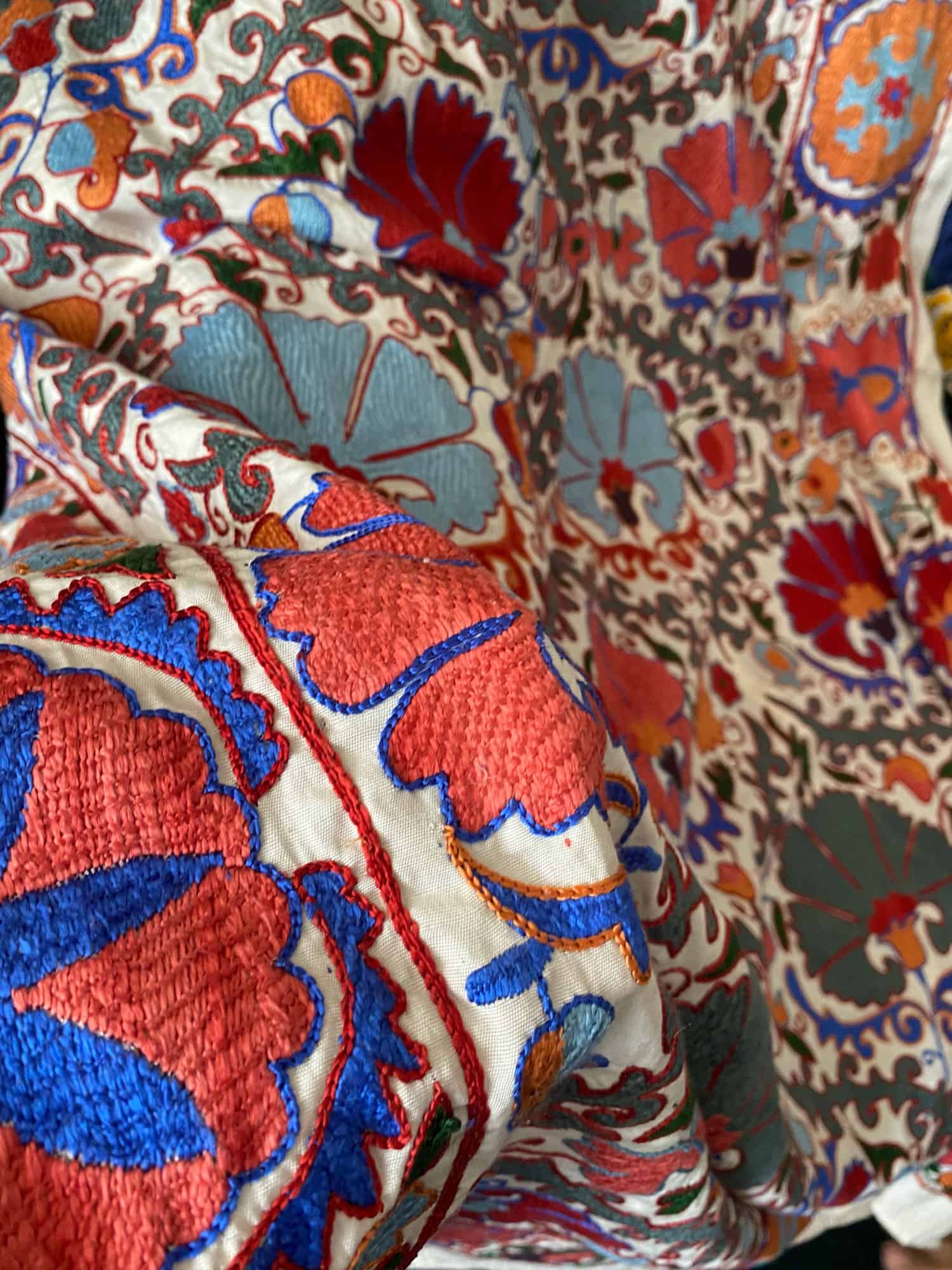

Internationally acclaimed suzani (embroidery) artisan Nargiza Sherkhodjayeva is leading a revival of traditional craftsmanship in the vibrant world of Nora and Co. Together with her husband, Dr. Ilkham Davletov, one of Uzbekistan’s master carpet makers, they are leading a revival of traditional craftsmanship. This powerhouse couple doesn’t just create luxurious and culturally rich products, they empower a community. Their center in Uzbekistan provides employment to 300 artisans—including 250 women and 35 young people under 35—bringing together 50 artisans on-site while many others craft from home, helping preserve Uzbekistan’s heritage. Their centre also just happens to be next to one of Central Asia’s longest running markets, Kumtepa Bazaar.
Each piece at Nora and Co. is a testament to Nargiza’s passion for quality and innovation. From exquisite Suzani embroidery to Ikat and Velvet Ikat textiles, silk carpets, and unique accessories, every item is carefully crafted using natural dyes, preserving tradition with a modern twist. Nargiza oversees quality control, trains her artisans, and continuously develops new designs for her exclusive collection, blending suzani and Ikat techniques into high-quality, culturally significant clothing, bags, shoes, and even earrings.



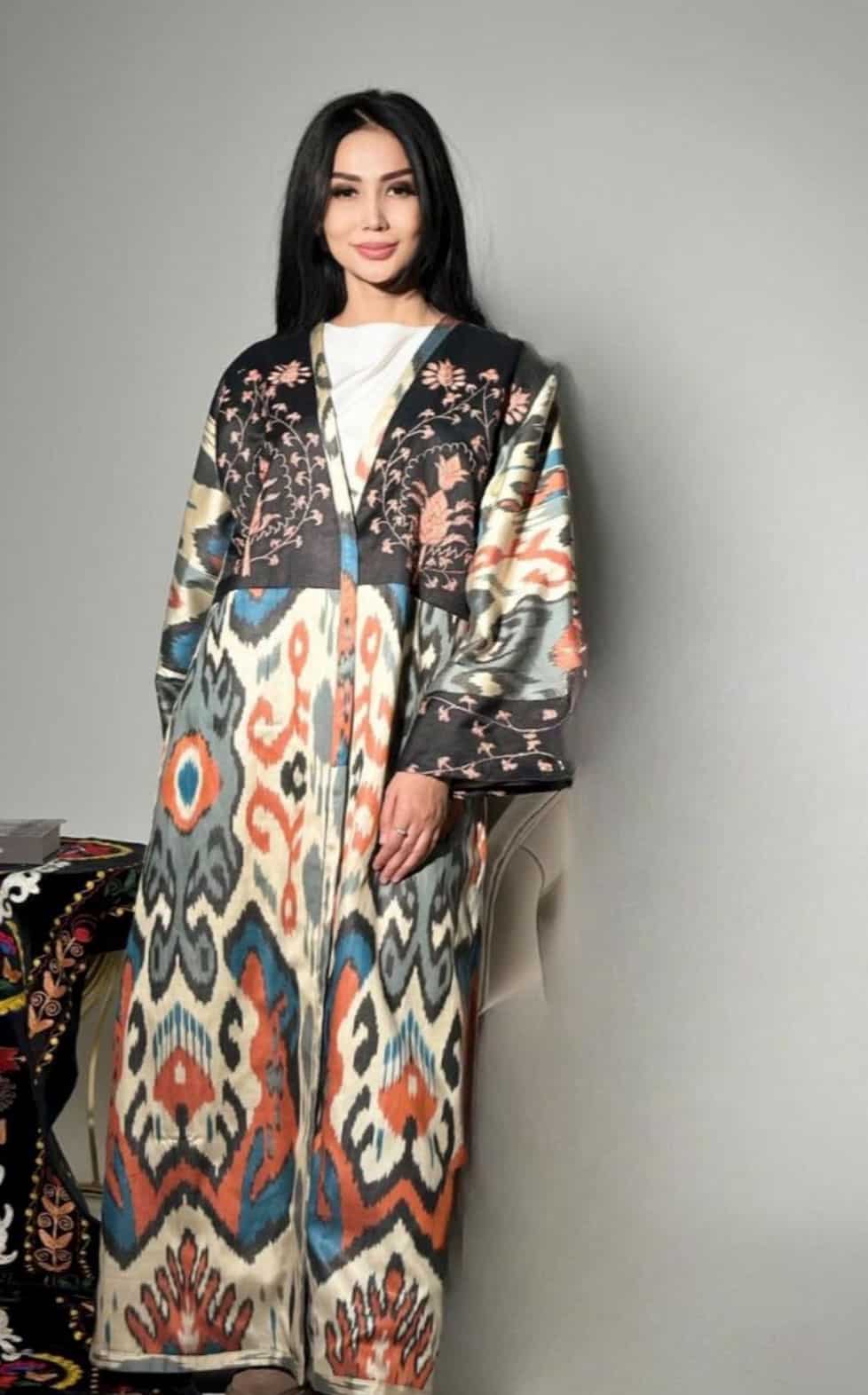
Zaynudinov Khayrutdin is a clothing designer and master storyteller specializing in high-quality chapans (traditional long coats) made from a blend of new and vintage ikat and suzani (embroidery) textiles in high-quality silk and cotton. Each piece combines color, texture, and patterns to weave the rich history, culture, and diversity of the Silk Road into a timeless treasure.
These wearable art pieces feature a variety of textures, colors, and patterns, with added decorative stitching, mono-color dye overlays, quilting, and unique designs. He sells his chapans to discerning customers at markets and exhibitions, often through word-of-mouth, but he also welcomes visitors to his studio to learn more about his craft and the stories, songs and traditions connected to them.

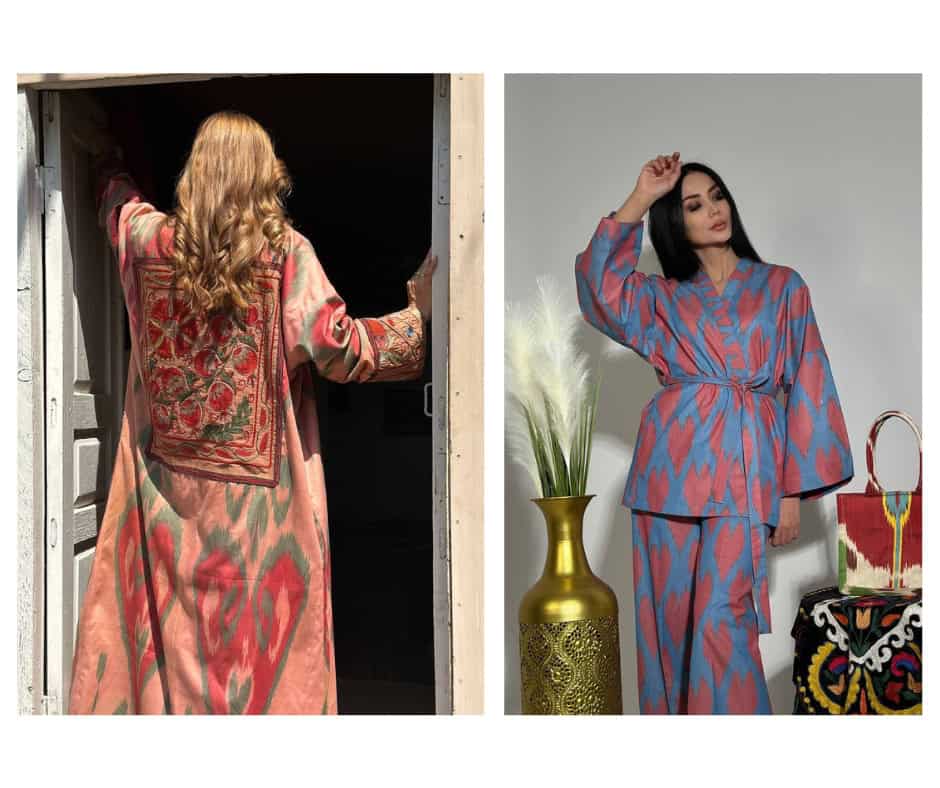
Nargiza Yuldaheva is the founder and designer behind Begoyim Creating that produces modern handmade national Uzbek clothes infused with innovation and quality. Her team of 10 skilled artisans and apprentices transform locally made silk and cotton ikat textiles into beautiful high-quality, one-of-a-kind clothing and accessories.
Nargiza is currently working on a new collection of accessories and clothing featuring stunning locally made ikat. She is working in collaboration with other artisans to develop a privately run craft shop that will feature products from around the Fergana Valley Region.


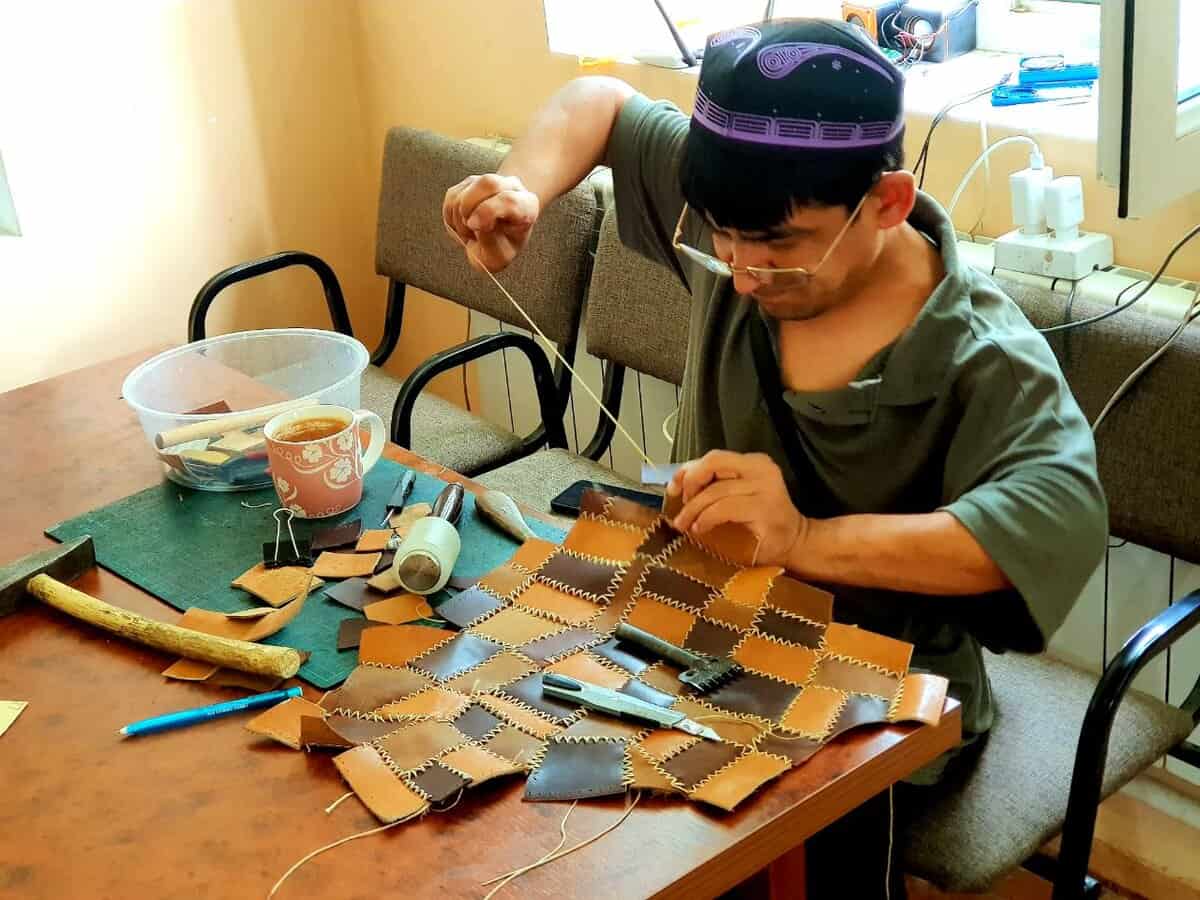
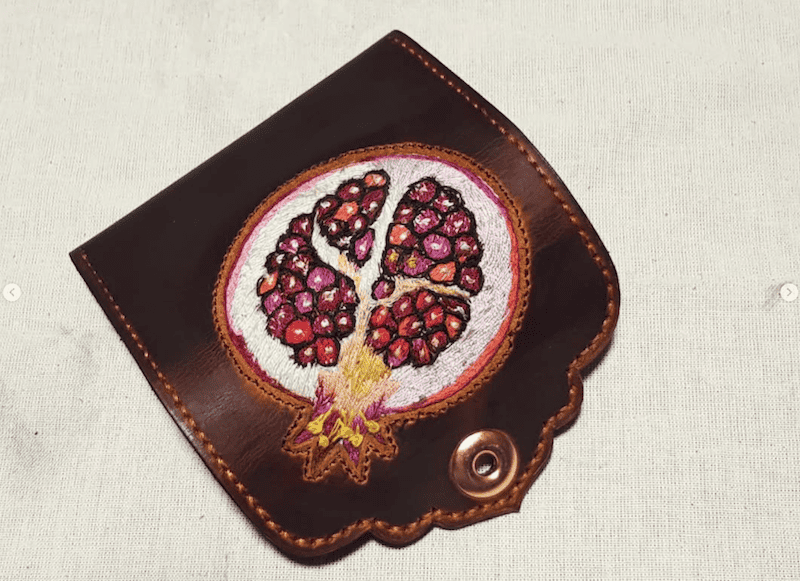
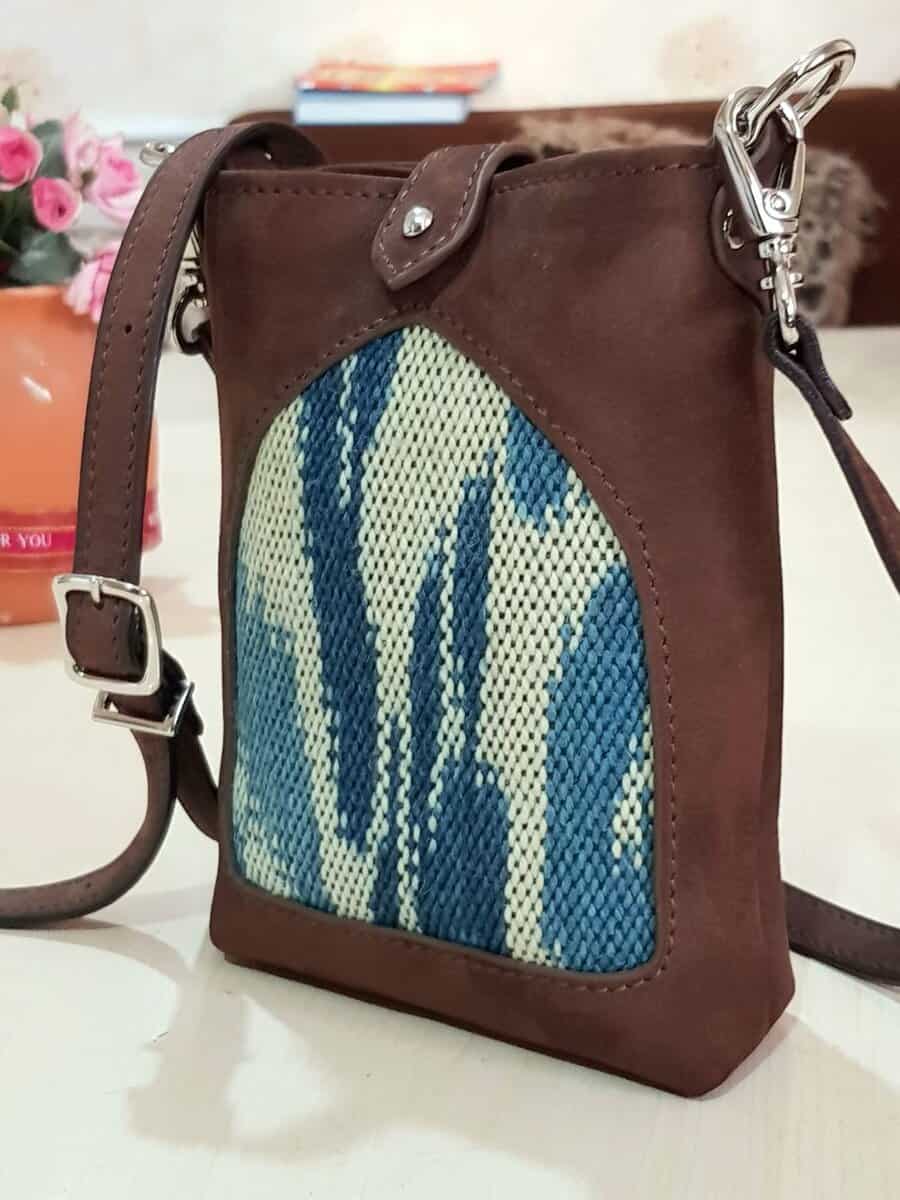
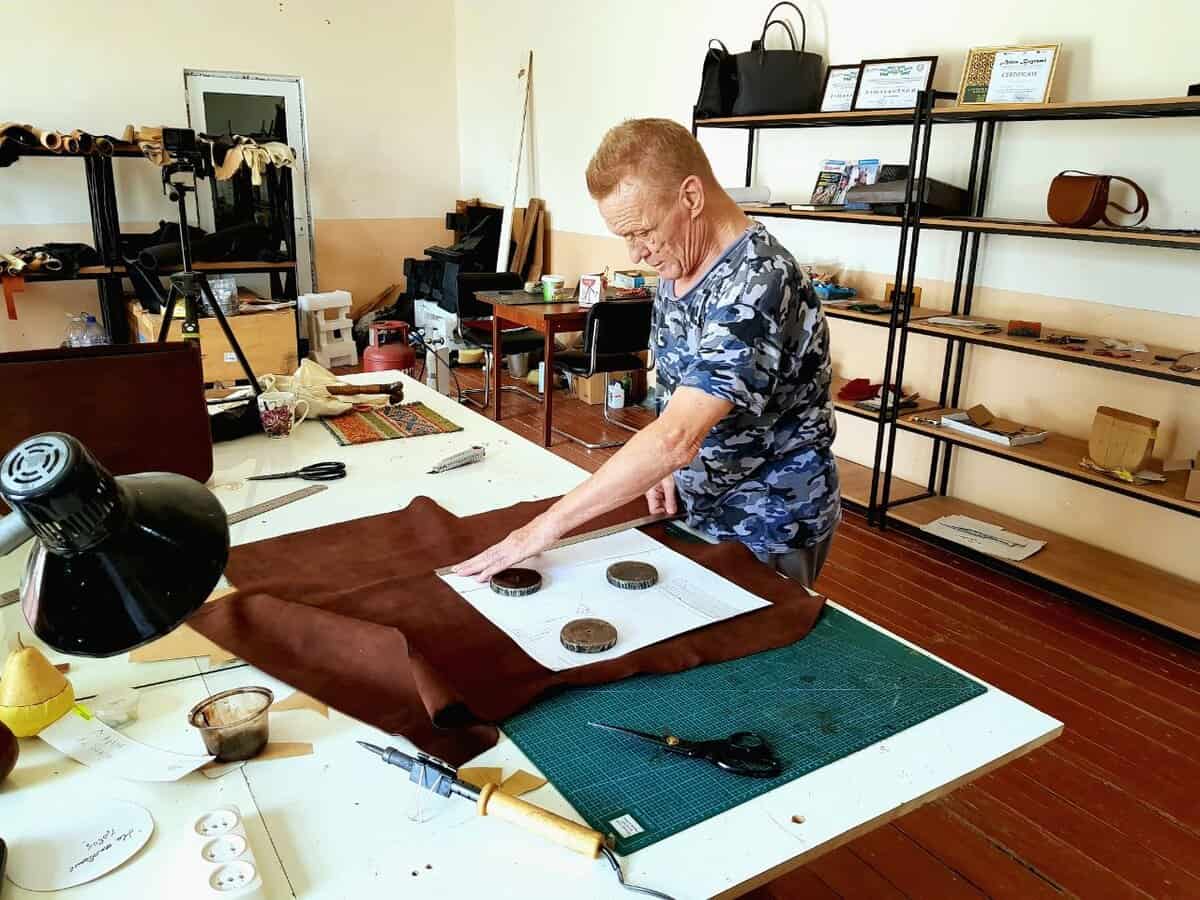
In the heart of the Fergana Valley, Elnur Leather explores a new direction in craftsmanship — creating leather goods combined with traditional Uzbek fabrics such as adras and atlas. Founded by artisan Eldorbek Matmusaev, the workshop seeks to unite strength and elegance, blending the timeless quality of genuine leather with the vivid spirit of local textile art.
Each piece — whether a bag, belt, or wallet — is handcrafted with care, reflecting the fusion of past and present. While Fergana is better known for its silk and weaving traditions, Elnur Leather brings these materials into dialogue with leather, giving birth to a unique, authentic aesthetic that speaks of cultural identity and contemporary design.
Beyond craftsmanship, the atelier also serves a social purpose — providing work and creative opportunities for people with disabilities, ensuring that every creation carries not only beauty, but also human dignity.
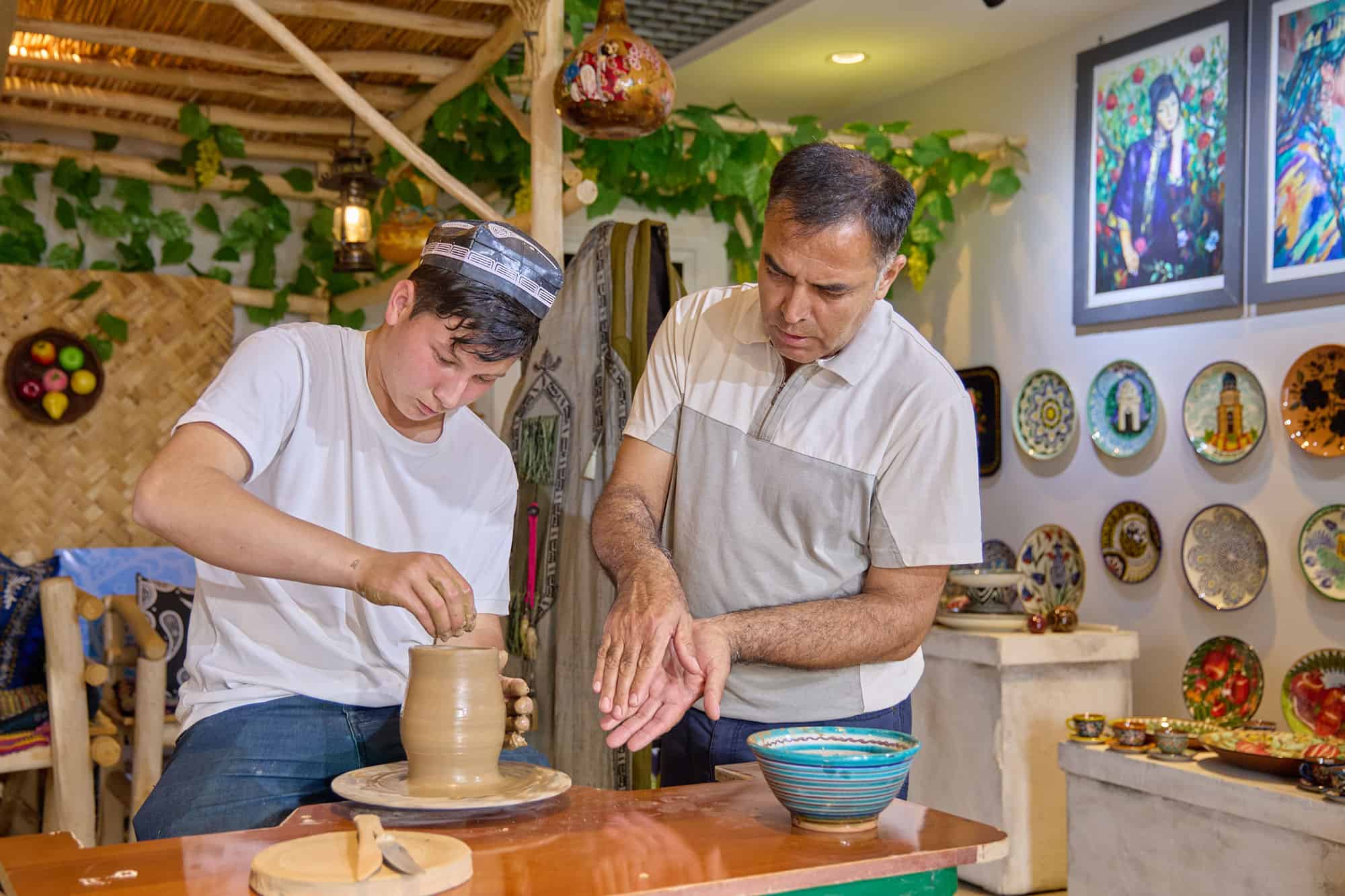
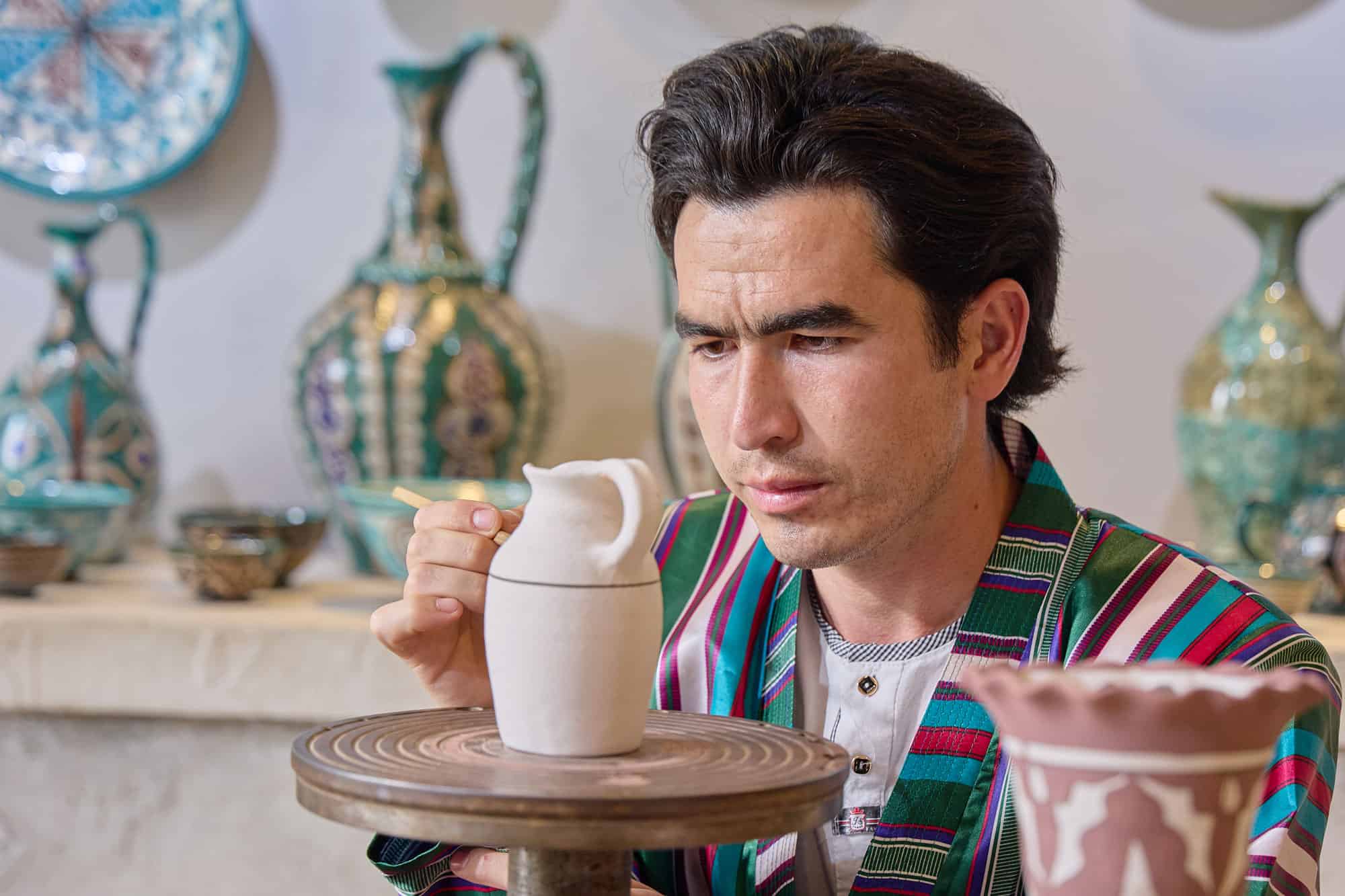
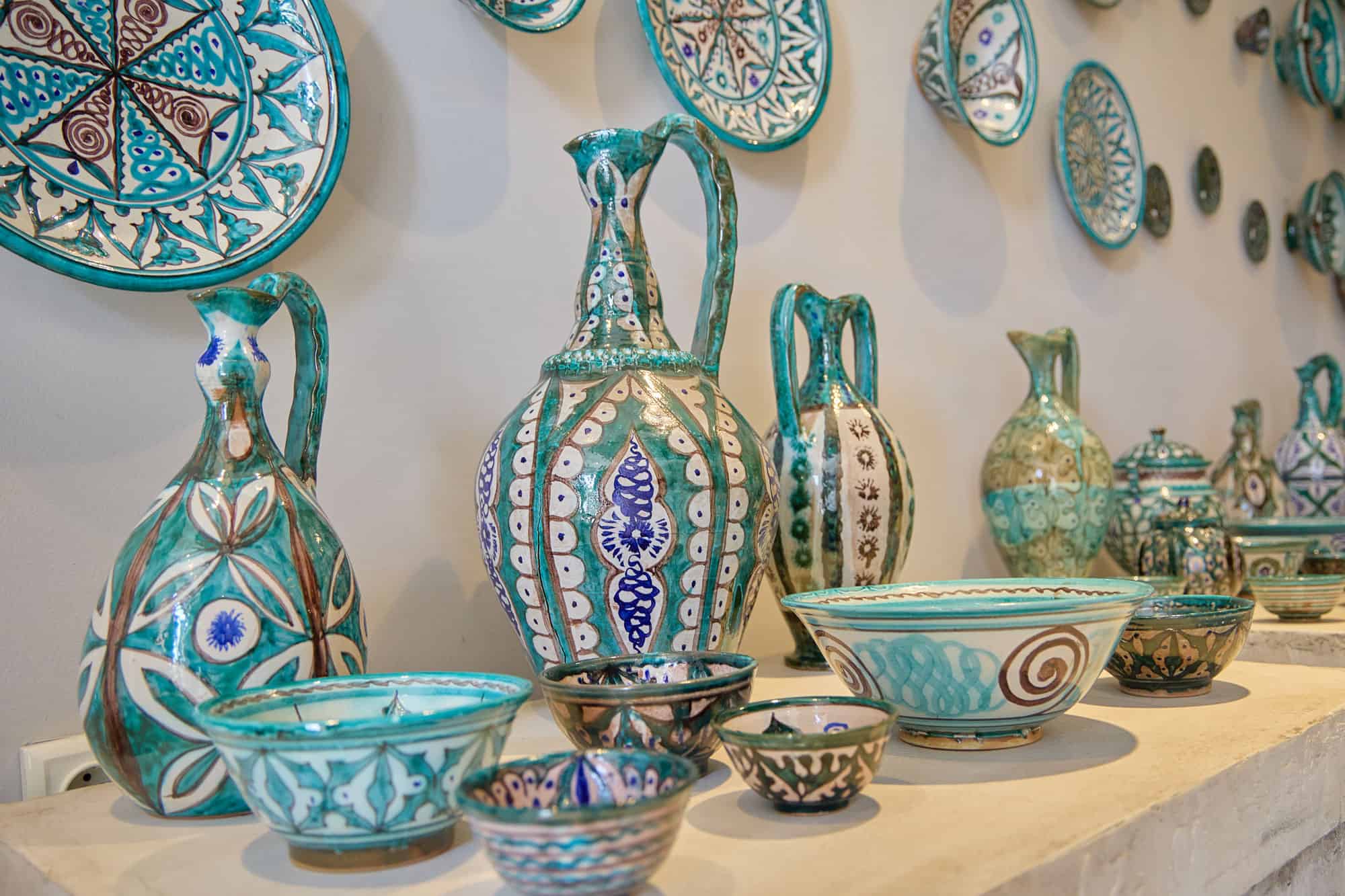
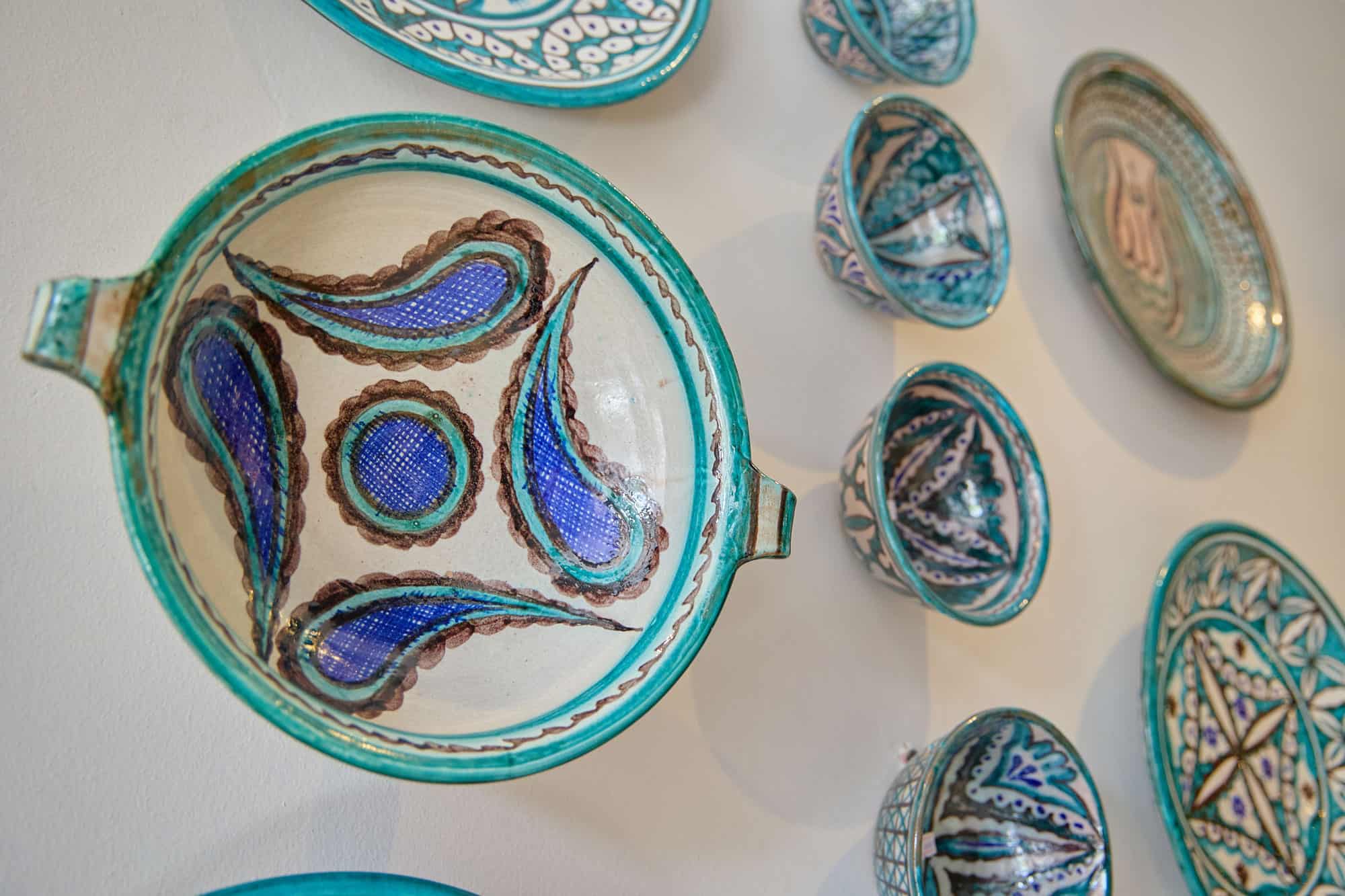
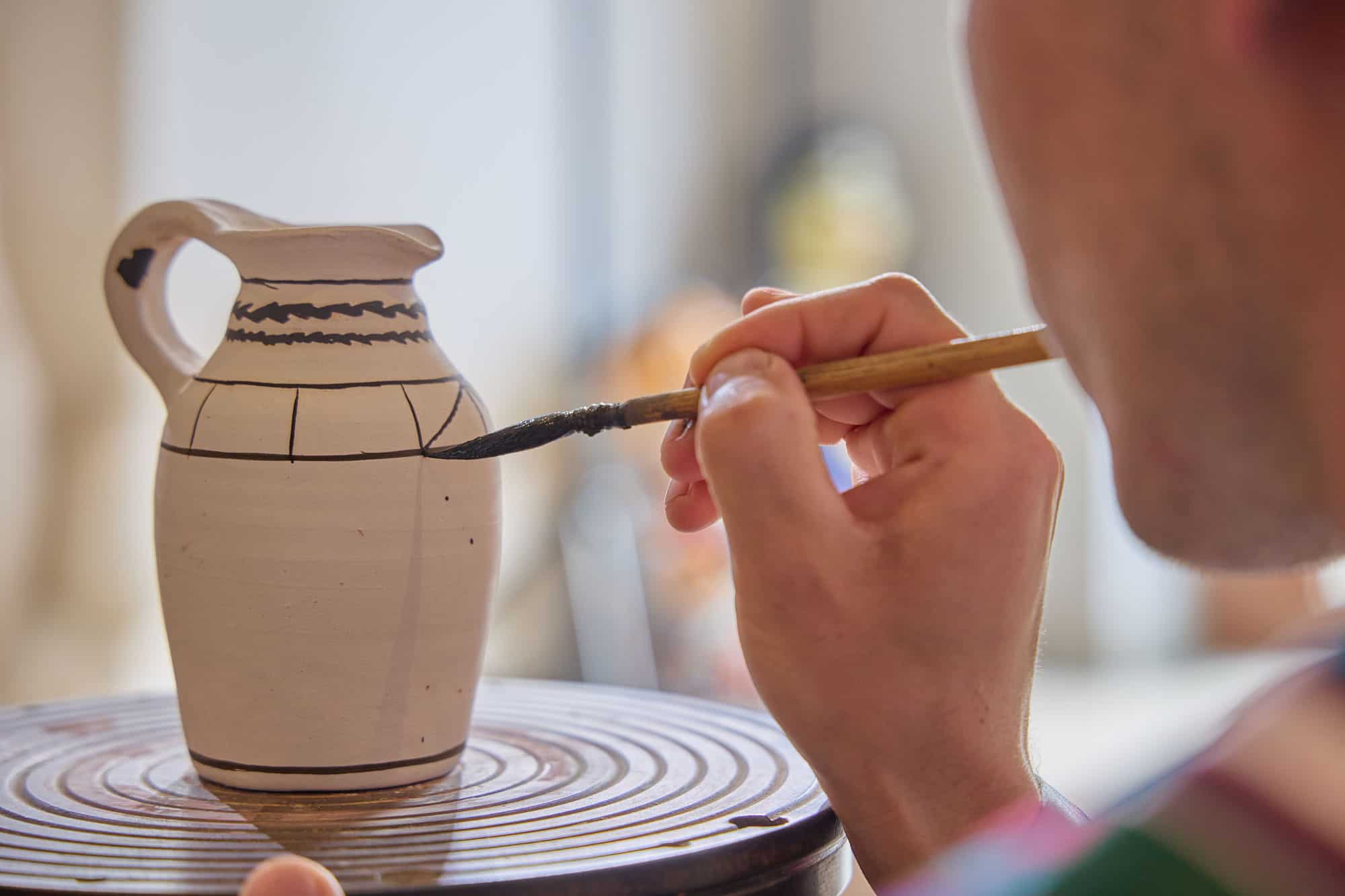
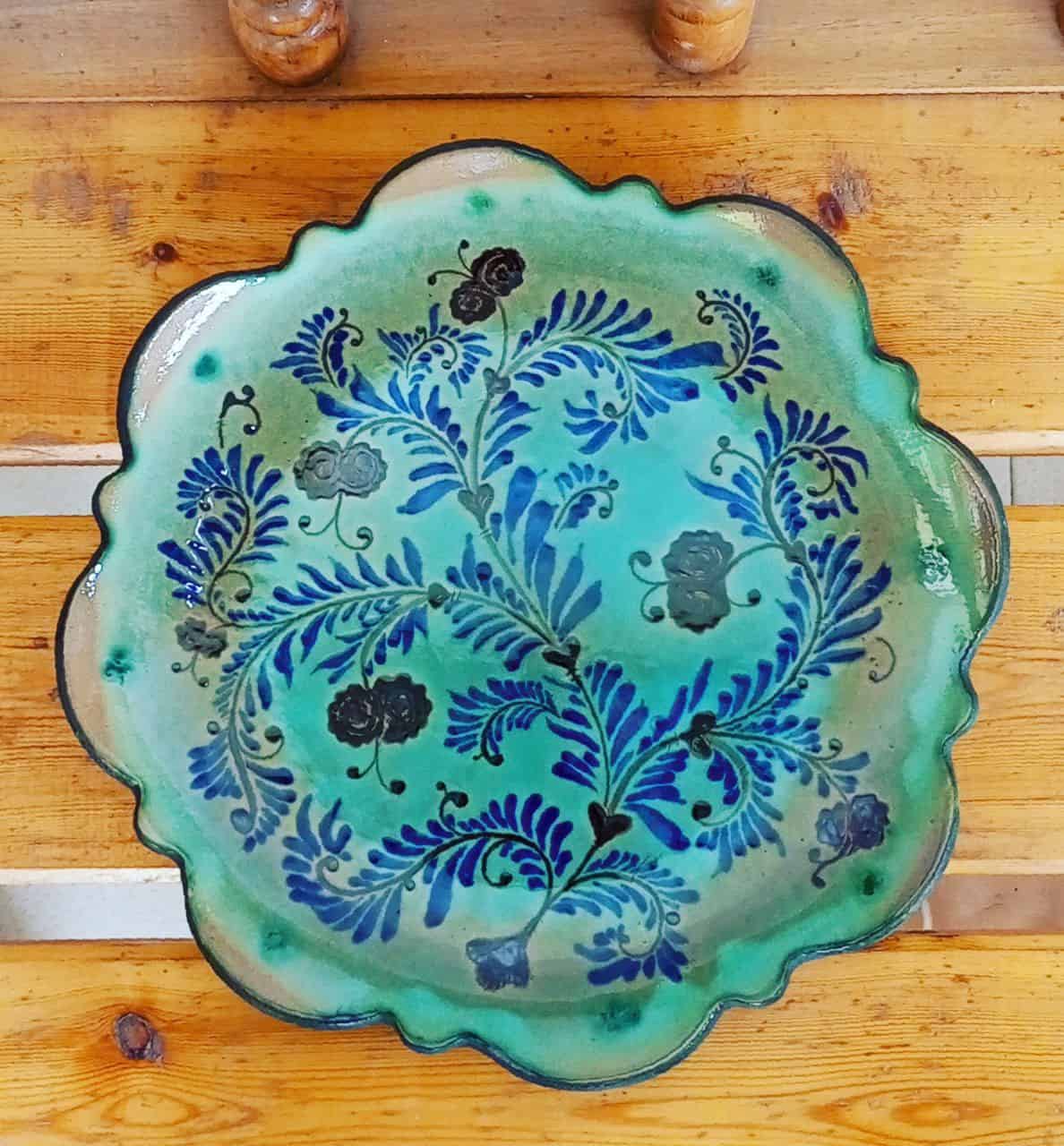
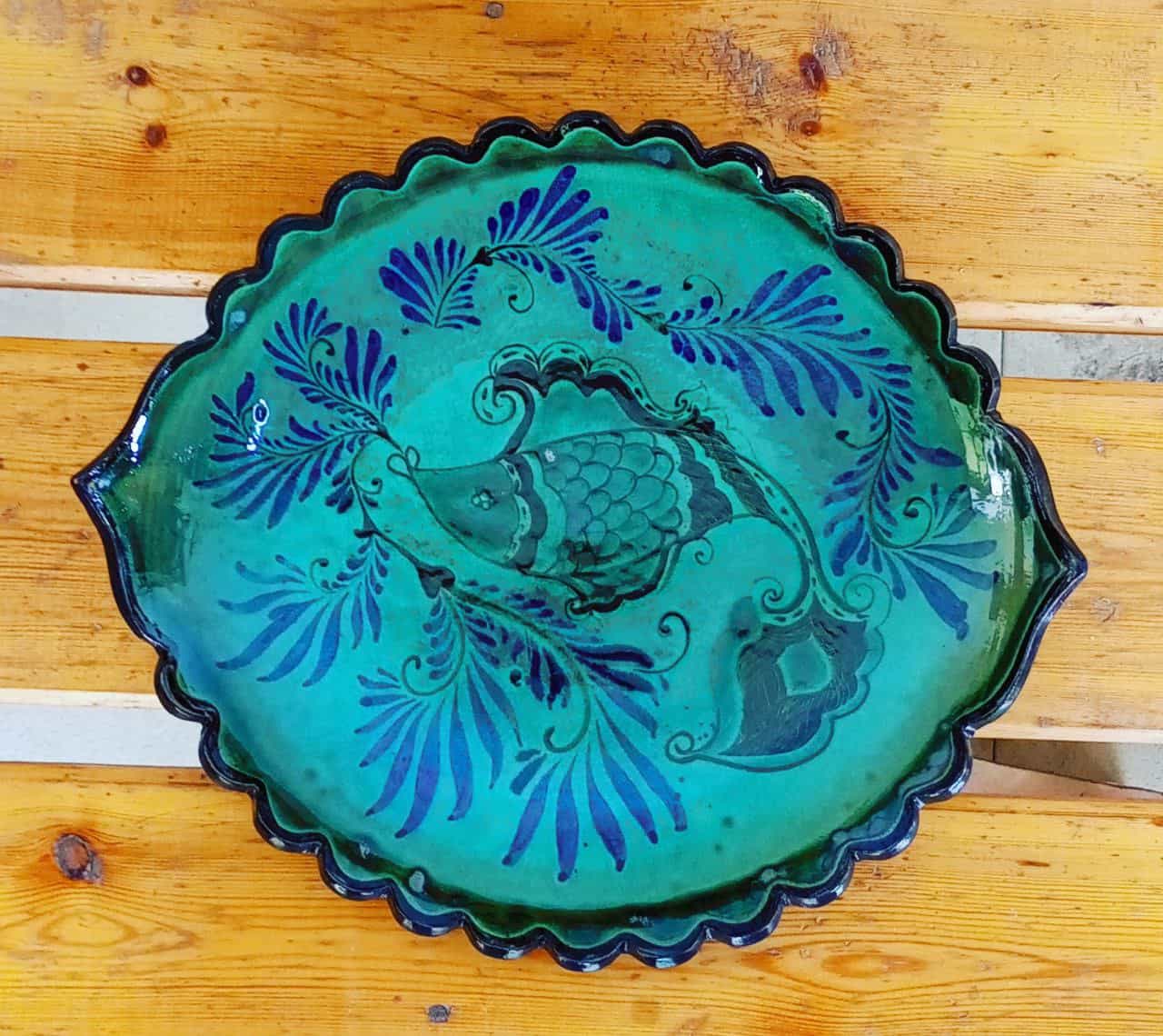
Vakhobjon Buvayev has become a grand master of Gurumsaroy ceramics, a craft renowned for its smoky blue-green hues and symbolic patterns. Trained by renowned ceramist Maksudali Turapov, Vakhobjon dedicated himself to preserving and elevating this ancient art form, even after many grand masters passed in the 1970s and 80s.
Using time-honored methods, he crafts his ceramics from start to finish: gathering “gulyak” herbs to create the signature “ishkor” glaze, molding each piece by hand, and painting motifs like the “chorbarg” quatrefoil and “cock’s comb.” His favorite creations—lyagans (big plates), deep bowls, and tall jugs—embody the monumentality and vibrant plant motifs of Gurumsaroy’s traditional style. Each piece tells a story of cultural heritage and artistry.
Dedicated to preserving techniques passed down by generations, he also mentors 15-30 students in his home and university studios to keep this art alive.
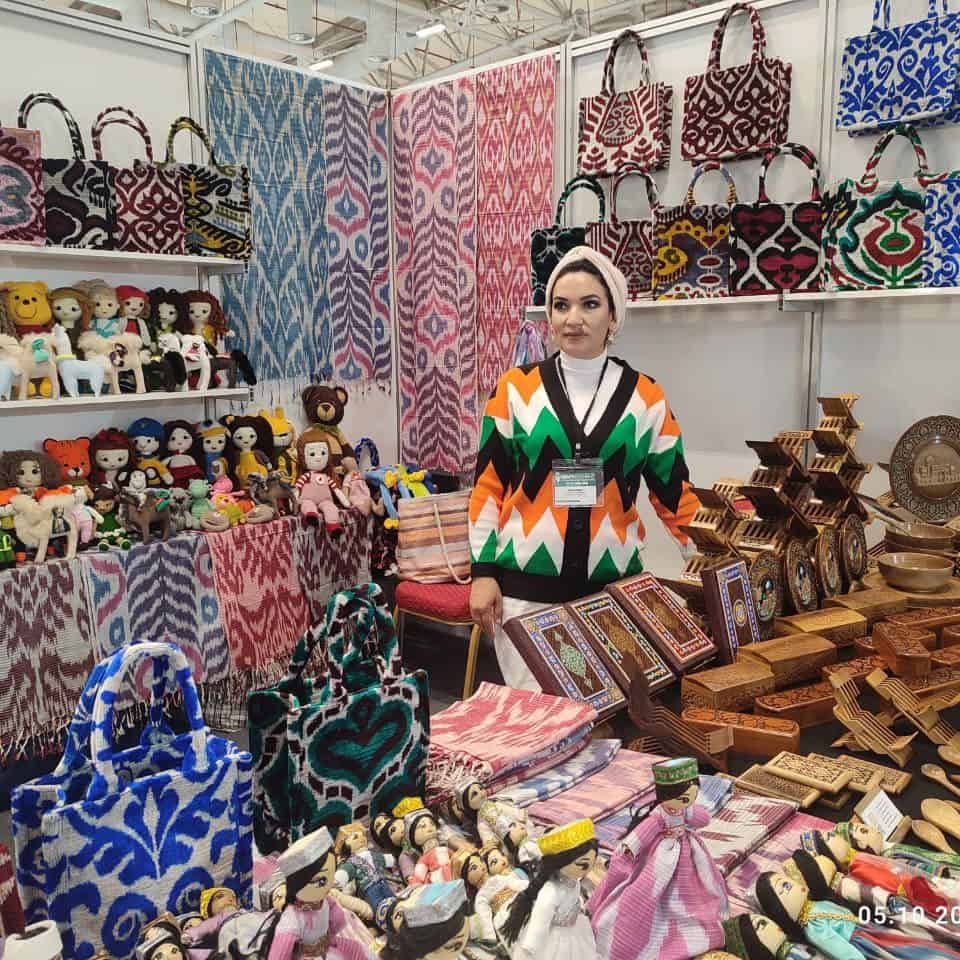
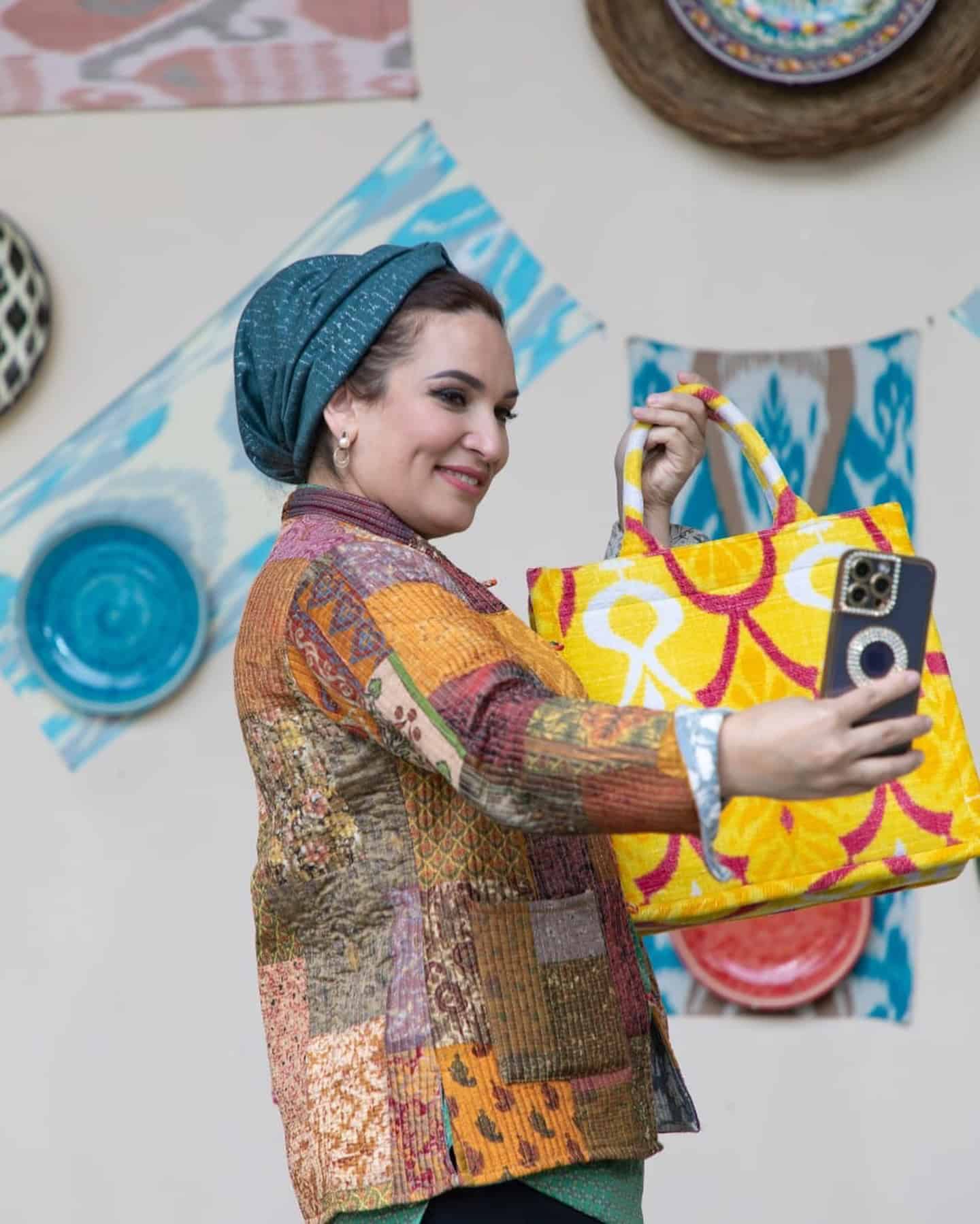

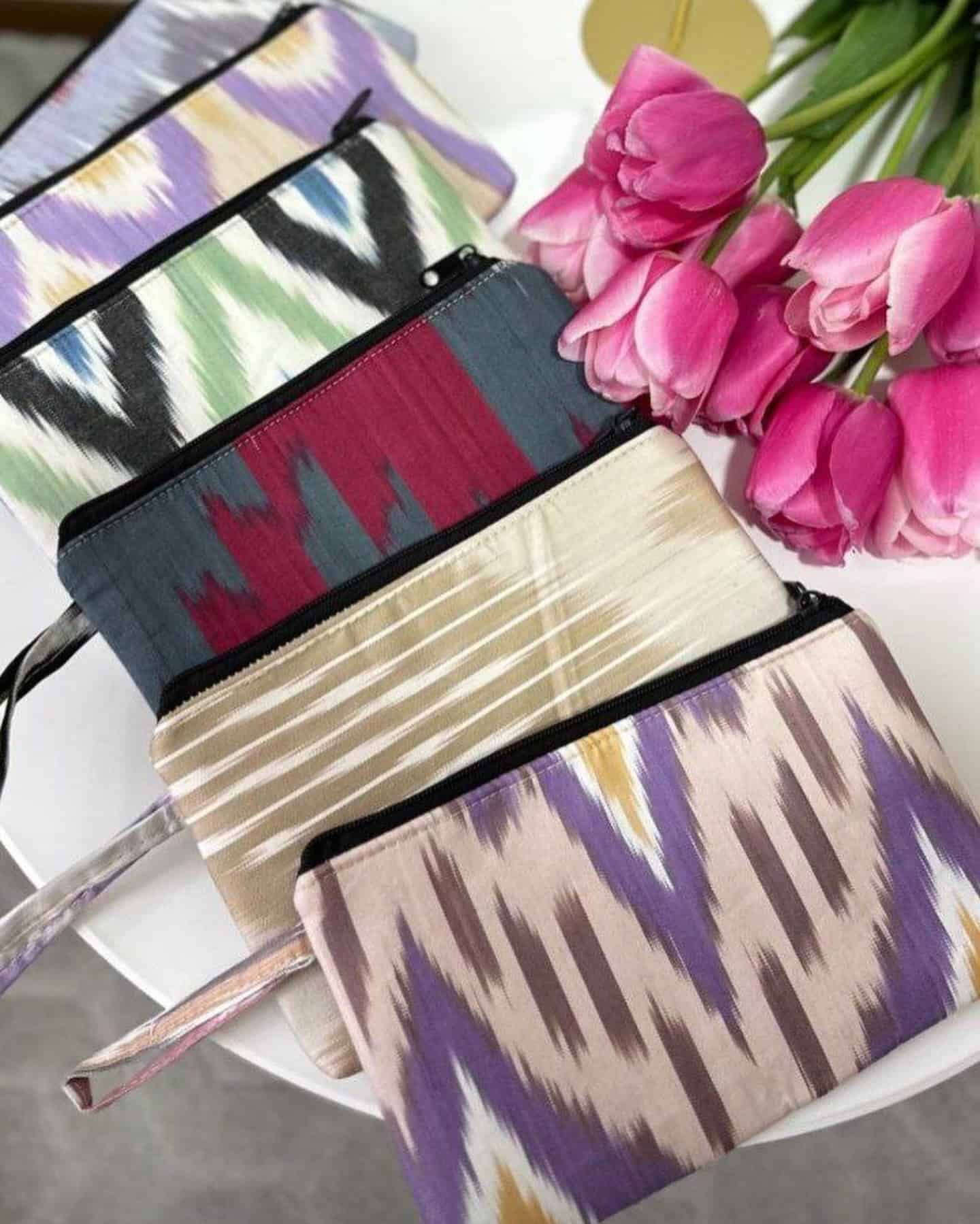
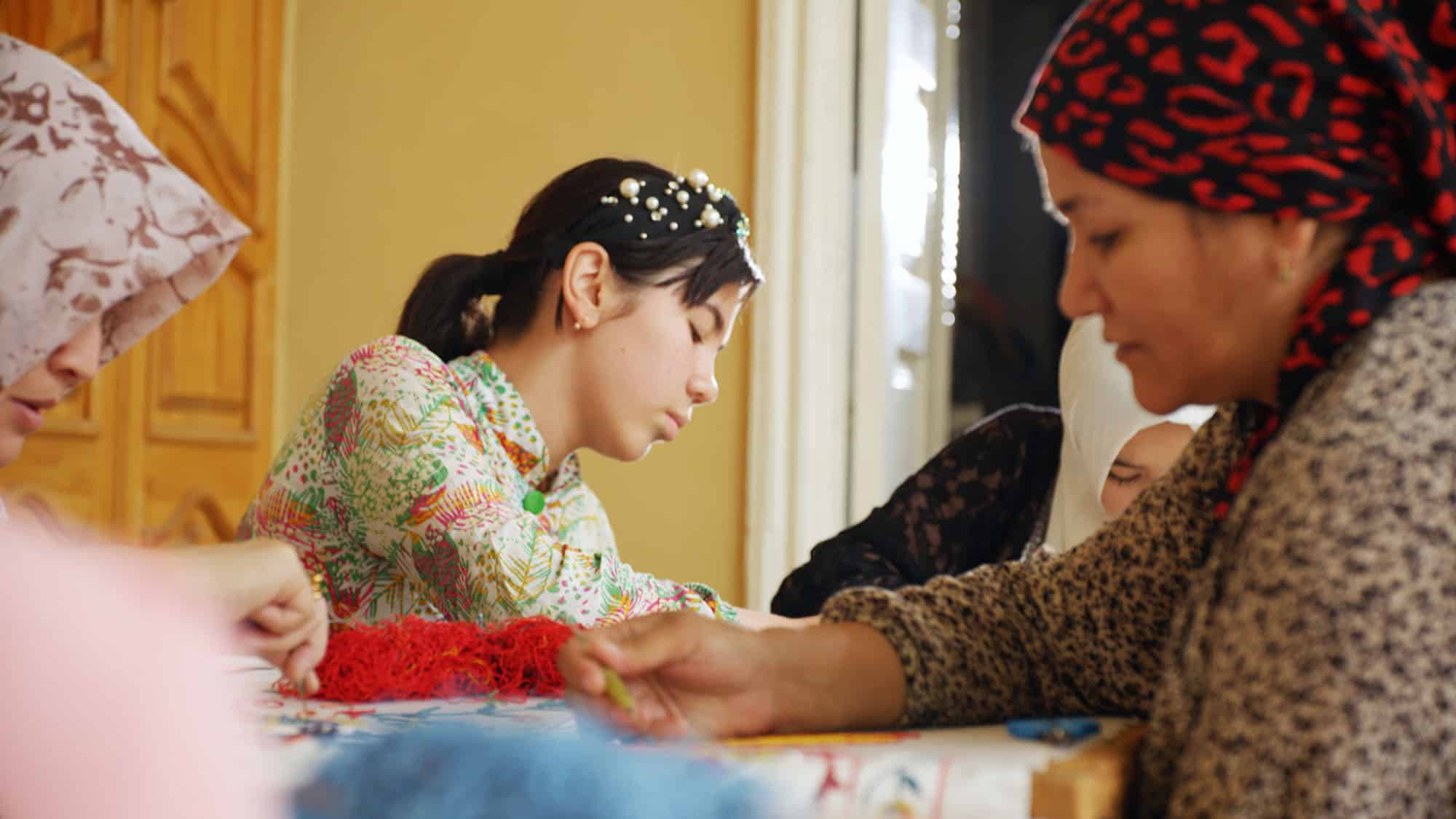
Sadoqat Mirzaeva is the creative mind behind Art House Sadosh, a company committed to preserving and promoting national crafts. She founded a non-governmental educational institution dedicated to the training of unemployed, unskilled women and women in need of social assistance, as well as women and girls with disabilities.
In a three-month training program, participants learn skills in embroidery, tailoring, doll making and design. In addition, they are given job opportunities both at home and in permanent workshops. With dedication, Sadoqat pursues the goal of preserving traditional handicrafts, offering unemployed women and girls a perspective and passing on these valuable skills to future generations. Between 2021 and 2023, they trained more than 300 women and girls and provided jobs to 110 of them.
Art House Sadosh specializes in the production of traditional costumes, women’s bags, dolls, toys and various accessories.
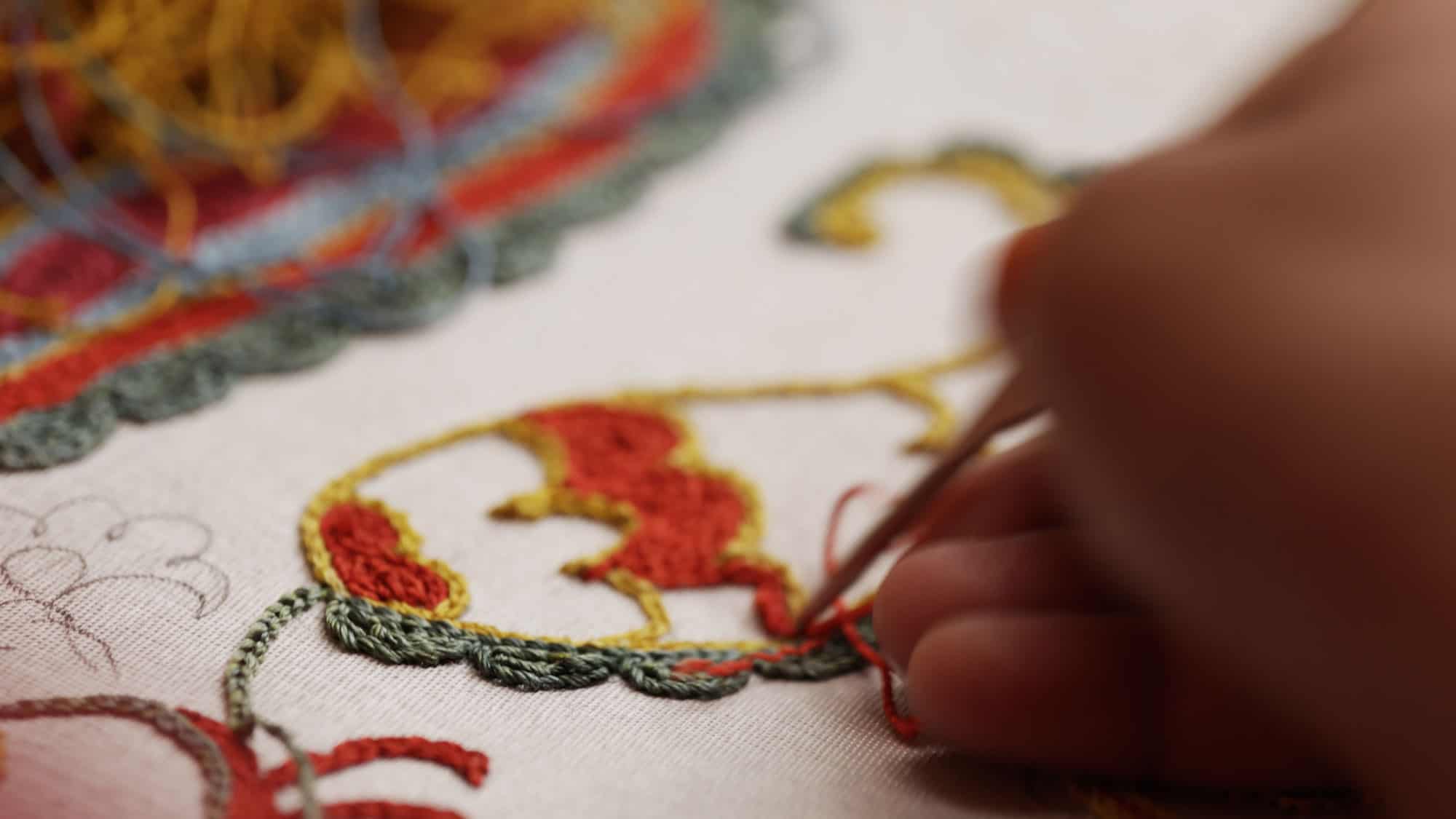
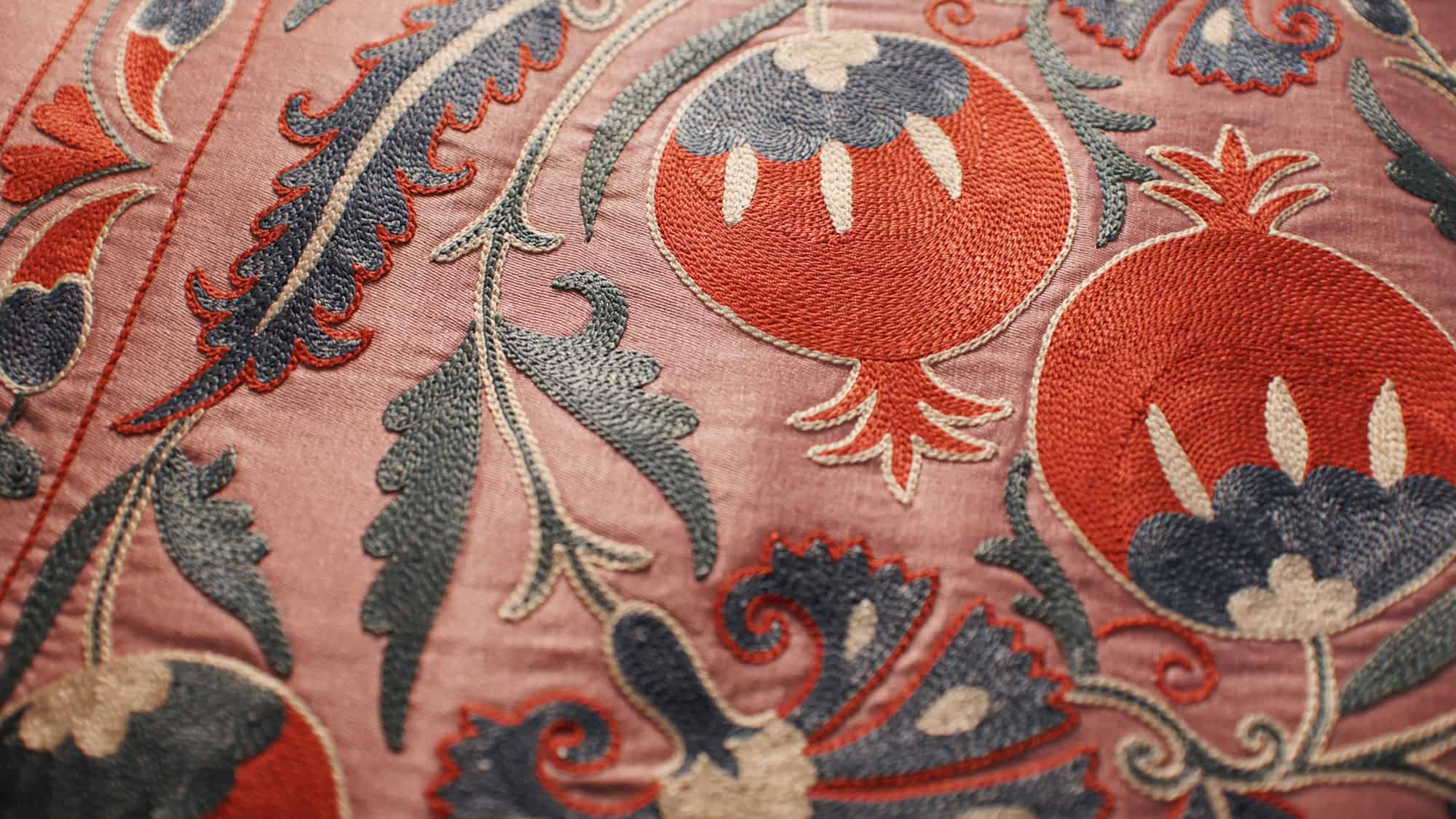
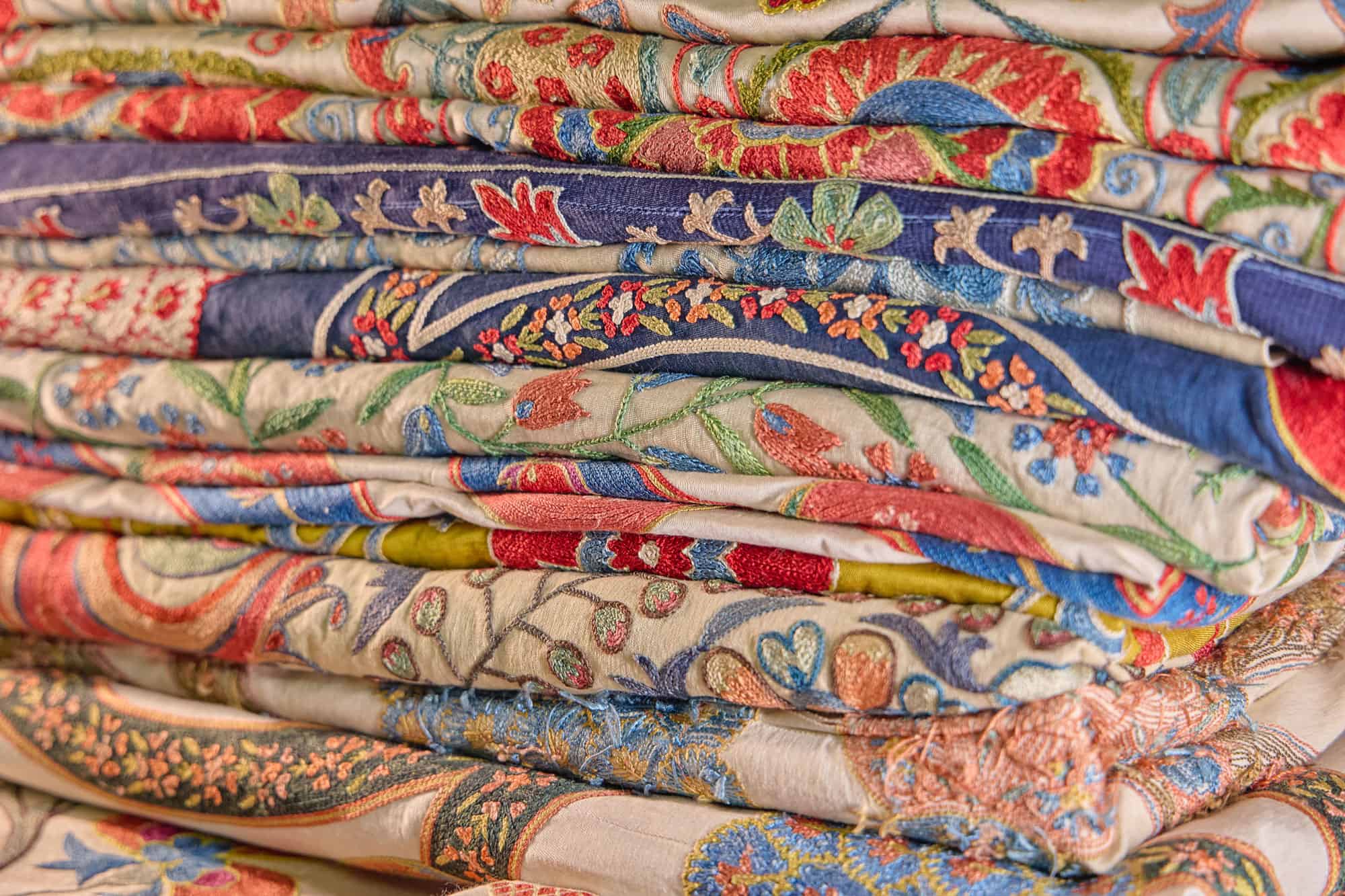
Abdulhakim Suzani Embroidery, based in Namangan, is internationally celebrated for its high-quality suzani work, crafted with heritage and meticulous care. Managing every step in-house—from spinning and dyeing to weaving, embroidery, and tailoring—they use only the finest Bukhara silk to ensure the highest quality.
Employing 200 skilled women—15 in their central factory and 185 artisans working from home—Abdulhakim Suzani Embroidery is a proud contributor to the local economy. Led by Abdulbosit Isakjanov, who is advancing natural dyeing techniques, the business ensures that suzani traditions continue to thrive and evolve.
Their collection includes unique cushion covers, custom jackets, bedding, wall hangings, and more, cherished by those who value the unmatched quality and artistry of suzani embroidery.
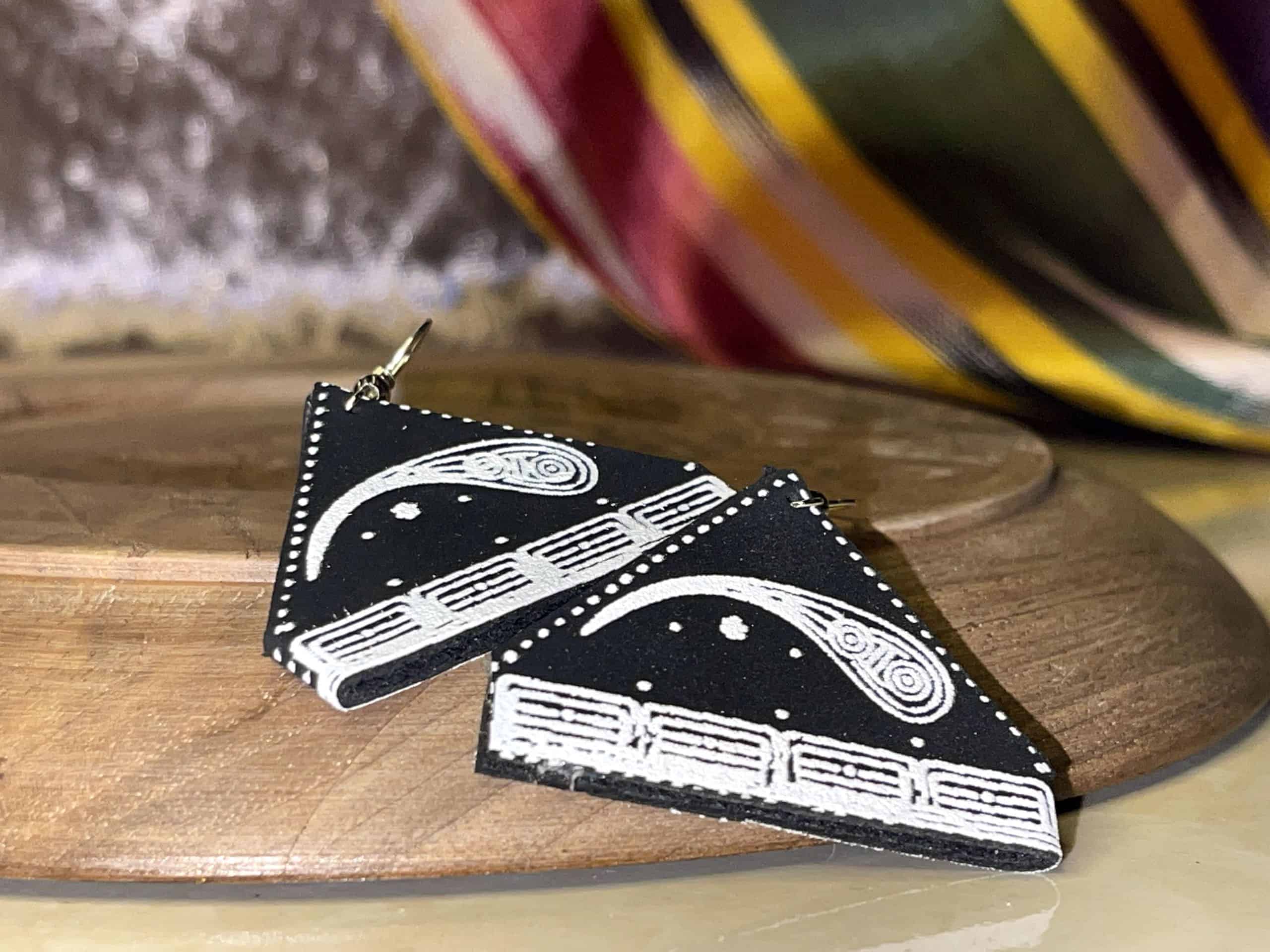

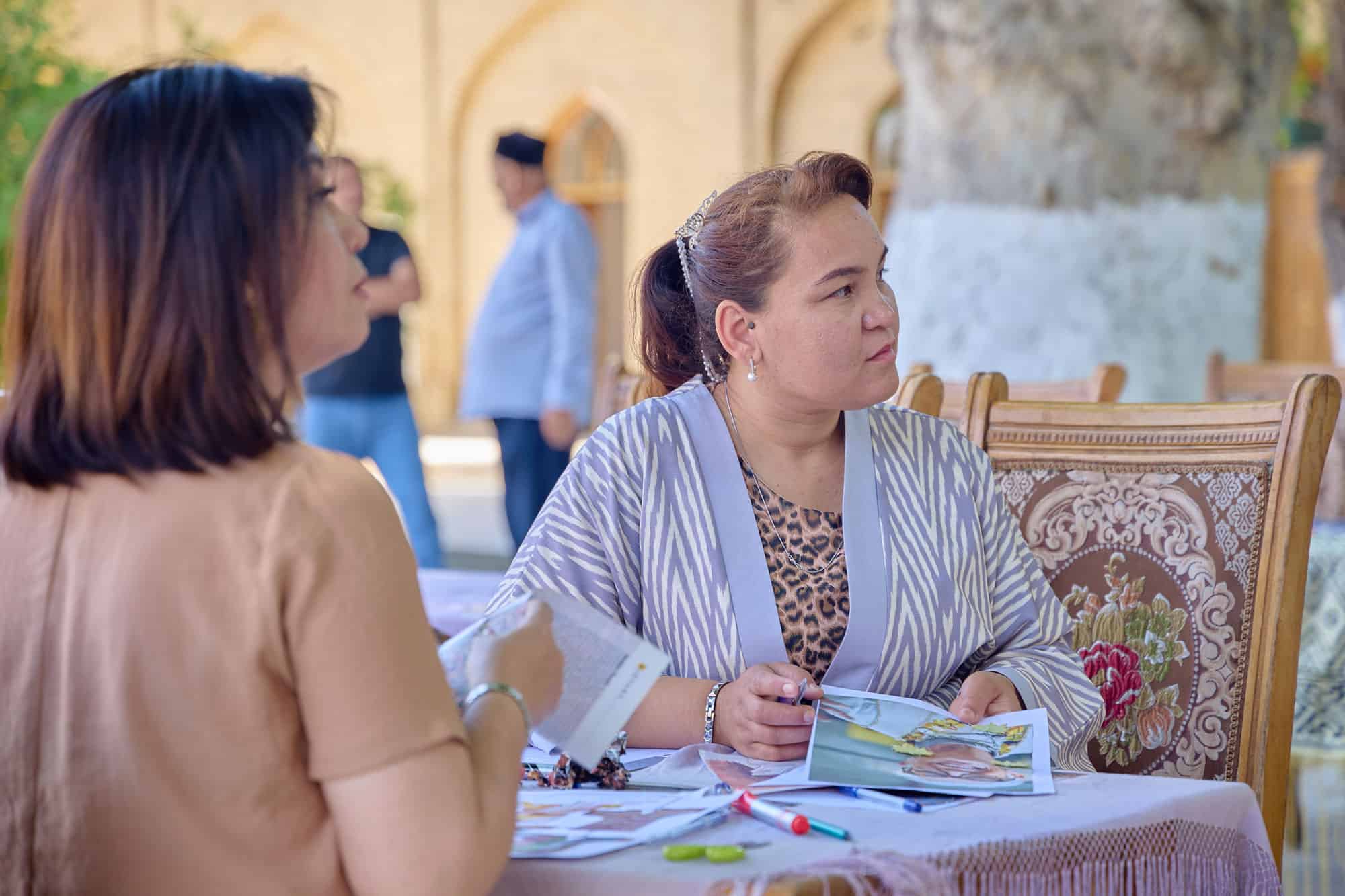
Rano Botaboyeva is reviving her family’s Uzbek jewelry traditions with an empowering purpose. Together with talented women of diverse abilities, she creates jewelry inspired by traditional Uzbek stories, symbols and processes. Her research into the history of jewelry in Uzbekistan underscores her deep connection to this art form and its cultural significance.
The doppi is a traditional cap often worn in Uzbekistan. They are adorned with motifs that carry meanings – one popular design includes small chilies – especially found in Fergana Valley. The chili is thought to be a protective symbol toward the wearer from harm or negative energy. As a way to keep the tradition alive and find new uses for the doppi, Rano has designed a range of earrings celebrating this cultural symbolism.
Her mission is to revive lost traditions, pass on Uzbekistan’s cultural beauty to new generations, and share this artistry with the world.
Rano Botaboyeva is reviving her family’s Uzbek jewelry traditions with an empowering purpose. Together with talented women of diverse abilities, she creates jewelry inspired by traditional Uzbek stories, symbols and processes. Her research into the history of jewelry in Uzbekistan underscores her deep connection to this art form and its cultural significance.
The doppi is a traditional cap often worn in Uzbekistan. They are adorned with motifs that carry meanings – one popular design includes small chilies – especially found in Fergana Valley. The chili is thought to be a protective symbol toward the wearer from harm or negative energy. As a way to keep the tradition alive and find new uses for the doppi, Rano has designed a range of earrings celebrating this cultural symbolism.
Her mission is to revive lost traditions, pass on Uzbekistan’s cultural beauty to new generations, and share this artistry with the world.