
The Fergana Valley in Uzbekistan offers a diversity of travel experiences for travellers immerse themselves in the local culture, cuisine and nature. The Plan Your Trip section of our website provides travel information on transportation, visas, money, internet and more to make it easy to organize your trip so you can focus your time on all that you want to do and see here in the Fergana Valley.
It’s becoming easier and faster than ever to get to Uzbekistan’s Fergana Valley by plane, train, or vehicle from both domestic and international destinations. Although it may seem remote, the Fergana Valley is actually very accessible from the capital city of Tashkent, as well as from Kyrgyzstan and Tajikistan. Once you arrive in the Fergana Valley, it’s quite easy to get around between Andijan, Namangan and Fergana Regions.
Our comprehensive transportation page provides you with all you need to know about how to get to Uzbekistan’s Fergana Valley and how to travel around between different regions, cities and sites.

Whether you’re visiting Fergana Valley in Uzbekistan for a day or settling in for a week or more, knowing the following practical travel details will make it easier to plan and your stay more enjoyable. Find out on this Practical Travel Information page about tourist visas, money, how to buy a SIM card, language, security and other useful travel details to help with your trip planning research.

Download PDFs of different brochures and maps for Uzbekistan’s Fergana Valley and CTN:
Yes, the Fergana Valley is very safe for tourists and visitors from all different types of countries. Uzbekistan is not only one of Central Asia’s safest destinations, but it ranked as the #1 country in the 2023 Safety Perception Index. Crime against tourists is extremely rare, and locals are known for their hospitality. The region is politically stable, and women travelers, including solo female travelers, feel safe.
Standard travel safety precautions apply, as in other destinations. Don’t display expensive items, stay aware of your surroundings, and keep document copies. Take an official taxi through one of the known apps (e.g., Yandex Go/Yango*, MyTaxi). Modest dress is appreciated in Fergana Valley as it is a more conservative area. Millions of people visit Uzbekistan annually without incident, and Fergana Valley offers an authentic, welcoming experience for travelers.
*Some people will not be able to download the Yandex Go taxi app because of sanctions against Russia. A workaround for this is to download the Yango app that uses the same system.
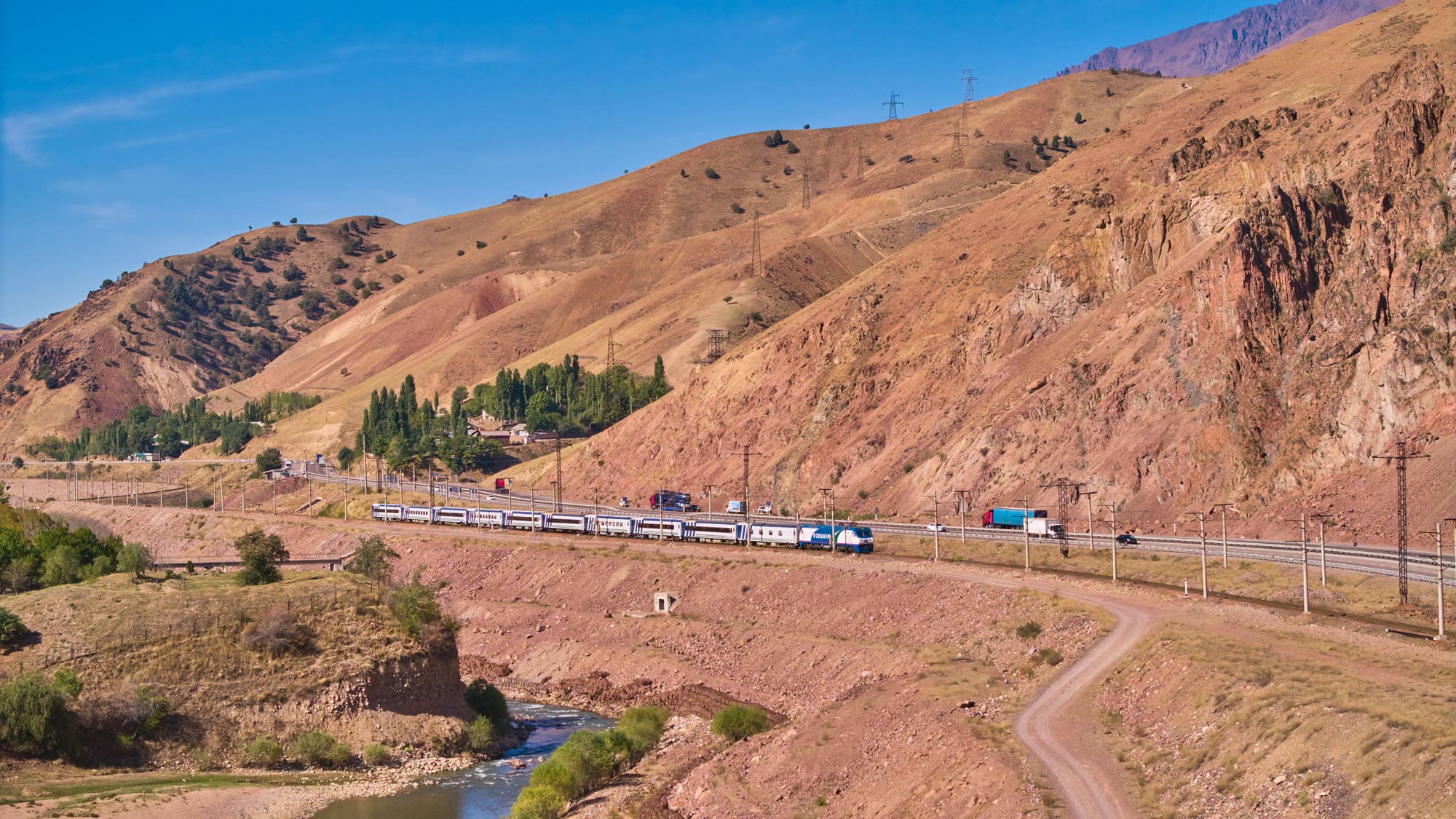
Three main transportation options exist to get to Fergana Valley from Tashkent: train, car /shared taxi, or airplane. We recommend taking the train as it is a comfortable option where you can enjoy the mountain scenery and it is the most sustainable option. Be sure to book tickets in advance for trains and planes in the high season. You can find more details on transportation to and from Fergana Valley here. Below is a summary of your main options from Tashkent:
Spring (April-May) and autumn (September-October) are ideal times to visit Uzbekistan’s Fergana Valley as temperatures are comfortable at around 15-25°C (59-77°F) and the natural landscapes are at their prime. Spring brings blossoming orchards, while autumn offers harvest season with markets full of melons and pomegranates. There are also important cultural events during these times like Navruz (March 20-21) or handicraft festivals.
Summer (June-August) is extremely hot with temperatures often exceeding 40°C (104°F) during the daytime. This is the high season for Uzbek travelers as there are school holidays and many are escaping the heat of the cities to go into the cooler hills or sanitoriums. Winter (November-March) sees temperatures of -5 to 10°C (23-50°F) with a low number of tourists, but this is also the time of more frequent electricity and power outages.
Citizens of over 100 countries—including EU and CIS countries, Australia, Canada, Japan, and South Korea—can enter visa-free for 30 days. Others nationalities, including citizens from the United States over 16 and under 55 years old, can apply for an Uzbek e-visa online for about $25 that allows for a 30-day stay. Processing time is around three working days. There is also the option of choosing a multiple entry visa for a higher fee.
Make sure your passport is valid for 6+ months beyond your departure date from Uzbekistan. Visa requirements change occasionally, so double check current Uzbek visa policies for your nationality well in advance of your flight or entry to Uzbekistan.
A minimum of 3-4 days covers Fergana Valleys highlights: Kokand’s palaces and mosques, Margilan’s silk factories, Rishtan’s pottery workshops, Andijan and Namangan cities. Five to seven days allows a more relaxed pace with time for exploring Andijan and Namangan regions with village homestays and deeper cultural immersion or an adventure in the mountains. We recommend you take a look at our CTN Recommended Routes for 3-7 day themed itineraries focused on cultural heritage, artisans and handicrafts and cuisine.
Fergana Valley’s compact size makes day trips feasible from one base, but this does mean spending several hours a day in transit. So consider staying in different places. Travelers interested in handicrafts, photography, or cultural experiences often stay 7-10 days. A rushed itinerary reduces opportunities for spontaneous local interactions, which is often the most memorable experiences travelers have in the Fergana Valley.
It’s easy to combine the Fergana Valley with an Uzbekistan itinerary that includes Tashkent, Samarkand, and Bukhara for a comprehensive 10-14 day Uzbekistan trip.
Uzbek is the primary language used in the Fergana Valley, written mostly Latin script and sometimes in Cyrillic script. Russian is widely understood, especially among older generations and in cities. English language skills are growing in younger populations, but expect minimal English outside of tourism-related businesses or services.
Learning basic Uzbek phrases helps tremendously: “Salom” (hello), “Rahmat” (thank you), “Qancha?” (how much). Translation apps (e.g., Deepl or Google Translate) can be really useful to communicate your needs or wants. Locals are patient and helpful despite language barriers so just try the best you can. Hiring a local guide not only enhances cultural understanding, but it facilitates communication with artisans and in non-touristy areas as the guide acts as a kind of translator.
Uzbek som (UZS) is the official currency (around 12,000-13,000 som per USD or 14,000 som per Euro). It’s important to always carry some local currency with you as most smaller restaurants, bazaars, guesthouses, and transport options will require payment in cash. Larger accommodation / hotels and restaurants will take international credit cards, but it’s good to check in advance to be sure.
ATMs are easy to find in major cities (Fergana, Kokand, Margilan, Andijan, Namangan) and accept Visa/Mastercard. US dollars and Euros are exchanged easily at official offices, banks, and hotels. Bring clean, newer bills for the best rates.
Fergana Valley is considered a conservative area in Uzbekistan so modest dress is recommended. Women should cover shoulders and knees with loose-fitting pants, long skirts, or dresses. Women should bring a scarf to cover their heads going into Mosques or religious sites. Avoid tank tops, shorts, and revealing clothing. Men should wear pants (not shorts) at religious sites and formal settings. Remove shoes when entering mosques.
Summer requires breathable, light fabrics for the heat while spring and autumn needs layers as temperatures can change quite a bit during the day. Winter visits require cold-weather jackets and layers.
Visitors shouldn’t drink local tap water as it can cause some digestive issues. We recommend that you use bottled water or clean filtered water provided by hotels. This filtered water is good for refilling your reusable water bottle to avoid plastic waste. Tea and coffee are fine as the water has been boiled already. Fresh salads in restaurants are usually OK and vegetables are washed in filtered water, but if you have concerns then stick with cooked foods.
Fergana Valley cuisine is famous throughout Uzbekistan for its fresh produce, grilled meats, and regional variations on Uzbek classics. Try plov (rice and meat mixture), shashlik (grilled skewered meat), laghman (hand-pulled noodles), and manti (dumplings). As Fergana Valley is an agricultural center, the local fruits and vegetables, especially tomatoes, melons, grapes and pomegranates, are exceptionally fresh and flavorful. Fresh non (flatbread) accompanies every meal and is an important part of Uzbek culture. Vegetarian food is not yet common, but vegetarians and vegan travelers can enjoy salads, cooked vegetables, and vegetable-stuffed samsa or manti.
We recommend that you eat at local chaikhanas (teahouses) for authentic, inexpensive meals. Bazaar or market food stalls serve prepared foods, but be sure it is still fresh and hot. You will also find many restaurants offering traditional Uzbek food as well as international favorites like hamburgers, pizza and pasta. Street food like samsa (savory pastries) is safe when fresh and hot. Many places, especially outside of the big cities, don’t serve alcohol.
Shared taxis, usually with up to four customers, connect major cities frequently and are one of the most cost-effective ways to get around Fergana Valley. They depart when full from bazaars and bus stations. Private taxis cost $15-40 depending on distance. You can negotiate with the taxi driver or use a taxi app for a fixed price. You can find more information on our transportation page.
Hiring a driver for the day ($40-80 per day) allows for customized itineraries and lots of flexibility. Within cities, taxis are reasonably priced and we recommend using Yandex App, MyTaxi or another taxi app so that prices are clear.
Some of the highlights of Fergana Valley include Kokand’s Khudoyar Khan Palace that showcases stunning 19th-century tilework and royal rooms, Andijan’s Devanaboy Mosque and Registan, Margilan’s handicraft centers showcasing handmade silk production and ikat fabrics, Rishtan’s pottery workshops reveal centuries-old ceramic techniques, and Namangan features impressive mosques and parks. To learn about the rich and deep history of the region, visit Aksikent archeological site outside of Namangan City or Mingtepa in Andijan Region.
Also highly recommended is a visit to one of Fergana Valley’s bustling markets like Kumtepa Bazaar in Margilan or Namangan’s Chorsu Bazzar for a view to authentic local life and textiles. Beyond and attractions, one of the most memorable things to do in Fergana Valley is meeting artisans and observing traditional crafts—silk weaving, pottery, woodcarving, knife-making. Many of our CTN Artisan Members offer tours of their workshops and an opportunity to shop directly from the artisan.
Fergana Valley offers a diversity of accommodation options for different interests and budgets. You can find 3-star hotels in the big cities, as well as more budget hotel options. Family-run guest houses offer a more personal and local experience as the rooms are usually part of or connected to a family house. Most accommodation options include breakfast as part of the room price and most places have air conditioning and wifi in the room. Your accommodation should be able to automatically take care of the government tourist registration process.
We recommend our CTN Accommodation Members if you are looking for a locally owned and run hotel or guest house and want to book directly. In addition, you can find and book many hotels and guest houses in Fergana Valley through Booking.com or Google Maps.
Consider staying in different cities or towns during your visit to Fergana Valley rather than one base to minimize the amount of time spent each day in transit between places.
There are no specific vaccination requirements for Uzbekistan, but we recommend that you check that your standard vaccinations are current and to discuss basic travel vaccinations like Hepatitis A and typhoid with your doctor. Be sure that you have travel insurance that also covers medical care in case you need to go to a doctor, clinic or hospital.
Although you can find pharmacies everywhere throughout the Fergana Valley, we recommend that you bring enough prescription medications with you for your stay. In addition, a general travel medical with anti-diarrhea medication, antibiotics (if prescribed), pain relievers, antihistamines, hand sanitizer, bandages is good to have on hand in case of headaches or stomach issues. Especially if you visit in the summer months, high SPF sunscreen is essential when you are out during the midday sun.
Yes, definitely! International roaming is expensive so we recommend that you buy a local SIM card (Beeline, Ucell, etc.) at airports or official stores with a calling and data plan for $2-10. Registration of an Uzbek SIM card requires your passport. Be sure your mobile phone is unlocked to use local SIM cards. You will also need to register your phones IMEI number with the Uzbek authorities if you stay longer than 30 days. You can do this online with a small fee at: https://uzimei.uz/en
Another good option is to buy an eSIM with a data plan in advance of arriving in Uzbekistan. This might be more expensive than a local SIM card for the data plans, but you would still have access to your home phone number.
Mobile data is reliable and in major cities with 4G/LTE, Most areas of Fergana Valley have some data coverage so you should be connected for most of your travels here. Free WiFi is available at hotels and some restaurants but speeds vary.
Hospitality is very important in Fergana Valley. This means that refusing tea or food can offend your local hosts. Remove shoes when entering homes and sitting on tapchans (traditional tables or raised platforms). Greet elders first and show respect. Use your right hand for eating and giving/receiving items.
You’ll find that most people are happy to be in your photos, but always ask permission before photographing people. Learn basic Uzbek words and greetings as this will very much appreciated everywhere you go.
Yes, Uzbekistan’s Fergana Valley is generally safe for solo female travelers. We recommend some cultural awareness to avoid any potential problems. As this is a conservative area, we recommend that women dress modestly with covered shoulders and knees. Uzbek people are overwhelmingly hospitable of foreign visitors and are often quite curious, which may result sometimes in stares.
Walking during the daytime is safe, as is walking in the evening in well-lit areas. Use a taxi app like Yandex Go / Yango / MyTaxi or hotel-arranged transport to be sure you get a registered or official taxi. Trust your instincts and remove yourself from uncomfortable situations. You’ll find that local people will want to help and make sure you feel safe and comfortable. Thousands of women travel solo through Uzbekistan without any safety problems.
@font-face<br> {font-family:"Cambria Math";<br> panose-1:2 4 5 3 5 4 6 3 2 4;<br> mso-font-charset:0;<br> mso-generic-font-family:roman;<br> mso-font-pitch:variable;<br> mso-font-signature:-536870145 1107305727 0 0 415 0;}@font-face<br> {font-family:Calibri;<br> panose-1:2 15 5 2 2 2 4 3 2 4;<br> mso-font-charset:0;<br> mso-generic-font-family:swiss;<br> mso-font-pitch:variable;<br> mso-font-signature:-536859905 -1073732485 9 0 511 0;}p.MsoNormal, li.MsoNormal, div.MsoNormal<br> {mso-style-unhide:no;<br> mso-style-qformat:yes;<br> mso-style-parent:"";<br> margin-top:0in;<br> margin-right:0in;<br> margin-bottom:8.0pt;<br> margin-left:0in;<br> line-height:115%;<br> mso-pagination:widow-orphan;<br> font-size:12.0pt;<br> font-family:"Calibri",sans-serif;<br> mso-ascii-font-family:Calibri;<br> mso-ascii-theme-font:minor-latin;<br> mso-fareast-font-family:Calibri;<br> mso-fareast-theme-font:minor-latin;<br> mso-hansi-font-family:Calibri;<br> mso-hansi-theme-font:minor-latin;<br> mso-bidi-font-family:"Times New Roman";<br> mso-bidi-theme-font:minor-bidi;<br> mso-font-kerning:1.0pt;<br> mso-ligatures:standardcontextual;}a:link, span.MsoHyperlink<br> {mso-style-priority:99;<br> color:blue;<br> text-decoration:underline;<br> text-underline:single;}a:visited, span.MsoHyperlinkFollowed<br> {mso-style-noshow:yes;<br> mso-style-priority:99;<br> color:#954F72;<br> mso-themecolor:followedhyperlink;<br> text-decoration:underline;<br> text-underline:single;}.MsoChpDefault<br> {mso-style-type:export-only;<br> mso-default-props:yes;<br> font-family:"Calibri",sans-serif;<br> mso-ascii-font-family:Calibri;<br> mso-ascii-theme-font:minor-latin;<br> mso-fareast-font-family:Calibri;<br> mso-fareast-theme-font:minor-latin;<br> mso-hansi-font-family:Calibri;<br> mso-hansi-theme-font:minor-latin;<br> mso-bidi-font-family:"Times New Roman";<br> mso-bidi-theme-font:minor-bidi;}.MsoPapDefault<br> {mso-style-type:export-only;<br> margin-bottom:8.0pt;<br> line-height:115%;}div.WordSection1<br> {page:WordSection1;}
Yes, Uzbekistan’s Fergana Valley is generally safe for solo female
travelers. We recommend some cultural awareness to avoid any potential problems.
As this is a conservative area, we recommend that women dress modestly with
covered shoulders and knees. Uzbek people are overwhelmingly hospitable of
foreign visitors and are often quite curious, which may result sometimes in
stares. Daytime walking is safe, as is walking in the evening in well-lit areas. Use
a taxi app like Yandex Go / Yango / MyTaxi or hotel-arranged
transport to be sure you get a registered or official taxi. Trust your
instincts and remove yourself from uncomfortable situations. You’ll find that
local people will want to help and make sure you feel safe and comfortable. Thousands
of women travel solo through Uzbekistan without any safety problems.
You don’t have to worry about being disconnected when you visit Fergana Valley. Most hotels and some restaurants offer free WiFi , though speeds may vary. Mobile data (4G/LTE) through local SIM cards or eSIM is often quite fast and reliable in urban areas. Although internet speeds might be a bit slow at times, messaging apps and social media almost always works. Consider download important items like maps, guides, translation dictionaries so that you have access to them offline, just in case you find yourself without a good internet connection.
Fergana Valley is quite safe from serious scams as most local people want visitors to feel welcome. Taxi overcharging is perhaps the most common scam, but taxi apps have helped resolve this as the price is determined in advance. You might find that vendors in bazaars or souvenir ships initial quote high prices as they are expecting a negotiation or bargaining process. This is more of a cultural practice than a scam.
We recommend that you use official currency exchanges, ATMs and banks, not street changers. As anywhere, be sure that your bill adds up correctly and there are no hidden charges and count your change when paying with large bills. Pickpocketing is very uncommon, but possible in crowded bazaars so keep your valuables protected. Most problems in Fergana Valley with tourists stem from miscommunication rather than intentional malice. You’ll find that local people are honest and helpful.